Practical ideas from FARM SHOW MagazineSubscribe · Free issue · Send us your shop tip
Subscribe to FARM SHOW
Issues / Vol. 44, No. 5 (2020)

Vol. 44, No. 5 (2020)

Money-Saving Repairs & Maintenance Shortcuts · Printed section pp. 32–35

47 selected entries · Complete text of selected entries

This issue’s section includes reader tips and feature-length shop stories. Held items and editorial notices are not reproduced.

Archive text: prices, coupons, availability and contact details reflect the original publication, not current offers. Reader methods are not universal instructions; follow manufacturer guidance and proper safety practices.

Reader shop tips

From the archive · Full text
Reader shop tip

Sandy Jackson

Sandy Jackson, Etowah, Tenn.

“The shift fork on my Deutz 6807 broke. The dealer wanted $600 to order one out of Germany. I made a jig for it. Welded it up and machined it back to size with a mill and surface grinder. Has worked fine for 5 or 6 years and I got to keep my $600.”

From the archive · Full text
Reader shop tip 1 of 2

Lee Roy Pipkin

Individual tip 1 of 2 from this reader’s published contribution.
Lee Roy Pipkin, Gilroy, Calif.

“I clean grease and dirt from my hands with Goop grease remover that you can buy at Walmart or Amazon. I used to clean tools separately but now I combine the two, cleaning both my tools and hands at the same time.

From the archive · Full text
Reader shop tip 2 of 2

Lee Roy Pipkin

Individual tip 2 of 2 from this reader’s published contribution.
Lee Roy Pipkin, Gilroy, Calif.

I also use Goop to pre-treat my grease-stained clothes before laundering. Wow! My wife was sure impressed. Now we pre-treat the kids’ clothes with Goop, too.”

From the archive · Full text
Reader shop tip

Elwin Gingerich

Elwin Gingerich, Kalona, Iowa

“If you have a housing that needs a seal but the seal fits loosely because the housing is worn, get a 12-volt battery and a set of jumper cables. Attach the negative cable to the housing and the positive to a hacksaw blade. Strike the saw teeth across the worn housing and it will melt bits of saw teeth to the housing for a tight fit. I learned this trick from a Deere shop mechanic.”

From the archive · Full text
Reader shop tip 1 of 2

Garland Rainey

Individual tip 1 of 2 from this reader’s published contribution.
Garland Rainey, Winchester, Kty.

“Hairspray on battery terminals can keep them from corroding and draining the battery.

From the archive · Full text
Reader shop tip 2 of 2

Garland Rainey

Individual tip 2 of 2 from this reader’s published contribution.
Garland Rainey, Winchester, Kty.

If you have a battery that’s already corroded, Coke can be used to get it clean.”

From the archive · Full text
Reader shop tip

Larry Wood

Larry Wood, Waldo, Ohio

“Tired of your trailer making noise when you travel down the road? I have a Ford F-350 with a 2 1⁄2-in. receiver hitch so I use a sleeve adaptor so our 2-in. ball hitch will work properly. But each time I pulled the 2-in. hitch out to change the ball size, the sleeve would move and pinhole would be misaligned.

“In order to solve both the noise problem and the alignment problem, I drilled and tapped a 1⁄2-in. hole in the bottom of the receiver and through the sleeve adaptor. Then I installed a short 1⁄2-in. bolt in the new hole. When the bolt is screwed in a short way, it holds the sleeve in place and when you screw it all the way in, it stops the rattle.”

From the archive · Full text
Reader shop tip

Fondy Auto Electric

Fondy Auto Electric, Fond du Lac, Wis. (ph 800 236-2701; www.fondyautoelectric. com)

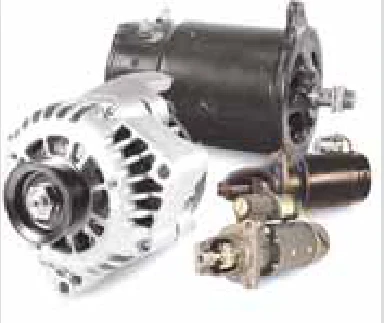
Fondy offers a large inventory of new and remanufactured starters, generators and alternators to fit any vehicle, including cars and light and heavy-duty trucks as well as motorcycles, ATV’s, and snowmobiles. They say that if they don’t have the exact product you need, they can rebuild the part you already have. Fondy also carries Astro Lite batteries, which are manufactured in the U.S. by East Penn Mfg. in Berks County, Penn. The company has been manufacturing batteries since 1946 and says they operate the largest single-site lead acid battery manufacturing facility in the world. The Astro Lite line includes absorbed glass mat technology, silver alloy, high performance, and import exact-fit batteries.

From the archive · Full text
Reader shop tip

SpynTec Industries

SpynTec Industries, North Lima, Ohio (ph 888 290-2953; www.spyntec.com)

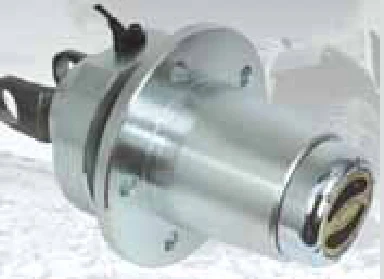
This company is the leader in fixed spindle hub conversions and recently released a new line of fixed spindle conversion kits for 2000-2015 Dodge 3500 dual rear wheel pickups. They also offer hub conversions for 1994-2010 Dodge, 1999-2010 Ford, and Jeep Tj, YJ, XJ and JK Wrangler vehicles. The company replaces weak factory bearings and disconnect hubs for less drag and better fuel economy.

From the archive · Full text
Reader shop tip

James Minix

James Minix, Morrison, Tenn.

“I was having trouble keeping plastic electric fence insulators from breaking prematurely on chain link fence due to sunlight causing them to get brittle and weak. So I got the idea to protect them by coating the end of the connector that attaches to the fence with Plasti Dip that people normally use to coat handles on shop tools. It seems to work well, extending the life of the insulators by protecting the plastic from the sun.”

From the archive · Full text
Reader shop tip

Doug Johnson

Doug Johnson, Aberdeen, Wash.

“When pouring bar oil into the small opening on my chainsaw from the gallon jug it comes in, trying to ‘hit the hole’ often results in spilled oil all over me and the saw. I found that pint-sized Coffee Mate creamer bottles have a good lip for easier pouring, and they’re fairly sturdy plastic bottles. The attached lid snaps in place pretty securely, which is handy when you throw the saw, gas can, and oil into the back of a Gator or pickup. It makes it much easier to keep your saw clean.”

From the archive · Full text
Reader shop tip 1 of 2

Ready Davis

Individual tip 1 of 2 from this reader’s published contribution.
Ready Davis, Bigfoot Equipment & Repair, Willow Creek, Calif.

“As a small town Husqvarna dealer, I like to check your Best & Worst Buys to see how my brand is doing. I recently saw reports by a couple readers who I might be able to help.

“Paul Peyton, who said he used to be a Husqvarna dealer in Louisiana, is disappointed with his 525L after years of using his original series 322L. I can understand because the 322L was a great machine. However, I have sold hundreds of 525L trimmers with very little negative feedback. The problem might be that the 525 has a 2-stage air filter, with the inner lining being felt. Although it stops more fines, it also traps more oil as the 2-stroke engine ‘spits back’ during use. That oil tends to clog the filter, degrading power. I find that by replacing the air filter and cracking the ‘H’ screw open about 1/8 of a turn after the engine breaks in, my clients get a lot more power. Feel free to ship me your engine for an at-cost rebuild if you think it needs it, one dealer to another.

From the archive · Full text
Reader shop tip 2 of 2

Ready Davis

Individual tip 2 of 2 from this reader’s published contribution.
Ready Davis, Bigfoot Equipment & Repair, Willow Creek, Calif.

“Another reader, Larry Johnson in Ontario, N.Y., is unhappy with his Husqvarna TS354D tractor’s deck mounting. He said he was having issues with the rear bar once the front was disconnected and didn’t like taking the belt off or putting it on. Honestly, I’ve never tried dismounting the front first so I tried it your way. Man, that’s hard. I highly recommend you drop the rear pins, and then the front. It takes all of 2 min. to pull the deck that way, without strain. I also usually pull the belt tension idler against the spring pressure with my right hand and then use my left hand to slide the belt off the drive pulley. These decks are heavy so I drop them onto furniture dollies to move them around.

“Thanks to Mr. Peyton and Mr. Johnson for sharing their comments. It helps me do a better job taking care of my customers.”

From the archive · Full text
Reader shop tip

Chuck Hollar

Chuck Hollar, Boone, N.C.

“I added hydraulic quick-connects to operate four 20-ton hydraulic jacks on 50-ft. hoses. I use them to pick up houses and other big stuff. Amazing what we can do with those.”

From the archive · Full text
Reader shop tip

Thomas G. Herriman

Thomas G. Herriman, Bainbridge, Ga.

“I put two 7/16-in. eye bolts over my garage door opening and put a chain through them to lift my Deere 125 mower for blade work. Works great and is safe. Don’t forget to put the gas cap on tight when you tip it up.”

From the archive · Full text
Reader shop tip 1 of 2

Thomas Dart

Individual tip 1 of 2 from this reader’s published contribution.
Thomas Dart, Northport, Ala.

“To hook up heavy 3-pt. implements to a tractor, I use an engine hoist to do the lifting. It works well because it’ll slide in under the hitch.

From the archive · Full text
Reader shop tip 2 of 2

Thomas Dart

Individual tip 2 of 2 from this reader’s published contribution.
Thomas Dart, Northport, Ala.

“To service my zero-turn mower, I mounted a boom pole on my tractor. Makes it easy.”

From the archive · Full text
Reader shop tip

John Kiminski

John Kiminski, North Brookfield, Mass.

“To back out Phillips head screws, place some valve grinding compound on the tip of the screwdriver. It’ll give it a lot more grip. Also works on sockets, too.”

From the archive · Full text
Reader shop tip

Tim Ojala

Tim Ojala, New Ipswich, N.H.

“When working on radiators in older vehicles, often the drain valve is stuck. So when we need to drain or lower the level of liquid to add antifreeze, I use a siphon hose through the radiator cap.”

From the archive · Full text
Reader shop tip

M. Freyer

M. Freyer, Dayville, Conn.

“I raised the handles on my Gravely walk-behind mower 5 in. higher using 3⁄4-in. Speed-Rail fittings. Saves my back.”

From the archive · Full text
Reader shop tip 1 of 2

Mark Musser

Individual tip 1 of 2 from this reader’s published contribution.
Mark Musser, Beecher City, Ill.

“When I have a mechanical problem, I check my old FARM SHOWs and usually it’s problem fixed.

From the archive · Full text
Reader shop tip 2 of 2

Mark Musser

Individual tip 2 of 2 from this reader’s published contribution.
Mark Musser, Beecher City, Ill.

“One tip I have is that I keep my welding helmet wrapped up in an old T-shirt in a cabinet so it’s always ready to use. No time wasted cleaning it.”

From the archive · Full text
Reader shop tip

John Daugherty

John Daugherty, Gray, Ga.

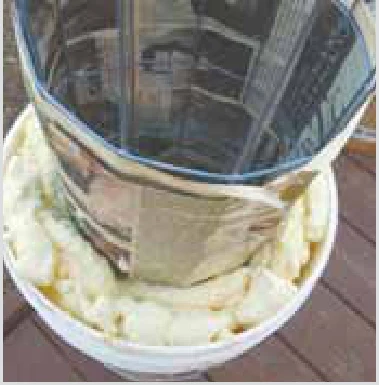
“Here’s how I made some insulating buckets to put over our outdoor faucets in the winter to keep them from freezing. I bent some wire into a cylinder, taped some newspaper around it, and put it in the center of a 6-gal. bucket. I then used a can of insulating foam sealant used to seal large cracks and filled in the bucket around the wire. Once it hardened, I took the wire out. That way the middle is hollow and I just set the bucket over the top of the faucet instead of letting it drip, or wrapping it with towels or blankets. This has worked well for 3 winters here in Georgia.”

From the archive · Full text
Reader shop tip

Henry Niemiec

Henry Niemiec, St. Clairsville, Ohio

“I put Vaseline (not petroleum jelly) on V-belts before storage, then run the unit for a couple minutes. It keeps pulleys from rusting and wearing on the belt. I’ve been doing this for years and it really helps.”

From the archive · Full text
Reader shop tip

Tony Ryba

Tony Ryba, Johnstown, Penn.

“Wanting to inspect the brakes on my Ford truck, I found that all 4 wheels were stuck to the rotors. Working on one wheel at a time, I applied penetrating oil to the joint between the rotor and wheel and let it sit a bit. Then I lowered the truck to the ground, removing the jack and jackstands, with the lug nuts left loose. Driving forward a couple feet, the brakes were applied. With a loud clunk the wheel would come loose from the rotor. When I reinstalled the wheel I applied a thin coating of grease between the wheel and rotor so it won’t happen again.”

From the archive · Full text
Reader shop tip

Eric Dyck

Eric Dyck, Sevenpersons, Alberta

“I keep a shopping cart in my shop with my most commonly used tools. Makes them easy to find and I can quickly take them to where I’m working.”

From the archive · Full text
Reader shop tip

L.D. Shumaker

L.D. Shumaker, Richfield, Ohio

“I wish there was a company out there that sells new or rebuilt rear drives for zero-turn mowers. They’re usually the first thing to go on these machines, especially the left drive since we trim counter clockwise. Or maybe there are some tricks for extending the life of these drives, like heavier oil.”

From the archive · Full text
Reader shop tip

Lee Shepherd

Lee Shepherd, Wabash, Ind.

Lee runs a small engine repair shop for lawn and garden tractors. He recently made a custom exhaust “tip” out of an old fire extinguisher that he had laying around. It sticks off the front of one of his tractors and is a real eye-catcher.

From the archive · Full text
Reader shop tip

Richard A. Rice

Richard A. Rice, Waverly, Tenn.

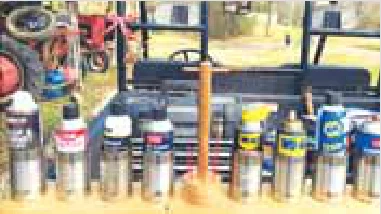
“I made a caddy to make it easier to locate and access various spray cans I use around my place. I used a 1 by 8 board that’s 34 in. long, with a couple dowel rods at the center for a handle. I fastened tin cans with a single sheet metal screw across the board to hold the spray cans. To keep track of the straws, I drilled 7/64-in. holes in a couple circular wood discs at the base of the handle. I can carry this on my Polaris Ranger so they’re always handy when I need them.”

From the archive · Full text
Reader shop tip

Jim Holt

Jim Holt, Cincinatti, Ohio

“Harbor Freight recently sold 2,500-lb. electric winches for less than $50 each. I bought 3 and installed one each on my Cub Cadet mowers and golf cart. No more running to get the big tractor when they get stuck in mud.”

From the archive · Full text
Reader shop tip 1 of 2

Larry Frederickson

Individual tip 1 of 2 from this reader’s published contribution.
Larry Frederickson, Monmouth, Ill.

“Years ago I stopped using liquid soap to mount tires on steel rims because it causes rusting along the rim edges and takes some of the softness out of the tire bead so that it tears when dismounting the tire.

Shop feature stories

From the archive · Full text
Feature story

$1.50 Tractor Headlight Repair

Featured source: Lawrence Goodman

“The rear headlight on my Dresser dozer didn’t work because of a bad wiring connection at the exterior screw on the housing. Because of corrosion, the screw head stripped when I tried to remove it. But instead of buying a new housing and bulb for about $70, I was able to repair the headlight for just $1.50. All I bought was a brass screw and 2 brass nuts,” says Lawrence Goodman, Ionia, Mich. He removed the bulb and cut off the wire connectors both inside and outside the housing. Then he removed a clip that holds a plastic piece inside the housing.

“I ground off the screw head from the interior side of the plastic piece to a brass insert that goes through the piece,” says Goodman.

“I used a 5/32-in. drill bit to drill straight through the housing and 2 screws, leaving a threaded brass insert in place inside the plastic piece.” He put together the brass screw, lock washer, and brass nuts, installed new wire connectors, and reinstalled the light.

“Now the light works like a million bucks,” says Goodman.

Contact: FARM SHOW Followup, Lawrence Goodman, 3200 Welch Rd., Ionia, Mich. 48846 (ph 616 755-1473; [email protected]).

From the archive · Full text
Feature story

“Gate Valve” Bead Breaker

Featured source: Ralph and Scott Altenweg

“My son Scott and I came up with this heavy-duty ‘gate valve’ bead breaker that we used on the rear tire of our old Massey Ferguson tractor. It isn’t fancy, but it works and saved the cost of going to a shop,” says Ralph Altenweg, Dayton, Minn.

“The wheel rim was badly rusted due to calcium chloride that hadn’t been changed in years. My dad always said, ‘use what you have on hand around the farm first, before you buy anything new’ and that’s what we did.” Scott works as a sprinkler fitter, and he already had some gate valve parts. The complete valve is designed to shut off the 6-in. water line to a building, and is equipped with a rotary wheel that turns a threaded shaft with a yoke at the bottom.

“The valve shaft has 6 in. of travel,” says Ralph.

The 2 men bolted the valve’s base onto an L-shaped steel plate, then welded one end of a 2-in. dia. pipe perpendicular to the plate. The pipe sets on a wooden block and goes up against the far end of the wheel rim to hold the tool steady. Turning the valve wheel causes the threaded shaft to push the pad against the bead and break it off the rim.

“It works somewhat like an apple cider press except that instead of pressing the juice out of apples, we’re breaking a tire bead. If the bead is stubborn and still won’t come off, we can remove the wheel and use a 2-in. open end wrench to provide extra torque,” notes Ralph. Contact: FARM SHOW Followup, Ralph and Scott Altenweg, Dayton, Minn. 55327 (ph 612 749-6946).

From the archive · Full text
Feature story

Loader-Mounted Tool Holders

Featured source: Ryan Foley

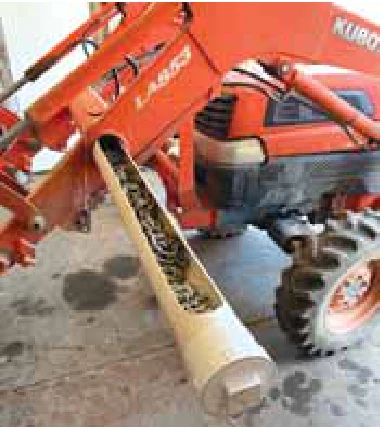
“I got this idea from a friend’s Facebook post, and my father-in-law and I put it into action on our Kubota 46 hp. loader tractor. It gives us extra room for storage, and we always know where our chains and tools are,” says Ryan Foley, Powell Butte, Oregon. The loader frame has a 4-in. dia. tube between the arms just ahead of the tractor. Foley bought a pvc tube to fit inside the tube and cut a wide slot along the top of it, then threaded a pvc cap onto the end of the tube.

“I used to keep chains on the operator’s platform but they were always in the way or falling off the platform. My tool holder is a better way to hold a few chains and small tools,” says Foley. Contact: FARM SHOW Followup, Ryan Foley, 16071 Sw Alfalfa Rd., Powell Butte, Oregon 97753 (ph 541 788-9729; [email protected]).

From the archive · Full text
Feature story

Pickup-Mounted Mower Lift

Featured source: Dave Meiners

Dave Meiners uses the receiver hitch on his pickup, 2-in. square tubing, and a come-along to lift his riding mower so he can clean the deck and sharpen the blades.

“I came up with this idea about 10 years ago and have used it ever since. Unlike cradle-type lifts on the market, there are no arms in the way when I want to service the deck,” says Meiners.

“It’s also easy to store - I just hang the tubing on my garage wall.” He started with a 4-ft. length of tubing and welded a horizontal 14-in. piece on the bottom and an 8-in. piece on top. He also bolted a metal ring to the top piece. The come-along hangs from the ring, with the cable attached to the mower’s front bumper. To lift the mower, Meiners just jacks up the come-along.

“It lifts the mower about 1 ft. off the ground, which gives me enough room to clean the deck or remove the blades for sharpening,” says Meiners.

“I have another mower with no front bumper, so I just hook a chain up to the come-along and wrap it around the front axle.”

Contact: FARM SHOW Followup, Dave Meiners, 1582 61st St., Edgerton, Minn. 56128 (ph 507 829-1215; [email protected]).

From the archive · Full text
Feature story

Tube Bending: Butterfly Nets To Fighter Jets

Featured source: Steve Harman

If a bent tube is needed, Tubular Techniques can provide it, no matter what it’s for. The company has bent tubes to make butterfly nets for the Ohio State University Department of Entomology and tubes for F-16 fighter jets.

“A lot of our customers are do-it-yourselfers and farmers trying to fix a piece of equipment,” says Steve Harman, Tubular Techniques.

“We also do frames and tubing for equipment prototypes, as well as crowd control and hand rails, even hand holders for emergency response vehicles. The variety is part of what makes what we do so much fun.

“We don’t do engineering,” says Harman.

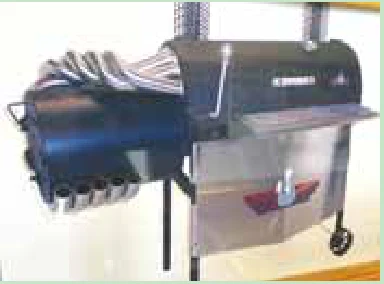
“We need a sample (even if it is damaged), a drawing or a model. It can be as simple as a straightened coat hanger with the intentional bends needed and longer than thought needed. Some people can make drawings, but photos usually are not helpful due to distortion from the lens.” A challenging job recently was a one-off for a trade show. The client sold grills and wanted to attract attention. They assembled a model of what they wanted using 2-in. pipe insulation for the model. It was a set of 5 stainless steel exhaust pipes that came out of the grill and twisted around a smoker unit.

“It was near impossible bending with a lot of welding and polishing to make it look like one twisted piece,” says Harman. That kind of exhaust header work for hot rods is what got Harman started in tube bending. A part-time job while in college turned into a unique career. Contact: FARM SHOW Followup, Tubular Techniques, 3025 Scioto Darby Executive Court, Hilliard, Ohio 43026 (ph 614 529-4130; [email protected]; www.tubulartechniques.com).

From the archive · Full text
Feature story

Welder Likes These Products

Featured source: Jeff Prose

“Anyone who’s ever braised, welded or soldered likely has a permanent ‘metalworking brand’ because of flying sparks and slag,” says pipefitter Jeff Prose.

“I’ve been a welder for 20 years and have several skin divots to prove it.”

Prose uses OHSA-approved protective wear at his job, but notes there are several consumer products that are ideal for small shops and metalworkers. Heatshield Products sells welding and torch blankets, an industrial welding jacket and a welding pillow. The company’s five different heavy-duty welding blankets are sized from 18 in. square to 52 in. by 72 in. Some of the blankets have grommets and magnets for easy positioning. Prose says welding blankets are ideal for repair jobs to protect painted materials from flying sparks and weld slag. The blanket protects at up to 1,800 degrees F of continuous heat and 2,000 degrees F intermittent.

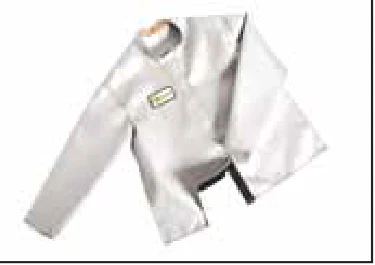
Another helpful product for welders is a heavy-duty jacket. Heatshield Products makes one from their weld mat that’s abrasion-resistant and impervious to liquid. It protects the front, arms and shoulders of the welder while the open back allows ventilation. They also make a carbon fiber jacket that protects against metal splashes, flames, sparks and UV radiation.

ROGO Fasteners produces Heat Shield Protective Gel that’s a heat sink especially designed for brazing. The gel protects valves, controls and surrounding areas from heat damage during welding, brazing or other applications. Heat Shield Gel is sprayed on areas surrounding the working joint or can completely encircle copper tubing to prevent heat transfer. The clear, non-staining gel is odorless, non-toxic and won’t harm skin. After use it evaporates without leaving residue.

Contact: FARM SHOW Followup, Rogo Fastener, 31 Industrial Drive, Middletown, New York 10941 (ph 800 423-7646; www.rogofastener.com) or Heatshield Products, P.O. Box 482500, Escondido, Calif. 92046 (ph 844 723-2665; www.heatshieldproducts.com).

From the archive · Full text
Feature story

Simple Wall-Mounted Chain Holder

Featured source: Don Boggs

“Here’s a simple chain holder that will make it easy to find the right-sized chain when you need it,” says Don Boggs of Pickens, S.C.

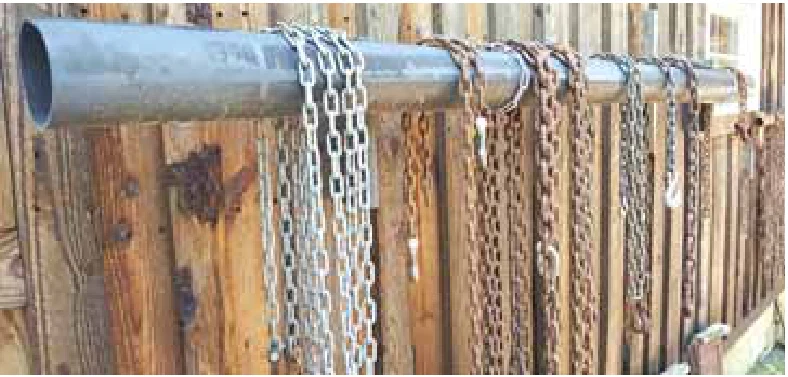
“A length of 4-in. dia. plastic pipe is suspended horizontally about shoulder high along the wooden wall outside my shop.

“The pipe hangs from a couple of small chains attached to nails in the wall. A couple of boards nailed vertically between the pipe and wall serve as spacers to create room between the pipe and wall. I drape chains over the pipe so that the chains hang down both sides. When I find the chain I need, I just grab one end and slide it off the pipe.

“I love this idea because it’s easy to see the length and size of each chain. I don’t have to guess at the chain’s length like I would if it was stored inside a pail or dumped in a pile.

“I also tried using a smaller 2-in. dia. pipe, but it didn’t work as well because I had to pull too hard on the chain while trying to slide it off the pipe.” Contact: FARM SHOW Followup, Don Boggs, 619 Amberwood Rd., Pickens, S.C. 29671 (864 787-4596; [email protected]).

From the archive · Full text
Feature story

Hand-Held Metal, Vinyl “Slitter”

Featured source: Joseph Schmucker

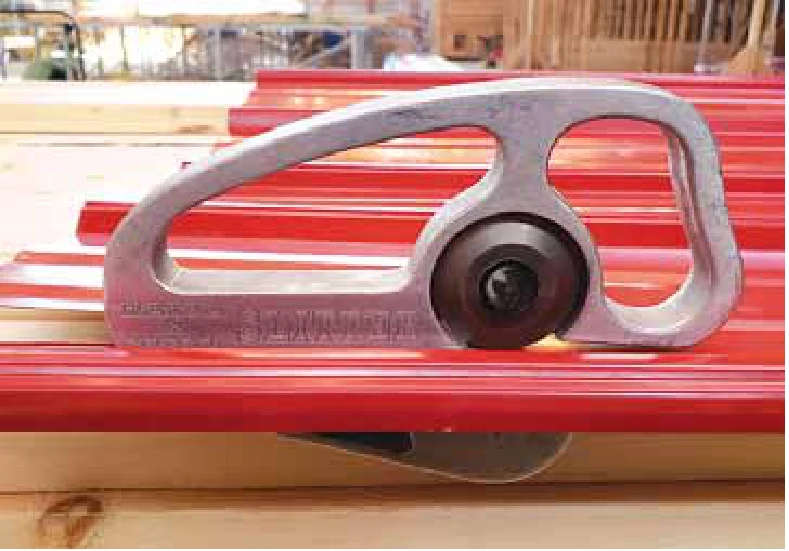
“Our new hand-held ‘slitter’ cuts through metal up to 24-ga. thick, and also works great on vinyl. Anyone who puts up pole barns should have this tool,” says Joseph Schmucker, owner of JTS Sales, Marysville, Ind. The slitter is CNC-milled from 3/4-in. thick aluminum and measures 6-in. high by 8-in. long, making it small enough to fit in a nail pouch. It weighs just 2.3 lbs. The cutting is done by a pair of overlapping 2-in. dia. cutter wheels made from German quality steel. The tool is designed to be pushed or pulled lengthwise. You hold the metal with one hand and push or pull the slitter with the other hand.

“Whether it’s pushed or pulled, it makes smooth cuts without scratching anything,” says Schmucker.

“It works great on corrugated metal roofing because it makes a much smoother cut than cordless cutters, which cut more like a scissors going up and down. It also works great to cut trim pieces. The only limitation is that it can’t be used to cut sideways over the metal. The wheels can be sent in for resharpening.”

The metal and vinyl slitter retails for $275, with free shipping to the lower 48 states. Contact: FARM SHOW Followup, JTS Sales, 9951 Dickey Road, Marysville, Ind. 47141 (ph 812 289-1274).

From the archive · Full text
Feature story

They Resell Allis Chalmers Parts, Equipment

Featured source: Lad and Laddy Benes

L&L Parts has a 300-ft. long shed nearly filled with Allis Chalmers tractors, crawlers, implements and parts. Lad Benes and his son Laddy have supplied the needs of farmers and collectors alike since 2012, carrying on a family love of the brand.

“My dad farmed with Allis equipment, and so did I,” says Lad Benes.

“When I quit farming, I had some older Allis tractors that I planned to restore, but never did. Laddy suggested we part them out instead.” Still in high school, Laddy turned his role in the business into an FFA project. After attending a few swap meets and tractor shows, the two began expanding their supply, buying parts and equipment.

“People started bringing parts to me at swap meets, and I started getting calls from people,” says Benes.

“They or their dad had been Allis Chalmers dealers and had boxes of new parts.” Today L&L Parts gets most of their supply within a 5-state area surrounding Minnesota. However, they have travelled as far as Texas. Buyers find out about them at meets and shows or through word of mouth. New customers also arrive via the L&L Parts Facebook page.

“Laddy posts equipment for resale or to be parted out as soon as we get it,” says Benes.

“He also uses Craigslist, but Facebook has been an important source of new business as well.” The Benes concentrate on used OEM parts, avoiding aftermarket parts, with the exception of some suppliers, such as tractor cab parts from Hiniker, Stopler, Year-A-Round and Full Vision. They have started remanufacturing some rare parts. They concentrate on older equipment through the 8000 Series.

“We stick with orange equipment,” says Benes.

“We don’t work with the really old equipment that was painted green.” While most of their parts are for tractors and implements, they do carry some for Gleaner combines and early corn and bean heads. What they have depends on what they have been able to source.

“The most unusual items we’ve sold so far were Allis Chalmers toy chainsaws,” says Benes.

“A man had 6 of them he wanted to sell. We bought them and had no problem reselling them.” While they respond quickly to email and inquiries on Facebook, both Lad and Laddy have off-farm jobs. Phone calls are most likely answered and voice mails responded to after 8 p.m. Central time. Contact: FARM SHOW Followup, L&L Parts, 10537 State Hwy. 22, Wells, Minn. 56097 (ph 952 290-1063; [email protected]; www.facebook.com/LLParts/).

From the archive · Full text
Feature story

Word Of Mouth Built Parts Business

Featured source: Rick Stair

Rick Stair has customers in all 50 states, often grouped by area. The list keeps growing as he expands his list of products, adapts to changes in the industry, and satisfies new customers.

“It’s amazing how many customers will have the same zip code,” says Stair.

“Customers talking to neighbors is where new business comes from.” People increasingly rely on neighbors for recommendations and online businesses for parts because of how the industry is changing. With nearly 50 years experience in ag parts, Stair has seen plenty of change. He literally grew up in the business, not yet in his teens when his father bought an Oliver dealership in 1971. By 1981 he was the parts manager. When the dealership sold in 1992, he continued working in dealerships, finally setting up Rick’s Ag Parts.

“It used to be that a specific model tractor used a single part for 10 to 15 years,” recalls Stair.

“Now various models may use various parts all in the same year, making it hard for a dealer to know what to stock, so many don’t stock at all. They call or go online to order the part to be delivered in a few days.” Stair notes that as parts managers retire, there is less and less help for customers needing parts for older equipment.

“At age 60, I can’t believe I’m considered an old timer,” says Stair. Stair brought his experience and supplier contacts to the new business, initially specializing in Fiat-made Oliver and White tractors. In the past 10 years he expanded to Massey Ferguson, Ford New Holland, Fiat Hesston tractors and New Idea parts. Recently, he added pto driveline-related items. He also sells paint, seats, roller chain, accessories and lubricants. Hay and forage equipment has become a growing part of his business.

“Hesston and New Idea items are our most common requests, but we sell plenty of New Holland, Case and Deere hay equipment items also,” says Stair. One reason for Stair’s growth in sales may be his user-friendly websites. While packed with brand names and items, there is also a searchable database. You will also find something not found on similar online stores - tips for searching. They include how to word a search, use of double quotes, keywords like, and search filters. Following the tips makes it easier to find a part. He offers links to brand parts websites, including Case IH and AGCO. He also scans some hard to find parts books; however, he finds less need for that today.

“Most of the catalogs are available online, or my customers have acquired their own,” says Stair, adapting to those new realities as he has in the past. Contact: FARM SHOW Followup, Rick’s Ag Parts, 874 Ridgecrest Dr., Wooster, Ohio 44691 (ph 330 466-2164; [email protected]; www.RicksAgParts.com).

From the archive · Full text
Feature story

Rubber Tubing Keeps Mower Deck In Place

Featured source: James Minix

James Minix, Morrison, Tenn., says he used to have problems keeping the front arm in place on his 2000 Deere LT 155 lawn tractor when mowing over rough ground. The arm attaches to a front lifting guide on the deck with 2 “hooks” on it, and gaps between the hooks and deck could allow the arm to jump out of the bracket, especially when backing up or driving over uneven terrain. Minix solved the problem by placing a piece of heavy-duty rubber tubing through both gaps, and then inserting a heavy duty, 24-in. long zip tie through the tubing. He secured the zip tie to existing holes in the bottom of the deck.

“The tubing fills the gaps between the hooks and deck to prevent the arm from jumping out of the hooks. I haven’t had to buy another $15 damaged deck hanger for 3 years,” says Minix.

“Whenever I want to remove the deck I just remove the tubing.” Contact: FARM SHOW Followup, James Minix, 136 Barbara Spears Rd., Morrison, Tenn. 37357 (ph 817 937-9655).