Practical ideas from FARM SHOW MagazineSubscribe · Free issue · Send us your shop tip
Subscribe to FARM SHOW
Issues / Vol. 39, No. 4 (2015)

Vol. 39, No. 4 (2015)

Money-Saving Repairs & Maintenance Shortcuts · Printed section pp. 36–39

37 selected entries · Complete text of selected entries

This issue’s section includes reader tips and feature-length shop stories. Held items and editorial notices are not reproduced.

Archive text: prices, coupons, availability and contact details reflect the original publication, not current offers. Reader methods are not universal instructions; follow manufacturer guidance and proper safety practices.

Reader shop tips

From the archive · Full text
Reader shop tip

Kerry Kilgora

Kerry Kilgora, Mineral Point, Wis.

“When repainting a house, barn or other building, I often come across isolated small areas where the wood is rotted, especially on window frames. There are commercial hardeners but they’re usually so watery that most of the hardener drops out before it has a chance to work, and the wood has to be below 15 percent moisture. I now use Gorilla Glue to repair all these areas.

“First, I remove the bulk of the pithy wood. Then I fill a disposable large animal syringe that has an 18-ga. needle (available at any farm supply store) with Gorilla Glue. I inject the affected area with the glue. Water activates the glue, the wetter the better. When the glue dries, it will expand to some degree and dry the wood. If it expands beyond the surface of the wood, I simply cut off the excess with a sharp wood chisel and then sand smooth. If the glue doesn’t fill the entire area, I use 2-part auto body putty to fill, spot spraying the putty patch as soon as possible after drying to keep it from absorbing humidity.”

From the archive · Full text
Reader shop tip

C.J. Bunce

C.J. Bunce, Perry, Kan.

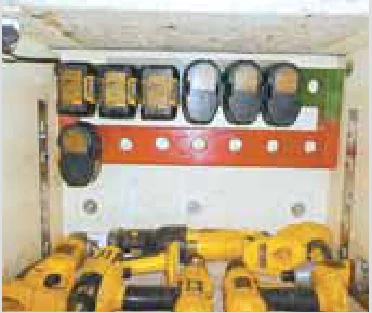
“I worked on a large farm for a year and a half and one of my biggest projects was setting up a service truck. The owner liked cordless power tools so there were a lot of batteries to keep track of. It was especially difficult to keep the dead batteries separate from the charged ones, so I came up with the idea for this battery rack. I cut two 2 by 4’s to fit the size of the cabinet on the truck. Holes were drilled to accept the neck of 18-volt batteries and evenly spaced to hold 7 of them. The bottom board is painted red and the top green. If a battery is dead, it’s on the red. If it’s charged, it’s on green. The racks made use of previously unused space and the batteries fit snug enough that they’re secure even on rough ground. I mounted a 12-volt charger on the shelf above the battery rack so we could charge batteries in the field as we used them without having to run the generator.”

From the archive · Full text
Reader shop tip

Graham Robertson

Graham Robertson, Westminster, Md.

“When the engine shroud on my old Simplicity garden tractor cut some wires that caused the generator to burn up, I decided it would be cheaper and easier to replace it with a 1-wire auto alternator. The Briggs & Stratton engine had a 1-in. shaft out the front – to drive some accessory I did not get when I bought the tractor – so I figured I could drive the alternator with that. I had to move the original muffler away from the front of the engine, installing a standard 1-in. muffler out the side.

“I needed a large pulley to get enough rpm’s to drive the alternator so I made a drive pulley out of an old lawn tractor transmission pulley. It was originally made to fit a 1/2-in. shaft. I ground it out to fit and welded a small 1-in. shaft pulley to the front of it to hold it to the shaft. The alternator cost $25 and came from an old Chevrolet. Once I got the alternator mounted, the hood would no longer fit so I had to modify the hinges to raise it 4 in.

“The last thing was to install a 30 amp gauge to allow for the higher output. A side benefit of this conversion is that it works well to jump start tractors and trucks with dead batteries.

“This is not a show tractor. It’s just an earn-your-keep farm tractor that we like because of its tall deck and huge heavy flywheel, which allows it to deal with pastures a foot or more tall.”

From the archive · Full text
Reader shop tip

Frost L. Nix

Frost L. Nix, Ponca City, Okla.

“For 30 years I’ve used a golf ball to squeeze every last bit of material out of caulking tubes. Once you’ve used part of a tube, pull back the handle on the caulking gun and put a ball in the tube. You’ll be surprised how much more caulking you can get out.”

From the archive · Full text
Reader shop tip

Burton Graves

Burton Graves, Sandusky, Mich.

“As a former IH serviceman, I always kept a small magnet in my tool kit to attach to a wrench to hold tiny screws, bolts, washers or nuts when replacing parts. It’s a very handy way to keep from losing them.”

From the archive · Full text
Reader shop tip

Wayne E. Sensenig

Wayne E. Sensenig, Hole Solutions, 255 Locust Point Rd., Elkton, Md. 21921 (ph 443 945-7011)

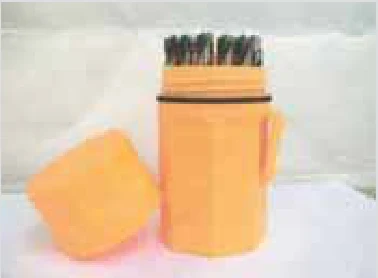
“In the last issue of FARM SHOW, a reader wondered if anyone had a solution to drill bit slippage in cordless drills. As a retailer of Norseman/CTD cutting tools, I suggest he try our Magnum Bully line of industrial grade drill bits. These drills are manufactured from special Hi-Molybdenum tool steel and have 3 flat sides on the shanks to eliminate chuck slippage. The 135° split point gives fast penetration and accurate starting without a center punch. These bits are designed for use in work-hardening grades of stainless steel and other hard metal drilling applications. We offer other cutting tools such as hole cutters, hole hog drills, car reamers, countersinks, and more.”

From the archive · Full text
Reader shop tip

Don Smith

Don Smith, Smith Repair, Fredericksburg, Iowa 50630 (ph 563 379-6536; [email protected])

“For years farmers with Freightliner semi tractors told me they needed fuel tank straps that wouldn’t rust out. We’re excited to announce that we now have replacement straps at an affordable price.

“The original straps are made from 12-ga. mild steel. With more aggressive ice melt chemicals now in wide use, coupled with fairings that cover the fuel tanks to improve aerodynamics, these steel straps quickly rust away.

“Our tank straps are made from 16-ga. 304 stainless steel so they won’t corrode.

“Freightliner doesn’t sell the T-bolt fasteners separately so when we sell a set of straps we require your original T-bolts in exchange, or there is an additional charge for the bolts.

“We currently make fuel tank straps only for Freightliner FLD120 and newer classic model trucks. However, with dimension information and T-bolt or specialized hardware available, we can also fabricate them for Peterbilt, Kenworth and other brands. The price will be in the $500 per strap range.”

From the archive · Full text
Reader shop tip

Bill Flies

Bill Flies, ProQuipment USA, Frontenac, Minn. ph 952 484-7444; [email protected]; www.pqusa.net)

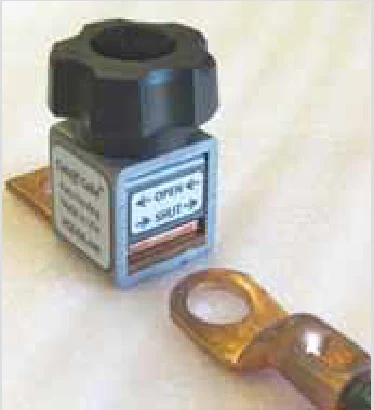
“My patent pending battery disconnect is designed to extend the life of batteries and other components when equipment is idle for an extended period of time.

“The Cutoff Cube takes up only 1 sq. in. of space so it’s not in the way and can accommodate any size cable. It’s especially useful for equipment you only use for short periods of time. When you’re done using the machine for the season, just turn the knob and lift the cable off.

“The Cutoff Cube sells for $20 including shipping.”

From the archive · Full text
Reader shop tip

Cal Miner

Cal Miner, Willmar, Minn.

“To keep ratchet straps and bungie cords from getting tangled up when they’re not being used, I store them in old socks. For example, I might fold a half dozen bungie cords in half and stuff them in one sock.”

From the archive · Full text
Reader shop tip

John W. Collins

John W. Collins, Sherburne, N.Y.

“I wanted to make holes in wine bottles to insert Christmas lights. So I bought a carbide drill but it tended to ‘wander’ and chip the hard glass.

“So I drilled a hole into a piece of 2-in. sq., 1/4-in. thick plexiglass and put the bottle in a tube of water, and drilled through the plexiglass.

“The water acted as a lubricant and kept the drill bit from getting hot. It took about 2 min. to drill each hole.”

From the archive · Full text
Reader shop tip 1 of 2

Milton Webster

Individual tip 1 of 2 from this reader’s published contribution.
Milton Webster, Taylor, Texas

“I came up with an inexpensive way to add water and antifreeze to my tractor tires, using the filter basket from an old automatic coffee maker and a 3-ft. length of clear plastic tubing. The filter basket forms a perfect funnel, and the tubing runs from it down to the tire valve stem.

From the archive · Full text
Reader shop tip 2 of 2

Milton Webster

Individual tip 2 of 2 from this reader’s published contribution.
Milton Webster, Taylor, Texas

“I’ve used an old Chicago Pneumatic air hammer for years with a blunt chisel, to break down tire beads on yard tractors so I can remove tires without taking wheels off.”

From the archive · Full text
Reader shop tip

Christopher Spicher

Christopher Spicher, North Las Vegas, Nevada

“My dad and I made a super bright workbench light on the cheap. We bought 2 Snap-On LED work lights for $33, took the mount off the bottom of each light, and mounted them on the ceiling above our workbench, using a 4-in. lag bolt with a washer between the base and light that allows the light to swivel. We plugged the lights into a remote switched socket on the ceiling and used a wall wire covering to hide the wires.”

From the archive · Full text
Reader shop tip

Lane Cummins

Lane Cummins, Austin, Texas ph 512 363-8555; [email protected]

“I’ve come up with a patent pending, disposable cardboard tool that makes it easy to pour out of paint buckets and cans. I call it a Container Drainer. It comes in a flat piece and with instructional drawings on how to fold it out and apply. I can send out samples once I know there’s enough interest.”

From the archive · Full text
Reader shop tip

Tri-Vice Industries

Tri-Vice Industries, Westlake Village, Calif. ph 805 370-5487; www.tri-vise.com

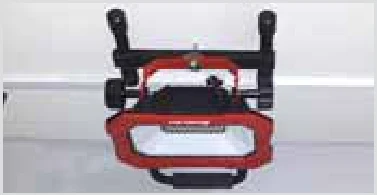
Anyone who needs to cut pipe, metal bars or lumber, but doesn’t have a vise handy will like this device. With the material safely locked in place you can measure, cut, drill, finish, tighten fittings, solder, weld, etc., all on the ground. Separate units are available for lumber and pipe.

From the archive · Full text
Reader shop tip

Abner Stoltzfus

Abner Stoltzfus, Leola, Penn.

“Some of the grease zerks on my farm equipment are located in tight corners where I need a hose on the grease gun, and some are in narrow corners too small to reach with my hand and therefore require a solid pipe. I didn’t like having to take both kinds of grease guns with me all the time. So I unscrewed the hose from the pump and slipped a 3/8-in. dia., 8-in. length of conduit over the hose, and then screwed the hose back on. The conduit is just the right diameter to hold the hose tip solidly.

“Whenever I need to use the hose I just slip the pipe back toward the pump to expose the hose. I started using this idea more than 2 years ago and haven’t found a grease zerk yet that I can’t reach.”

From the archive · Full text
Reader shop tip

Dennis Strahle

Dennis Strahle, Eagle, Mich.

“I use 5-gal. gas/diesel cans to fill my antique tractors, but the fuel flows out really slow and I got tired of holding onto them. The fuel flow is restricted because the air vent is too restrictive. To speed up the flow I drilled a 27/64-in. dia. hole into the air vent and tapped it for a short 1/2-in. dia. bolt. It lets me empty the gas can a lot faster and with much less arm fatigue.”

From the archive · Full text
Reader shop tip

Mark Yax

Mark Yax, Solon, Ohio

“I find that a piece of bandsaw blade works great for scribing out lines on a rounded surface. The rake of the blade’s teeth gives the blade some grip and keeps it from sliding around.”

From the archive · Full text
Reader shop tip 1 of 2

Cal Miner

Individual tip 1 of 2 from this reader’s published contribution.
Cal Miner, Willmar, Minn.

“I use the metal cages around plastic bulk chemical totes to store metal tubing, pieces of pipe, conduit, and other parts. I flip the metal cages upside down. By inserting crossbars I’m able to stack items too short to go all the way through. The cages have about the same footprint as a pallet so I can easily move them around with a forklift or skid loader.

From the archive · Full text
Reader shop tip 2 of 2

Cal Miner

Individual tip 2 of 2 from this reader’s published contribution.
Cal Miner, Willmar, Minn.

“By triple rinsing the plastic totes and then hooking up a trickle hose, they work great to water plants and trees.”

From the archive · Full text
Reader shop tip

Glen Allan

Glen Allan, Ontario, Canada

“In regard to Jerry Brandt’s problem with his LX188 Deere riding mower that was detailed in the last issue, the surging he experiences when he’s not running the mower deck could be caused by something loose in the governor linkage. It may be a loose arm where it comes off the engine or attaches to the carburetor.”

From the archive · Full text
Reader shop tip

Richard Delage

Richard Delage, Malone, N.Y.

“Engine surging when not under load could be a lot of things but the most likely culprit is worn or mis-adjusted parts in the governor linkage. However, there could also be an air leak in the intake system. You can test for leaks with an unlit propane torch. With the engine running, hold the torch so propane hits the suspected areas. If there’s a leak, propane will be drawn in and you’ll notice a change in the engine.”

From the archive · Full text
Reader shop tip

William Necessary

William Necessary, Tombstone, Ariz.

“To find an engine intake air leak, I’ve had good luck starting the engine and spraying WD-40 on the suspected areas. If there’s a leak the engine will stumble when the WD-40 hits it.”

From the archive · Full text
Reader shop tip

William, Hildebeitel

William, Hildebeitel, Kenyton, Penn.

“I had a similar problem to Jerry Brandt with my Deere 50 garden tractor. I suspected an air leak in the intake manifold gasket. After I replaced it, the engine ran like new with no surging.”

From the archive · Full text
Reader shop tip

Fred Welton

Fred Welton, Grove City, Penn.

“Engine surging when not under load could be caused by fuel that’s too rich. If he’s running premium, try switching to regular and it might solve the problem.”

From the archive · Full text
Reader shop tip

Lee deVries

Lee deVries, Crawfordsville, Ore.

“Regarding Jerry Brandt’s ‘surging’ Deere garden tractor, I had a similar experience with a Deere mower that’s also equipped with the Kawasaki engine. It was surging badly when not under load and I had tried all the simple things I could think of until finally I was at the end of my rope. I called my Deere dealer and they said they’d had many complaints about this motor and suggested that before bringing mine in for expensive repairs, I should try a can of Seafoam additive in the fuel tank to neutralize the effect of ethanol. I did and after about an hour, the tractor ran like new again. Since then I now use non-ethanol fuel and I installed a fuel shut-off valve in the fuel line so I can run the carburetor dry after use. I bought this mower in 1996 and it has many hundreds of hours of hard use. The Kawasaki engine still runs like new, especially now that I figured out this problem.”

Shop feature stories

From the archive · Full text
Feature story

He Made His Own Fuel Injector Tester

Featured source: Paul Bernier

“My homemade fuel injector tester works great for trouble shooting injector problems on diesel engines,” says Paul Bernier, Geyserville, Calif. He made a tester out of a hydraulic jack from a cab-over truck.

“The jack normally lifts the cab to gain access to the engine. I found that it produces 2,500 psi, which is enough to pop the injector and check the spray pattern,” says Bernier.

“I had to add a pressure gauge, adapt the hydraulic line to the injector fittings, fill the reservoir with diesel, and bleed the line. I watch the gauge while pumping the handle, which lets me see what pressure the injector pops at. The spray pattern is easy to see. It has saved me a lot of time diagnosing problems.” Contact: FARM SHOW Followup, (Paul Bernier, [email protected]).

From the archive · Full text
Feature story

Where To Buy New Idea Picker Parts

Featured source: Steve Zook

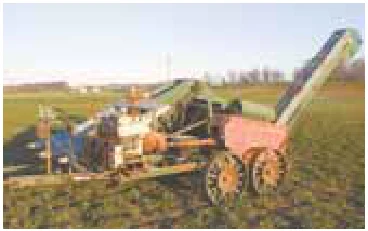
If you’re looking for parts to get a New Idea corn picker running better, Glendale Repair can help. If they don’t have the part, Steve Zook says they can fabricate a replacement or rebuild the original. He maintains contact with several other picker repair shops that also fabricate parts. Glendale makes new snouts and carries new cast iron toes for snout ends. They also carry a special straw walker for the New Idea model 325.

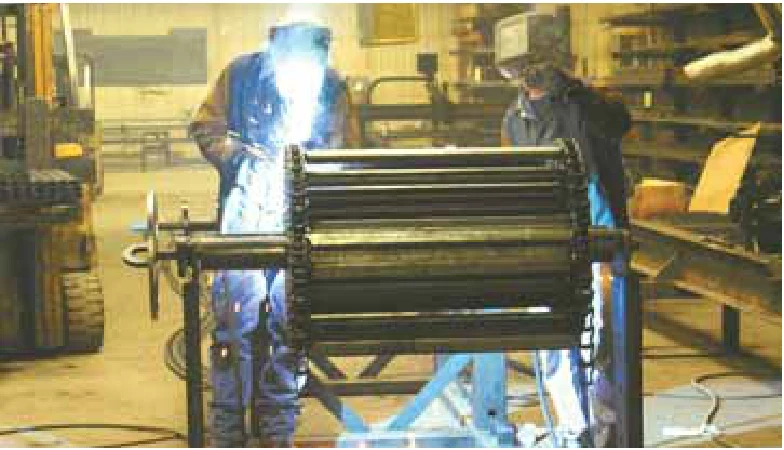
“It replaces the first and second flapper and moves trash through better,” says Zook. Another of Zook’s special touches is building up the steel snapping rolls with a thin layer of carbide. In the past he used nickel, but after trying carbide on his own picker, Zook is sold.

“They should last longer,” he says.

“However, the difference is in how they work. They take the ear through faster and pop it right off.” Glendale can rebuild gearboxes and rubber rolls. Zook suggests that customers call for prices on parts and availability.

“We can rebuild rubber husking rolls with new bearings and seals,” he says.

“The price will vary depending on the model and the extent of repair. It can cost from $500 to $900 for a set. The company also specializes in tractor-powered pickers to horse-drawn units, with special tandem wheels and 12-volt brakes.

“Our steel tandem wheels mounted on a rocker arm are easier on the machine,” says Steve Zook, Glendale Repair.

“When it hits a bump, the picker just rides through it instead of dropping. It is easier on the elevator too.” The brakes are an added safety feature. As Zook notes, horses can pull a picker and wagon, but it can be hard for them to stop it on a hill. Glendale also offers crawler repair and parts. They carry sputnik casters with replaceable sealed bearings in the swivel, as well as plastic 8 to 10-in. wheels with nylon bearings for the sputnick.

“We have designed and fabricated quick attach units that let you use nearly any skid-steer loader attachments on your crawler,” says Zook. Contact: FARM SHOW Followup, Glendale Repair LLC, 241A Williams Run Rd., Christiana, Penn. 17509 (ph 610 593-2942).

From the archive · Full text
Feature story

Giant Shop Crane Lifts 15 Tons

Featured source: Andy and Tony Mulvihill

When Andy and Tony Mulvihill learned they’d have to spend at least $2,000 a year to rent a truck crane to switch out the dry and liquid tanks on their new Rogator, the brothers quickly decided to build a large A-frame crane to do the job.

“Renting a truck crane costs $400 to $500 a pop,” says Andy, “and one isn’t always available when you need it. Having our own crane lets us make the switch ourselves whenever we need to.” The 24-ft. tall A-frame is 42 ft. wide and can lift a whopping 15 tons. The vertical upright beams are 10 by 10 in. by 3/8-in. thick tube steel. They’re supported by angled braces on each side made from 4 by 4-in. tube steel. Each of the uprights is welded to a tubular steel base that’s 4 in. by 10 in. by 5/8 in. thick. Both bases are bolted onto concrete slabs that are 2 ft. wide, 16 ft. long and 24 in. thick. We can also lift the front or the back of the Rogator to change from narrow wheels for spraying to wider wheels for lime and dry fertilizer application. It sure beats trying to raise it up with hydraulic or air jacks.”

The Mulvihills built the crane tall and wide to suit their specific needs. The 42-ft. I-beam cross member is 24 in. deep, 3/4 in. thick, and has 12-in. flanges. It weighs more than 4,300 lbs. Six 1-in. bolts through the base flange at each end attach the cross beam onto the uprights through 2-ft. sq. by 5/8-in. thick plates. Lateral support is provided by angled gussets welded to the inside of the uprights and to the base of the cross beam. One of the uprights is also attached to the 14-in. thick concrete building foundation about 3 ft. above grade. The hoist is powered by a 5 hp electric motor that raises and lowers the load on a true vertical lift. The operator raises and lowers the cargo with a handheld remote. Andy says the cost for building the crane was somewhere around $4,500 and he figures it will pay for itself in about 2 1/2 years. Contact: FARM SHOW Followup, Andy and Tony Mulvihill, 25789 Northfield Blvd., Hampton, Minn. 55031 (ph 651 226-3255).

From the archive · Full text
Feature story

Where To Get Spreader Chains And Paddles

Featured source: Excel Machine & Manufacturing

More than 30 years ago Hank Van Bochove started making apron chains and spreader paddles for manure spreaders at a large feedlot near his Inwood, Iowa farm. By experimenting with different metals he was able to develop paddles and chains that are stronger and last much longer than the OEM parts. Today, he and his sons Brad and Justin, nephew Tyler, and 3 other employees are a big supplier of paddles and pintle chains to customers across the country.

“We started out small and soon the word spread that we made excellent replacement parts. We were also able to offer huge cost savings so the business just grew from there,” says Brad.

“Now we manufacture and stock many of the common paddles that fit several types of spreaders on the market.” The family-owned business, known as Excel Manufacturing, will also custom-manufacture paddles to whatever specifications a customer wants.

“We make our paddles from high carbon steel,” says Brad.

“They’re thicker and wider than the original and OEM upgrades, so they last longer. Our paddles are more resistant to abrasive material like sand and gravel and corrosive manure than ones you’d buy from a spreader dealer.” Excel’s chains fit manure spreaders and silage wagons.

“Short line dealers don’t want to inventory those parts, so we’re able to provide a lot of chains that simply aren’t readily available anywhere else,” Brad says. Because they buy large quantities of chain they’re able to save farmers about 40 percent on the cost of a new pintle apron chain compared to ones bought from a dealer. The company’s website is designed in a way that customers can easily order the chain or paddles they need online. The make and model of the spreader along with the chain type, bed length, center-to-center width and links between flights provides Excel with the information they need to fill the chain order. Paddle orders are filled in the same manner when the make and model of spreader are provided. Excel also takes orders by phone if a customer doesn’t have internet access.

“We try to fill every order within one day and can ship it for next day arrival if a customer needs it fast,” Brad adds. Contact: FARM SHOW Followup, Excel Machine & Manufacturing, 2751 Beech Ave., Inwood, Iowa 51240 (ph 712 986-4288; www.manurespreaderparts.com).

From the archive · Full text
Feature story

Plastic Covers Solve Deere Shift Problem

Featured source: Randy Smith

Randy Smith says Deere forgot to make a cover for an exposed circuit block on its 5425 tractor. He discovered the problem when he borrowed a friend’s tractor and was warned the shuttle drive only worked occasionally unless the pto was engaged.

“A Deere mechanic came out to check it, and it worked...while he was there,” says Smith.

“I did some digging and found some corroded fuses on an exposed fuse block right above the axle. I called Deere to order a cover, and they said no cover existed.” Since he had a milling machine in his shop, he decided to make his own cover. At first he thought to make a 2-part mold and cast plastic in it. After noticing a welding stick that had been dipped in Plasti Dip, he decided to try a dip mold. He got busy with a block of aluminum, milling it down to the right size and shape.

“I emailed Plasti Dip and asked what release to use, but they said it wasn’t made for dip molding,” recalls Smith. He checked the internet and found one fellow who had used plastic wrap over a mold. Smith decided to try silicon spray first, and if that didn’t work, he would try the plastic wrap. The silicone spray worked.

“I sprayed the mold and let it dry and then dipped it,” he says.

“It took about 4 dips with half an hour in between each. Aside from making the mold, it didn’t take that long.” Smith also made a cover for a 12V junction box above the fuse block. He filled the sockets full of dielectric grease and reinstalled the fuse box. Covers worked great and so did the shuttle.

“The Deere mechanic charged my friend $300 after theorizing the intermittent problem was a wire grounding at random someplace,” says Smith.

“If anyone else has this problem or just wants a cover Deere can’t provide, I’ll be glad to make them.” Smith says he would charge around $20 to make the covers. Since making his own, he has sold 4 sets to friends with a similar problem on Deere tractors. Contact: FARM SHOW Followup, Numeric Control, LLC, P.O. Box 916, Morton, Wash. 98356 (ph 360 269-1497; www.simplecentrifuge.com).

From the archive · Full text
Feature story

“Total Drain-Out” Oil Pan For Duramax Diesel Engines

Featured source: Banana Pan

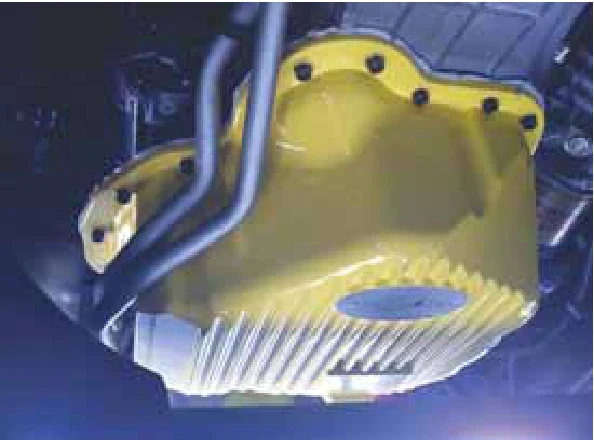
This new oil pan is designed to drain all the oil from any Duramax diesel engine, resulting in a cleaner engine every time you change the oil. The Duramax diesel engine’s dirty secret is that it has a hump at the bottom of the oil pan that’s lower than the drain plug. The hump adds volume, so you can have more oil in your engine. But when you drain the oil there will still be 2 cups of undrainable, used oil trapped in the hump. By eliminating the hump, the new “Banana Pan” is able to drain all the oil so you won’t be putting new clean oil in with old dirty oil. It’s made from 356T6 aluminum and has a stainless steel magnetic drain plug with safety wire. The pan is an exact fit so no special tools, cutting or grinding are required for installation. The Banana Pan comes powder-coated in yellow. It sells for $379 including S&H. Contact: FARM SHOW Followup, Banana Pan, P.O. Box 3078, Oceanside, Calif. 92051 (ph 800 474-7538; www.go-truck-yourself.com).

From the archive · Full text
Feature story

8-Ft. Fluorescent Lights Fitted With CFL Bulbs

Featured source: Terry Morgel

“Eventually 8-ft. fluorescent lamps will be phased out and we won’t be able to buy them, so I got an early start by retrofitting a couple of 8-ft. long ceiling-mounted fixtures in my garage with compact fluorescent lamps,” says Terry Morgel, Avon, Minn. He removed the ballast and all the factory wire and lamp holders from the fixture.

“The factory wire is too light for CFL’s, which require AC voltage,” he explains. He installed two different kinds of lamp holders: one with a short pipe nipple, and the other with an adjustable weatherproof holder that can be pointed to whatever you’re working on like the ones used on outdoor floodlights.

“To install the lamp holder with a short pipe nipple, I drilled a 3/8-in. dia. hole in the fixture and then fed the nipple and wire through the hole and tightened the nut,” says Morgel.

“To install the adjustable weatherproof holder, I drilled a 7/8-in. dia. hole in the fixture and then inserted the lamp holder and tightened the nut. It’s best to use at least a 14-ga. wire when installing CFL lamps. You can install as many lamp holders in each fixture as you like.” He bought the lamp holders at Menards.

“The outdoor adjustable holders sell for about $3 and the porcelain nipple ones for up to $5.”

He says he plans to retrofit his entire shop with CFL’s.

“CFL’s are a lot more energy efficient than the old-style fluorescent lights,” notes Morgel. Contact: FARM SHOW Followup, Terry Morgel, 37313 Co. Rd. 3, Avon, Minn. 56310 (ph 320 363-8802).

From the archive · Full text
Feature story

World’s Largest Inventory Of Used Chainsaw Parts

Featured source: Scott DesJardins

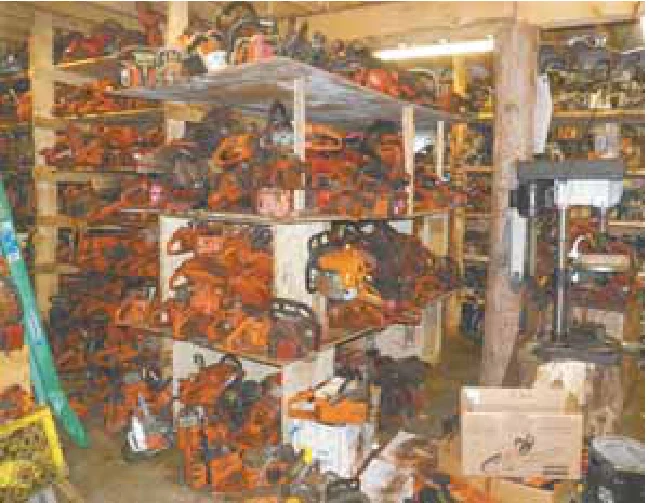
About 10 years ago Scott DesJardins bought an old tractor and “other contents” of the barn where it was stored. Unknown to him, the “other contents” was more than 200 used chainsaws. Since then, his life has never been the same.

“I repaired several of the saws and sold them for a nice profit,” DesJardins says.

“Guys heard about what I was doing and started bringing saws to me for repair. Pretty soon I became known as ‘that chainsaw guy’.” Flash forward to 2015 and DesJardins lives up to that name, and then some. He and his right hand man, Levi, run a thriving chainsaw sales and repair business in rural Stannard, Vermont.

“We have about 7,000 used chainsaws for parts, and several hundred used ones for sale,” DesJardins says. He and Levi ship about 300 orders of used parts a week and repair about 10 to 20 used saws. Each year they sell 500 to 600 saws.

“It seems like we just keep getting busier and busier since we put up a website and Facebook page,” DesJardins says. A quick glance at the website reveals that the business has parts for 30 different brands of chainsaws. Service and repair manuals are also available. DesJardins says his inventory covers about 90 percent of the chainsaws ever made. In the past 10 years DesJardins has filled more than 65,000 parts orders. Many of his saw parts come from inventory he’s purchased from repair shops that have gone out of business. Other parts come from salvage yards that send junked saws his way. He also sources parts from machines he’s traded in on new or other used models. He is also a dealer for new Dolmar saws. DesJardins’ website is easy to navigate by brand or part number. Closeup color photos show each part available, its price, identifying number, and the machines it fits. Viewers select what they need, proceed to the checkout where the amount they owe, including tax and shipping, is figured automatically.

“The website is thorough because it allows us to be efficient and maximize the quality and attention to fill each order,” DesJardins says, who prefers to work with customers by email. Contact: FARM SHOW Followup, Chain Sawr, Scott DesJardins, 20 Hall Road, Stannard, Vt. 05842 ([email protected]; www.chainsawr.com).

From the archive · Full text
Feature story

Fix Tires Fast Any Place

Featured source: Sandy Ochoa

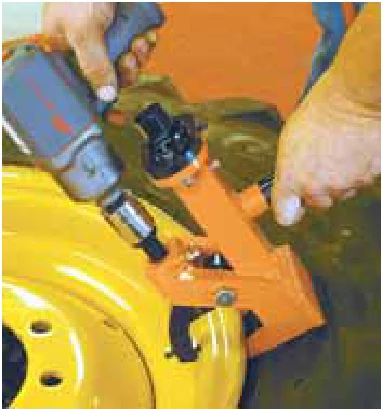
Pneu-Tek Tire Tools Ag Kit takes the tire shop to the field with everything you need to change out a tire. No more waiting hours for tire service or hauling wheels to town. All you need is an air impact wrench or air socket, and you’re in business.

“What got us going developing the Ag Kit was a guy doing a service call, spending 6 hrs. on what should have been a 15 min. job with the right equipment,” says Sandy Ochoa, Pneu-Tek Tire Tools.

“Increasingly, people living in rural areas have to drive 50 to 100 miles to get a tire fixed. With our equipment, they can do their own.” Ochoa made his name in the tire business developing the Cheetah Bead Seater. The Ag Kit consists of a Demounter, Bead Breaker, two Bead Keeper Tire-Locs, a Bead Wedge and several mounting bars. The Demounter works like a hand-held tire machine. It can be used on 10-in. ATV tires on up, including hard to handle 19.5 reverse hubs and grader tires. Tire-Locs work as bead keepers. They replace commonly used vice grips that often don’t hold under moving pressure. The Bead Wedge reduces bead damage and stretching while demounting tires with stiffer sidewalls or in cold conditions when rubber is less flexible. The Ag Kit sells for $1,545. The price is $2,123 with the addition of a Wheel Mounter PRW to demount the second bead on flotation tires and similar width or wider tires.

“One farmer came up to me at a farm show and said the Ag Kit was the best investment he ever made,” says Ochoa. A friend with a tire service told me that without the Ag Kit, he would have quit doing tires a long time ago.” Ochoa’s latest addition is a tool for changing small pneumatic tires.

“A guy said he had tried changing his lawn mower tire and couldn’t do it,” says Ochoa.

“He took it to the tire shop, and they couldn’t do it. Now we have a tool that will do it.” Now 77, he still likes the challenge of solving problems, such as with 19.5 tires for motor homes and 1-ton trucks. He notes that they are difficult to do with a tire machine, but his tools can handle them. They can also handle big floater tires.

“We’ll even buy a tire and bring it into our shop to work on,” he says.

“We’ve had floater tires the tire shops can’t do with 3 guys working on one. We’ve brought it in here, and I can do it by myself.” Contact: FARM SHOW Followup, Pneu-Tek Unlimited, 505 24th St., Alamogordo, New Mexico 88310 (ph 575 439-1561 or 575 430-9361; [email protected]; www.pneu-tek-unlimited.com).

From the archive · Full text
Feature story

Tractor Tire Mounting Made Easier

Featured source: Terry Regimbal

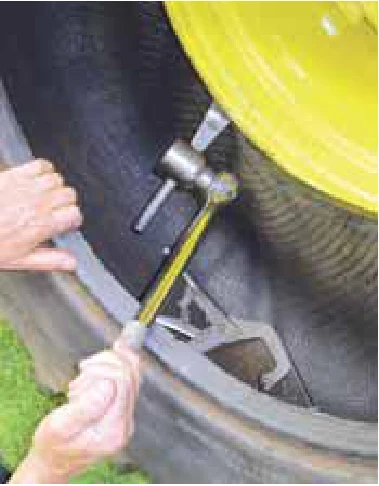
“I always thought there had to be an easier way to mount tractor tires, so I invented this tool to use on the inner bead when mounting them. It works fast and takes the hard work out of the job,” says Terry Regimbal, Huron, S. Dak. The patented tire mounting tool makes use of a 3/4-drive ratchet and a 6-in. stub bar. The stub bar is placed between the wheel rim and inner bead, and then the ratchet is used to pull the bead down into the wheel rim’s drop center. The process is repeated at intervals until the entire inner bead is seated on the wheel rim.

“It lets you pull the bead onto the rim easily no matter how tough the bead is. You’re bypassing the outer bead and rotating the stub bar down inside the tire. It works whether the tire is on the tractor or laying on the ground,” says Regimbal.

“I’m 69 years old and still changing tires every day, but if I didn’t have this tool I couldn’t do this job any more. It totally eliminates the need to use a long bar and hammer, which can damage the tire bead and also cause personal injury. Also, the ratchet produces way more power than a long bar. It works great for both super singles and super wide small dia. tires. It’s especially useful on tractors where the axle and hub protrudes out and there isn’t room for a bar and hammer.” The tool’s price had not been determined at press time. Contact: FARM SHOW Followup, Terry Regimbal, 21533 398th Ave., Huron, S. Dak. 57350 (ph 605 354-8014; www.tractortireinnerbeadtool.com).

From the archive · Full text
Feature story

Fix For Problem Case IH 3-Pt. Pins

Featured source: John Boersma

Case IH owners with electronic draft sensing for 3-pt hitches can fix failed pin problems fast. The Draft Sensing Pin Eliminator Kit is a low-cost fix for the frustrating problem, says John Boersma, Ag Electronics Repair.

“Faulty draft sensing pins send error codes to the on-board computer, halting operation of the 3-pt.,” explains Boersma.

“Each time the operator activates the reset cycle, the computer allows only a 5-second operation of the 3-pt. The OEM solution is replacing the high-cost sensing pins.” The problem occurs on Series 71, 72 and 92 Case IH tractors equipped with electronic draft sensing. Boersma’s solution is a 2-piece kit that plugs into the existing wiring harness between the sensors and the computer. It cancels the error codes and allows manual use of the 3-pt.

“The kit is simple to install,” says Boersma.

“Just turn off the tractor and disconnect the draft sensors on each side. Plug in the modified connectors to the tractor wiring harness.” Boersma reports that load sensing is lost. However, all other functions are unaffected, as are other tractor components. He suggests it as a quick fix until draft sensors can be replaced.

“The kit can be a permanent fix for farmers not requiring the draft sensing option,” says Boersma. The kit has been available from several distributors, but Boersma is now offering the kit direct at the wholesale price of $98.40. Contact: FARM SHOW Followup, Ag Electronics Repair, 36355 County 14 Blvd., Cannon Falls, Minn. 55009 (ph 507 263-5515; [email protected]).