Practical ideas from FARM SHOW MagazineSubscribe · Free issue · Send us your shop tip
Subscribe to FARM SHOW
Issues / Vol. 28, No. 2 (2004)

Vol. 28, No. 2 (2004)

Money-Saving Repairs & Maintenance Shortcuts · Printed section pp. 36–39

36 selected entries · Complete text of selected entries

This issue’s section includes reader tips and feature-length shop stories. Held items and editorial notices are not reproduced.

Archive text: prices, coupons, availability and contact details reflect the original publication, not current offers. Reader methods are not universal instructions; follow manufacturer guidance and proper safety practices.

Reader shop tips

From the archive · Full text
Reader shop tip 1 of 2

Floyd VerPloeg

Individual tip 1 of 2 from this reader’s published contribution.
Floyd VerPloeg, Lavilia, Iowa

“I take magnets out of old microwaves for use around the shop. There are two strong magnets in every microwave. Be sure to short circuit the capacitor before working on it because it can still store high voltage. After you take out the magnets, you can put the cabinet back together and you’ll have a nice mouse and waterproof storage cabinet.

From the archive · Full text
Reader shop tip 2 of 2

Floyd VerPloeg

Individual tip 2 of 2 from this reader’s published contribution.
Floyd VerPloeg, Lavilia, Iowa

“I use the magnets to pick up spilled nuts, bolts, nails and other parts. I just put the magnet in a plastic bag, pick up the spilled parts, and then turn the plastic bag inside out and the parts are neatly stored in the bag.”

From the archive · Full text
Reader shop tip

John Lindemer

John Lindemer, Ind.

Several years ago, a neighbor of John’s had problems with frozen pipes. The problem was compounded by the fact that the frozen pipes were made of pvc instead of copper so he couldn’t use his welder to thaw them out. He came up with another idea.

He took a windshield washer pump off one of his vehicles and got a 12-volt battery. Then he heated up a big bucket of hot salty water. He proceeded to feel a small piece of rubber tubing into the end of the frozen pipe, pumping in the warm water using the washer pump. It worked great. He was able to open up the pipe, no problem. He’s not sure if he needed the salt but figured that’s what you use to melt ice on steps so maybe it would help.

From the archive · Full text
Reader shop tip 1 of 2

James Weaver

Individual tip 1 of 2 from this reader’s published contribution.
James Weaver, Weaver’s Repair, 9507 Forest Ridge Rd., Shippensburg, Penn. 17257 (ph 717 477-9332)

Weaver’s Repair specializes in new and used parts for compact utility-sized tractors. He recently started selling brand new aftermarket cylinder heads for Kubota V1902 and V1702 engines.

“These engines are found in skid loaders and many other machines. We’re selling a bare head with no valves for just $595. That’s a huge savings over OEM prices and they come with a 6-month warranty. Dealers are welcome.”

From the archive · Full text
Reader shop tip 2 of 2

James Weaver

Individual tip 2 of 2 from this reader’s published contribution.
James Weaver, Weaver’s Repair, 9507 Forest Ridge Rd., Shippensburg, Penn. 17257 (ph 717 477-9332)

Weaver has another new product that he thinks is a real winner.

“Someone robbed the 3-pt. hitch off one of our compact tractors and we couldn’t justify spending $400 to $600 for a new OEM hitch kit. So we

Car wheels

make nifty

service ramps, says May.

came up with our own and it worked so well we’ve decided to offer it for sale. It’s a 7-piece kit that sells for just $189. It’ll fit Deere, Ford, Kubota, Yanmar, and many other compact tractors. A larger kit for bigger tractors is also available.”

From the archive · Full text
Reader shop tip

Robert Dixon

Robert Dixon, Oxford, N.C.

“I bought a used Allis Chalmers 8030 4-WD tractor from the early 1980’s. We got it cheap because it was smoking quite a bit, although it seemed to run okay. I figured I could rebuild it and come out okay.

“After we got it home we did everything under the sun short of rebuilding the engine, including replacement of the injectors and rebuilding the pump. It still smoked like a freight train and we just couldn’t figure out why.

“I finally talked to a very knowledgeable diesel mechanic at a local shop to see what he thought. He suggested we check to make sure the injectors were installed correctly. We went to a neighbor who also had an 8030 and discovered that his injectors were turned 180° from ours. Our injectors were still installed exactly as they were when we bought the tractor. But apparently they were wrong. It’s confusing because on the 7010 and 7020 Deeres, the injectors can be installed either way. But on the 8030 they can’t.

“Once we got the injectors turned around, the tractor ran like a top with no smoke. What’s more, it had 35 percent more horsepower. We got a heck of a tractor for a bargain price.”

From the archive · Full text
Reader shop tip

Pete Peters

Pete Peters, Osler, Sask.

“I have come up with a stand that makes it easy to pour oil or other substances easily. It consists of an old wheel rim with a piece of steel pipe welded onto it. The strap iron bracket on top is made to hold a 5-gal. bucket. You can control the pouring with one hand, which leaves the other hand free to steady the container you’re pouring into.”

From the archive · Full text
Reader shop tip

John Martens

John Martens, Sanford, Man.

“I made a portable air-tool oiler out of some angle-iron and an old steering wheel. The wheel can act as a base or a handle.

“Two pairs of 1/2-in. pipes are butt welded to the horizontal angle iron and support the combination of filter, regulator and oiler. The angle iron is extended to protect the equipment if the unit is upset.

“It makes working on cultivator sweeps so much easier when you have a portable air-tool unit.”

From the archive · Full text
Reader shop tip

Ken Scharabok

Ken Scharabok, Waverly, Tenn.

“I replaced the gauges on an old Ford backhoe with automobile gauges, saving the cost of expensive dealer replacements. I traced the pattern of the gauges on a piece of plexiglass and cut out the new holes. I spray painted it black and attached an old set of automobile gauges for amps, temperature and oil. It was pretty easy and they work just as well as the originals.”

From the archive · Full text
Reader shop tip

Lawson Products, Inc.

Lawson Products, Inc., 1666 E. Touhy Ave., Des Plaines, Ill. 60018 (ph 800 448- 8985; website

www.lawsonproducts.com): Lawson products has come up with a grinding disc that has three holes in it. When the disc is in motion the holes give you an accurate view of exactly what you are grinding. The company says it’s great for cleaning up welds and other jobs where it helps to see what you’re doing.

From the archive · Full text
Reader shop tip

Charles Gerdeman

Charles Gerdeman, Delphos, Ohio

“After buying a used Deere semi-mounted sickle mower, I discovered that all the universals at the gearbox end were made wrong. To solve the problem, I used a torch to heat up the joints and bent them at more of a 90-degree angle. As a result, the mower doesn’t vibrate as much so the bolts don’t loosen up. I haven’t broken a sicklebar since I made this modification.”

From the archive · Full text
Reader shop tip 1 of 3

Eric Webster

Individual tip 1 of 3 from this reader’s published contribution.
Eric Webster, Lansdowne, Ontario

“I made the frame of this hydraulic press out of old bulldozer parts. It runs off tractor hydraulics and has a ‘bed’ made out of a 6-in. wide, 3/4-in thick steel plate. The 6-in. dia. hydrau- lic cylinder is off an overhead loader and has a 3-ft. stroke so it can develop a tremendous amount of pressure, applying up to 45 tons when used with a newer tractor equipped with a 3,000-lb. pump. Using the tractor’s variable flow hydraulics I can slow the press down so much that I can barely see it move. Because of the slow speed it works great for straightening out objects. It can easily bend a 3/4-in. thick piece of metal at a right angle. We have different attachments to fit the shaft. One time we used this press to take a 90 degree bend out of a 4-ft. long hydraulic cylinder shaft.

From the archive · Full text
Reader shop tip 2 of 3

Eric Webster

Individual tip 2 of 3 from this reader’s published contribution.
Eric Webster, Lansdowne, Ontario

“I made this tire band saw out of two spare car tires. An electric motor belt-drives a pair of pulleys that turn a shaft that rotates the bottom tire. The saw blade runs from one tire to the other. My only expense was for the blade and the guide.

From the archive · Full text
Reader shop tip 3 of 3

Eric Webster

Individual tip 3 of 3 from this reader’s published contribution.
Eric Webster, Lansdowne, Ontario

“My homemade 48-in. belt sander is operated by a 1 hp electric motor. I use it to make furniture. The belt is 6 in. wide. A pair of screws at each end of the unit are used to adjust the belt and keep it running true.”

From the archive · Full text
Reader shop tip

Darryl Foreman

Darryl Foreman, Lafayette, La.

“I mount a roll of paper towels on hangers that attach to the frame on the underside of the trunk lid on my Buick Century car. That way I always have a towel handy to clean off my hands when taking stuff in or out of the trunk or after changing a flat tire, etc. The roll is always up out of the way instead of rolling around on the bottom of the trunk.

“I ran a rubber bunge cord through the roll and then attached a metal S hook to each end. The S hooks go through holes in the trunk lid.”

From the archive · Full text
Reader shop tip

Gears, Inc.

Gears, Inc., 221 Walkers Chapel Road, Adolphus, Ky. 42120 ph 270 622- 8393; fax 270 622- 8395; email: [email protected]; website: www.gearsinc.net)

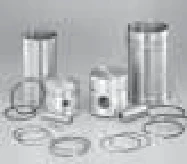
“We offer new and used parts for heavy equipment and diesel engines, both OEM and aftermarket. We carry filters and engine overhaul kits as well as new and used parts for excavators, shovels, loaders, dozers and more. We also offer new aftermarket parts for construction, logging, mining and agricultural equipment.

“We also handle engine rebuilds on all major brands, specializing in service on Case, Caterpillar, Cummins, Detroit, Ford, International and Deere engines. We offer a large inventory of new and used parts for all major brands as well.”

From the archive · Full text
Reader shop tip

Rogers Metal Works, Inc.

Rogers Metal Works, Inc., 114 Caldwell St., P.O. Box 221, Auburn, Ky. 42206 ph 270 542-7135; fax 270 542-4035; email

[email protected]: “We manufacture aftermarket replacement fingers for stripper headers that are compatible with all stripper headers on the market. They sell for only about half the price of OEM replacement fingers, and lab and field tests over the past three years have proven our fingers are equal in quality to OEM parts.

“Our replacement fingers are made from premium material, combined with the accuracy of computerized numerical control machining, so the fingers will last and fit perfectly every time. A 30-in. long section of fingers for AGCO (Massey Ferguson) headers sells for $25 plus S&H; a 24-in. section of fingers for Shelbourne Reynolds headers sells for $19 plus S&H.”

From the archive · Full text
Reader shop tip

Floyd VerPloeg

Floyd VerPloeg, Lovilia, Iowa

“In your last issue, a reader talked about greasing U-joints and tie rods until the grease comes out the seals. This is wrong on two counts. Number 1, grease does not wear out. Number 2, if you break the seals by forcing grease out through them you open up a way for dirt to get in, and too much grease can lock up the bearings inside so they will not roll, wearing them out faster. I spent 30 years as a machine repairman at Maytag Co.”

From the archive · Full text
Reader shop tip

Craig Richlen

Craig Richlen, Lockhart, Tex.

“I have successfully used “JB Weld” to do body work on my wife’s minivan and various other equipment. It’s an epoxy that can be used to hold any porous or non-porous surface. When I have a stripped screw that I want to fix permanently, I use JB Weld. Done right, it holds.”

From the archive · Full text
Reader shop tip

Gene Pearson

Gene Pearson, Wichita, Kan.

“I bought two 24 by 20-in. stainless steel coolers from a local buffet restaurant. I put the coolers together and topped them with a 1/4-in. steel plate and they make some of the best workbenches I’ve seen.”

Shop feature stories

From the archive · Full text
Feature story

Do-It-Yourself Car Ramps

Featured source:

It took Jacob May only about an hour to make a set of portable car ramps, using nothing but his cutting torch, welder and a bit of scrap metal.

May welded pieces of 1-in. thick flat steel tubing to a pair of 15-in. car wheels.

“The car ramps you can buy are made out of sheet metal, so they’re not that safe,” May explains.

“Because the rims have a lip on them, the vehicle’s tire fits inside the lip and you don’t have to worry about your vehicle rolling.”

May cut a curve into the flat tubing with a cutting torch and then welded them to the rims.“They were real simple to make and they work really well. You can easily move them around your shop as needed.”

Contact: FARM SHOW Followup, Jacob May, HC 53, Box 21, Interior, S. Dak. 57750 (ph 605 455-2425).

From the archive · Full text
Feature story

Push Mower Service Ramp

Featured source:

“I built a lawn mower service ramp. It’s made out of angle iron and has a hinge on one end to fold the legs up and lower the ramp. Once the mower is on you just lift the ramp up and lock the legs in place. This one is big enough for two push mowers.”

Contact: FARM SHOW Followup, Pete Peters, P.O. Box 166, Osler, Sask., Canada S0K 3A0 (ph 306 239-2045).

From the archive · Full text
Feature story

Go-Anywhere Vise Fits Pickup Hitch

Featured source:

Dan Jacobson, Pequot Lakes, Minn., doesn’t have a tailgate on back of his pickup. That’s because he often uses the pickup bed as a work table in the shop or field. One of his handiest tools is a vise mounted on a bracket that fits into the pickup’s 2-in. receiver hitch. The vise is positioned flush with the pickup bed.

The vise bolts to a base made by welding two pieces of heavy angle iron together.

“I can take the vise with me anywhere,” says Jacobson.

“The same idea could be used with the tailgate only you’d just have to extend the bracket farther back.”

Contact: FARM SHOW Followup, Dan Jacobson, Sr., 8913 Weaver Lake Drive, Pequot Lakes, Minn. 56472 (ph 218 543-6623).

From the archive · Full text
Feature story

“Sight Gauge Caps” For Case IH Quadtrac Tractors

Featured source:

Mark Richter, Endicott, Wash., contacted FARM SHOW recently to tell us about his new “sight gauge” caps for Case IH Quadtrac 4-WD tractors that ride on rubber tracks. The sight gauge cap consists of a small brass plug, or cap, with a glass window in it. It allows you to see the level of oil in the idler wheels and roller wheels on the track undercarriage. They make it easy to relube before expensive problems develop.

“The Quadtrac is a great tractor but there’s a problem with seal failure in the undercarriage rollers,” says Richter.

“If the oil level in the rollers goes down too far, the seal can fail, which results in ruined bearings. Yet you had no idea there was ever a problem because there’s no way to check the oil level, other than pulling out the plug on each roller to see if there’s oil in it. That’s a big job, because you have to get all 40 fill plugs to the high point and then remove the fill plug and check them. It’s a job that takes several hours. I’ve been a Quadtrac owner for four years and have had several roller seals fail resulting in costly repairs, anywhere from $100 to $1,000 or more. My solution lets you check the oil level at a glance.”

Richter says his sight gauge can be used on both the 9300 series and the STX series Quadtracs. They sell for $18 apiece plus S&H.

Contact: FARM SHOW Followup, Mark Richter, 21132 Endicott Rd., Endicott, Wash. 99125 (ph 509 397-6773; email: [email protected]).

From the archive · Full text
Feature story

Rotating Shop Hoist

Featured source:

“I built it to save my back,” says George “Bing” Ribble about an easy rotating shop hoist he uses to move heavy loads of a ton or more into and out of his shop.

The Hettick, Ill., farmer used two different sizes of heavy duty well casing for the 11-ft. high upright anchored just inside the door of his shop. The outer pipe is 8 in. in dia.; the pipe that rotates inside is 7 1/2 in. in dia.

The outer pipe is sunk in 3 ft. of concrete in the floor of the shop. The inner pipe mounts on a bearing hub out of a disk gang to make it rotate easily, with only a nudge. A race mounts on top of the bearing, helping to take weight off the inner well casing.

Three bearings at the top mount in brackets in a notch in the outer pipe to keep the inner pipe centered.

The lift arm consists of a 10-ft. I- beam. It’s fitted with a shop-built carrier that runs in five bearings out of an old corn picker head. A commercial chain hoist mounts in the carrier.

“The hoist rotates 220 degrees at the touch of a finger and works great for moving heavy objects, such as engines, into and out of my shop,” says Ribble.

“It’s a lot handier than using a front end loader or backhoe as we did before.”

Out-of-pocket expense was about $100. Contact: FARM SHOW Followup, George “Bing” Ribble, Rt. 2, Hettick, Ill. 62649 (ph 618 778-5752).

From the archive · Full text
Feature story

Case Crawler Modified To “Steer Like A Caterpillar”

Featured source:

“Like all Case 850 crawler tractors, mine was difficult to steer. I added a pair of steering levers that make it steer as easy as a Caterpillar,” says Robert Gibson, Canby, Oregon.

The tractor was originally equipped with a pair of steering levers with low, neutral, and high gear speeds for each track. It also had a hydraulic valve that allowed the operator to steer with a brake pedal. The problem was that there was too much difference between the high and low gear speeds for the tractor to steer easily, and there was no way to slip the clutch in and slowly adjust the speed of the tracks. As a result, when turning with a load, the tractor tended to spin in its tracks.

To solve the problem, Gibson tapped into the tractor’s existing pedal steer hydraulic valve and hooked up a pair of metal rods to a pair of homemade steering levers that he mounted in the control tower behind Case’s original steering levers. He removed the hydraulic lines from the pedal steering system and installed a linkage system that pushes the pistons in gradually. The rods allow the piston to move only about a half inch instead of all at once so Gibson can release the clutch a little at a time.

“If I want I can still steer using the original steering levers. I think the same idea would work on the Case 450 and 1150 models,” says Gibson.

Contact: FARM SHOW Followup, Robert Gibson, 29176 S. Barlow Rd., Canby, Oregon 97013 (ph 503 651-2800).

From the archive · Full text
Feature story

Toolbox Makes Combine Repair Handy

Featured source:

Peter Snyder of West Montrose, Ontario found a simple way to keep downtime to a minimum during harvest. He mounted a Rubbermaid box on the straw walker hood of his combine to serve as a large toolbox.

He calls the toolbox his “Rubbermaid Action Packer.”

“I got the idea from semi truck drivers who I’ve seen use similar boxes to carry salt, sand, dirty boots, or whatever,” Snyder says.

Before Snyder adapted the idea for his own needs, he says his combine cab floor was cluttered with parts and often when a breakdown occurred, the needed part was not handy or back at home.

“I carry along a jug each of engine oil and chain oil, and that got messy when it was in the cab,” he says.

“The parts I take along change, depending on the head I’m using. I carry corn head parts like gathering chains for corn season and grain head parts like guards and sections for the cutter bar in grain season. The box has a lid, so it keeps everything clean and dry.”

Contact: FARM SHOW Followup, Peter Snyder, 1044 Cox Creek Rd., West Montrose, Ontario, Canada N0B 2V0 (ph 519 664-2918; fax 519 664-2304; e-mail: [email protected]).

From the archive · Full text
Feature story

Cheap Way To Charge Older Diesel Tractors

Featured source:

“I came up with a way to charge older Deere diesel tractors for less than $100,” says Ken Armstrong, Point, Texas.

Armstrong came up with the idea for his Deere 730 diesel tractor. The tractor was equipped with a 24-volt system. He used a 24-volt generator and four 6-volt batteries to charge it.

“Unfortunately, I knocked out the regulator and couldn’t keep one working. I never knew why that happened. The original Deere had a 24-volt system, but part of it was 12-volt negative and part was 12-volt positive. I scrapped the whole thing and started over.”

An engineer told him he needed a 12-volt alternator equipped with a series parallel switch, but they were either too expensive or too small, so he made a parallel switch out of a 4-prong trailer connector and an old knife switch.

He made use of the tractor’s original 24-volt starter and a Ford auto alternator borrowed from an old Falcon 30 car and made a heavy duty series parallel switch for it. He also installed a Ford regulator.

“I removed the tractor’s generator and made a bracket that allows me to hang the alternator in place of the generator,” says Armstrong.

“I wired the ignition switch and batteries for 12 volts, when the switch is open. When I open the switch and plug in a 4-volt trailer connector, current runs from the alternator to the battery. Closing the switch isolates the alternator and puts it on a 24-volt system.

“I think the same idea would work on any 2-cyl. Deere diesel tractor, and maybe on other tractor brands, too.”

Contact: FARM SHOW Followup, Ken Armstrong, Box 340, Point, Texas 75472 (ph 903 598-2855).

From the archive · Full text
Feature story

Tire Sealant For ATV’s

Featured source:

“Our new tire sealant for ATV’s will seal up to a 1/2-in. puncture in the tread and 1/4-in. puncture in the sidewall,” says Glen Urguhart, Tucker Rocky Distributing, Ft. Worth, Texas.

Quad Boss is designed only for low speed (up to 40 mph) applications and is inserted into the tire through the valve stem. The product is a liquid filled with fibers which instantly form a rubbery compound when exposed to outside air. Unlike with many other tire sealants, the Quad Boss sealant is water soluble and can easily be removed from a tire if you ever have to patch it.

The seal is permanent and will last as long as the tire, says the company. It will stop bead leaks and pinhole leaks in wheel rims but it won’t seal “gashes.” The product stays liquid down to -33 degrees Fahrenheit.

To use the product, you remove the valve core using a supplied tool, then attach a clear hose to the bottle and squirt into the valve stem. Reinstall valve core and inflate to recommended pressure.

QuadBoss is available in 8, 16, and 32-oz. bottles as well as 1 and 5-gal. pails. An 8-oz. bottle sells for $5.99.

Contact: FARM SHOW Followup, Tucker Rocky Distributing, 4900 Alliance Gateway Freeway, Ft. Worth, Texas 76177 (ph 817 258-9229; email: [email protected]; website: www.quadboss.com).

From the archive · Full text
Feature story

Combine Axle Super Shop Hoist

Featured source:

When Glenn and Gordon Marshalek, Raymond, Nebraska, needed to pull the engine and transmission from a garbage truck, they realized their normal engine hoist might not be able to handle it.

“The truck had a 3406 Cat diesel with an Allison automatic transmission, and our little hoist wasn’t heavy enough to stand that much weight,” Glenn says.

He got to thinking about a home-built crane he’d seen once built out of a combine. He figured they could find more uses for a heavy-duty lift, so he located a Deere 45 self-pro-pelled combine and the brothers went to work.

They used just the front (drive) axle from the combine and added an A-frame tongue made from two 8-ft. lengths of 6-in. sq. steel tubing. They can move the two-wheeled cart around with a tractor. They used another 8-ft. length of the same square steel tubing for an upright, and a fourth 8-ft. length of tubing to make the boom. They mounted the riser at a 12-degree angle toward the tongue from perpendicular, so the hinge point is not directly over the axle. Then they mounted a 2-stage telescoping hydraulic lift cylinder salvaged from the dump bed of a 1963 Ford 2-ton grain truck between the riser and the boom.

“Angling the riser and cylinder back slightly from perpendicular transfers more lift to the combine axle and upper end of the boom, so there’s less weight on the tractor drawbar,” Marshalek says.

“We reinforced the boom tube where the cylinder mounts, using channel iron and angle iron salvaged from the scrap pile where I bought the square tubing,” he adds.

The boom reaches about 14 ft. high, and Marshalek figures it will pick up 10,000 lbs. or more, although he’s not had a chance to test it with that much weight yet.

Contact: FARM SHOW Followup, Glenn Marshalek, 1300 W. Little Salt Rd., Raymond, Neb. 68428 (ph 402 785-5195).

From the archive · Full text
Feature story

“No Worry” Hydraulic Hose Holder

Featured source:

“Hydraulic hoses on equipment used to get pulled, dragged, or caught on my tractor tires, but my new Hose Holder eliminates those problems,” says Thom Koch, Petersburg, Ohio.

“Some equipment already has built-in hose holders, but they don’t pivot and they aren’t spring-loaded so eventually the hoses will stretch and fray,” he says.

“The hose holder I invented has four parts: a base plate, spring, rod, and flange. The base plate can be cut to fit any piece of equipment.”

Contact: FARM SHOW Followup, Thomas Koch, 14744 Youngstown- Pittsburg Rd., Pittsburg, Ohio 44454 (ph 330 542-9160).

From the archive · Full text
Feature story

Do-It-Yourself Sandblaster

Featured source:

Why haul a sandblaster and motor to a work site when you can drive it there? Dunn-Right, Inc. lets you do just that with their Volks-Air air compressor that turns a VW engine into an air compressor that produces 58 cfm at up to 120 psi.

“Our kits are a real economical way to have a powerful sandblaster that would otherwise be hard to justify,” says Larry Dunn, owner of Dunn-Right.

“Restoration people like them because they are large enough to do big jobs.”

Some people do install the kit on a working VW so two of the car’s cylinders are used for air compression and two to power the car. Most people, however, mount a VW engine on a cart with a sand blaster next to it.

Installing the kit is straightforward, says Dunn, who provides detailed do-it-yourself instructions.

“You do need to be comfortable working with an engine, as you have to take it apart and swap out the cam shaft,” says Dunn.

“If you’re not skilled, there are plenty of mechanics experienced with air-cooled VW engines who can do the job.”

Conversion involves replacing the stock camshaft, installing compression boosters on the pumping pistons, replacing the outlet valve spring retainer, and modifying the intake manifolds. Air flanges are then bolted to the old exhaust port on the head. Spark plugs no longer in use are grounded, and the clutch housing from the old transaxle and mount starter is cut. If one is needed, a new engine and starter mounting housing costs $46.50. Dunn also sells a sandblaster for $319.50.

“The concept of buying a kit and doing the work is what a lot of people like. They end up with a unit worth more than what they have invested,” says Dunn.

“Avoid the rental of an equivalent compressor/sandblaster for a week, and you’ve paid for building one.”

The kit sells for $489.50 with airlines and air tank assembly, or $299.50 for just the engine kit. Fits any dual part type I or type III VW engine.

Complete setup is $5,695. Contact: FARM SHOW Followup, Larry Dunn, Dunn-Right, Inc., 3672 Abbeville Hwy, Anderson, S.C. 29624 (ph 864 296-9316; e-mail: [email protected]).

From the archive · Full text
Feature story

Mobile Welder Goes Anywhere

Featured source:

It’s nice to be able to take the welder to the job, and not always the job to the welder, according to Aron Wiebe of Niverville, Manitoba, who built his own mobile system, which he says works well and wasn’t hard to do.

What initially motivated him to take on this project was the humidity in the building where he had originally been storing his welding equipment.

The indoor humidity in that building was harming the performance of his electronic helmet and the generator’s electronics.

To alleviate the problem, he decided to set up his system so that he could leave it outside year-round.

His Dayton 25 K.W. generator and a Lincoln Ideal Arc 250 amp welder sit on a trailer that he made himself from scrap materials, and the equipment is housed inside a plywood shell. The enclosure has sliding doors at either end and shelves to hold the welding cables, electronic helmet, welding rods and miscellaneous.

Since the shell has no bottom, the air can circulate, and Wiebe’s humidity problems are solved. He can also move the rig to any location where welding needs to be done.

“I’m always building things, so it’s handy. The generator is driven by the power take-off of the tractor that’s pulling the trailer — in this case, my Allis Chalmers D14,” he says.

“I also have the option of parking the trailer alongside a shop and plugging it in to the electrical outlet.”

Contact: FARM SHOW Followup, Aron Wiebe, Box 296, Niverville, Manitoba, Canada R0A 1E0 (ph 204 434-6478).

From the archive · Full text
Feature story

Pump Gives Mowers A Shot Of Gas

Featured source:

Roger Wessels, Fairbury, Ill., came up with an idea that makes it easier to start the engine on his 1983 Allis Chalmers 720 riding mower.

He installed an off-the-shelf electric fuel pump and needle valve on the tractor. He tapped a hole in the intake manifold to install the valve. To start the tractor, he turns the ignition key as he opens the needle valve to pump a shot of fuel into the manifold.

“It solves a common problem with one and two-cylinder tractors, which are notorious for starting hard,” says Wessels.

“I think this idea works better than using starting fluid because once the tractor is equipped with the electric fuel pump, I don’t have to hassle with anything else.”

Wessels also permanently removed the riding mower’s hood in order to keep the machine running cooler.

“A cooler engine will always last longer,” he says.

Contact: FARM SHOW Followup, Roger Wessels, RFD 1, Fairbury, Ill. 61739 (ph 815 848-9377).

From the archive · Full text
Feature story

Concrete-Cutting Chain Saw

Featured source:

If you ever need to cut through concrete or rebar, you might be interested in this specially designed “wet cut” saw that can cut through concrete up to 12 in. thick, and even rebar.

“It makes cuts that no circular cut-off saw can make and is the perfect solution for foundation work and remodeling,” says Joe Taccogna, ICS Blount Inc., Portland, Oregon.

The saw is available in both gas and hydraulic-operated models. It has a water delivery system and in the bar a diamond chain that’s lubricated by the water. The water clears the concrete slurry away from the chain and also keeps the saw cool.

The diamond chain grinds through concrete with very small diamond teeth. There is no kickback.

“You’re grinding away at the concrete, not chipping at it,” notes Taccogna.

You can’t buy a diamond chain and put it on a wood-cutting chain saw, says Taccogna.

“A wood-cutting chain saw doesn’t have the water system you need, and the modified air filtration.”

Saw models are available with 12, 14, and 16-in. guidebars. Prices start at $1,495. Contact: FARM SHOW Followup, ICS, Blount Inc., 4909 SE International Way, Portland, Oregon 97222 (ph 800 321-1240; fax 503 653-4393; email: [email protected]; website: www.icsbestway.com).

From the archive · Full text
Feature story

Test Deere Planters At Home

Featured source:

“While setting up a new Deere planter with hydraulic drive we discovered that we could not turn the seed drive system in the shop because Deere has a shutoff built into the drive that will not allow it to work unless the planter is moving. That was a problem because we like to check all the drive trains, sprockets and shaft alignments before going back into the field,” says Chris Steidinger, Princeville, Ill.

“So we came up with a service kit that will hook up to the planter sensors and allow us to simulate ground speed, wheel and radar, as well as lowering the planter.

“The wheel speed simulator plugs right in place of the Deere sensor and simulates a speed of 5 mph. The hydraulic drive won’t activate unless it thinks the planter is moving.

“I also had a customer with a 24-row planter use the service kit when a wheel sen-sor broke on his planter,” says Steidinger.

“The sensor broke on a Friday and he couldn’t get a replacement until Monday. So he used the service kit to fool the planter into thinking he was moving, and planted 650 acres over the weekend until the new sensor was available.

“We’ve caught bent drive shafts, bad drive chain links, broken sprockets and other alignment problems without wasting time in the field,” says Steidinger.

“The kit sells for $275.”

Contact: FARM SHOW Followup, Chris Steidinger, 11725 W. Mendell Rd., Princeville, Ill. 61559 (ph 309 238-1061; email: [email protected]).