Practical ideas from FARM SHOW MagazineSubscribe · Free issue · Send us your shop tip
Subscribe to FARM SHOW
Issues / Vol. 43, No. 6 (2019)

Vol. 43, No. 6 (2019)

Money-Saving Repairs & Maintenance Shortcuts · Printed section pp. 32–35

34 selected entries · Complete text of selected entries

This issue’s section includes reader tips and feature-length shop stories. Held items and editorial notices are not reproduced.

Archive text: prices, coupons, availability and contact details reflect the original publication, not current offers. Reader methods are not universal instructions; follow manufacturer guidance and proper safety practices.

Reader shop tips

From the archive · Full text
Reader shop tip

Jim Pettis

Jim Pettis, Plainview, Minn.

“You need a good cutting fluid for drilling and tapping work, and I really like Amsoil compressor fluid. It was recommended to me by a friend. I’ve been an industrial mechanic for about 30 years, and this compressor fluid works as good as anything else I’ve used and costs a lot less. A one-quart container costs about the same as a few ounces of other fluid products.”

From the archive · Full text
Reader shop tip 1 of 2

Donald Chapman

Individual tip 1 of 2 from this reader’s published contribution.
Donald Chapman, Billings, Mo.

“I use inexpensive dog collars purchased from our local Dollar Store to hold cords, tow straps, and cargo ratchet wraps together for tidy storage. You can buy different size collars and adjust them to fit. The collars come with attached rings for dog tags which comes in handy for hanging items on a wall.

From the archive · Full text
Reader shop tip 2 of 2

Donald Chapman

Individual tip 2 of 2 from this reader’s published contribution.
Donald Chapman, Billings, Mo.

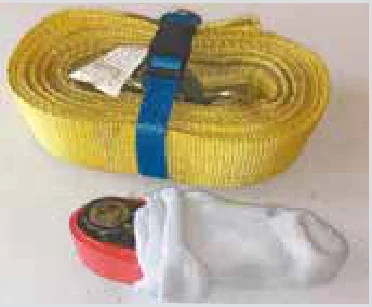
“Another solution for small strap storage is to place a wrapped-up strap inside an old sock. I store several straps together this way inside a duffel bag so all my straps are in one place when I need them.”

From the archive · Full text
Reader shop tip

Milton Webster

Milton Webster, Taylor, Texas

“I’m a small engine mechanic, and over the years have noted that the solenoid shift starters on riding mowers sometimes make a ‘clicking’ noise caused by a hot battery. Many people think the clicking noise means the solenoid is failing so they need to buy a new starter. However, I recently found a service bulletin published by John Deere that says otherwise.

“The company makes a relay harness (part number Am107421) that fits on the starter’s hot lead. It results in a hotter spark that boosts the amperage to the starter and causes the solenoid to kick in.

“Solenoid shift starters come standard on

many brands of ‘high end’ riding mowers, including the Deere STX38 riding mower. This relay can’t be used on riding mowers equipped with remote solenoids.”

From the archive · Full text
Reader shop tip

Import Tractor Parts

Import Tractor Parts, Cobden, Ontario

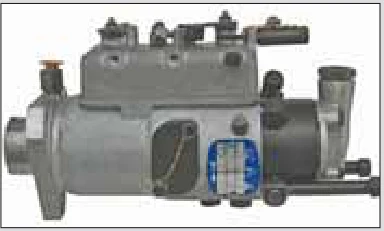
“We’d like to tell FARM SHOW readers that we now sell new CAV-style fuel injection pumps for IH “B” Series tractors such as the B414, 434, 276, 354, and 444 models. We also have new, original-type manual solenoid or lever-style starters for the IH B275 and B414, the Fordson Major and Dexta, and the Nuffield 10/60 and 4/60. We also carry many parts for the Leyland 154, including new pto gears and shafts.”

From the archive · Full text
Reader shop tip

Kevin Mclain

Kevin Mclain, Albany, Ore.

“I rigged up a little tool to put bleeder valve caps on. With no room to reach some fittings, this simple idea lets me put caps over valves. I also plan on using it to cap grease fittings wherever dirt is an issue. The cap is held in a fitting attached to the end of a pipe. Vacuum from a small hand vacuum pump holds it in place until you can put it on. That tray of old fittings I kept saving finally came in handy.”

From the archive · Full text
Reader shop tip

Roger W. Meihak

Roger W. Meihak, Forest Lake, Minn.

“I recently had a problem with a windshield wiper on my Buick and came up with a fix that your readers might be interested in. The wiper stopped working after making a noise for a while as it loosened. The aluminum serrations on the wiper post had worn away so I designed a replacement shim that would fit any wiper arm where the posts are tapered. The shim fills up the space on the worn arm. I used .004-in. thick stainless steel to make the shim, cutting it with tin snips. It worked so well I’m selling a set of two shims for $5 with instructions. Call me at 651 433-2600 or email [email protected]).”

From the archive · Full text
Reader shop tip

Steve Faber

Steve Faber, Tiffin, Ohio

“Many spray cans for paint, penetrating oil, and solvents have a dot marking the orientation of the pickup tube inside the can. The dot always seems to get washed away by the contents of the can so before I start using it, I scratch an inverted ‘V’ into the can to mark it permanently.”

From the archive · Full text
Reader shop tip

Charles Butch Beck

Charles Butch Beck, Hope, Ark.

“A 2-post car lift in our shop doubles as an adjustable height, heavy-duty work station for heavy farm tool and equipment repair. You can pick things up from floor level to any convenient working height, even above your head for working underneath something.”

From the archive · Full text
Reader shop tip

Len Mallas

Len Mallas, Fond du Lac, Wis.

“When I needed to repair the drain pump on our washing machine, I first had to get water out of the tub. I did it by attaching a wet vac to the drain hose on the machine. Worked great.”

From the archive · Full text
Reader shop tip

Mark Gillen

Mark Gillen, Sterling, Mich.

“We use a number of small electric fans around the farm that run day and night, sometimes for months at a time. The bushings get dry and sometimes the fan won’t restart after being shut off. To keep them running, I drip a few drops of 3-in-1 oil onto the front shaft and allow it to run into the bushing to relube it. I also lube the rear bushing if I can access it by removing the motor cover.”

From the archive · Full text
Reader shop tip

E.T. Greene

E.T. Greene, Harriman, Tenn.

“I have found that placing a flat blade shovel under a tractor tire and wheel, and then putting your foot on the handle for leverage, is useful when one person has to line up the bolt holes when remounting a wheel.”

From the archive · Full text
Reader shop tip 1 of 2

Wayne Hamel

Individual tip 1 of 2 from this reader’s published contribution.
Wayne Hamel, Hopwood, Penn.

“I added 3 chain links to my ratchet straps so the ratchet body does not ride on the corner of my trailer frame. Works great.

From the archive · Full text
Reader shop tip 2 of 2

Wayne Hamel

Individual tip 2 of 2 from this reader’s published contribution.
Wayne Hamel, Hopwood, Penn.

“I also added 4 LED lights to the outside edges of my trailer and 12 small bed lights to help see the trailer and where I’m backing up at night. It’s a big help.”

From the archive · Full text
Reader shop tip

Dan Flood

Dan Flood, Toledo, Ill.

“A cover board spring broke on my Landoll Tilloll due to dirt buildup. It was constantly swinging back and forth. I solved the problem by bolting chains to the back of the cover board and pulling the chain back around a frame member and bolting the chain to itself. That stopped the flopping and spring breakage.”

From the archive · Full text
Reader shop tip

Joe Potteiger

Joe Potteiger, South Coffeyville, Okla.

“When my New Holland RB450 round baler stopped tying bales consistently, a friendly mechanic suggested I check the fuses. I had been having a problem with the automatic tie mechanism. The arm wouldn’t cross the bale to get the twine started. The manual said to hit reset, which I did. Sometimes it would help for 10 bales or so, and other times it wouldn’t help at all. I would have to manually tie the bale and then reset it.

“I discovered that the spade-type automotive fuses were loose inside the weathertight box on the wiring harness. The intermittent problems occurred when they jiggled loose. I opened the box, pushed them back in, and then cut a piece of lightweight foam insulation and shoved it into the box. That holds the fuses in place and solved the problem.

“It has been a good baler otherwise. It is such a simple thing that a lot of technicians don’t even realize it could be a problem.”

From the archive · Full text
Reader shop tip

Andrew Horst

Andrew Horst, Excel-ER-ate LLC, 20918 Millers Church Rd., Hagerstown, Md. 21742 (ph 240 382-0459)

“Factory- installed receiver hitches on Chevrolet Silverado 2500 and 3500 pickups made from 2001 to 2010 have experienced failures while towing heavy loads. The hitches just aren’t strong enough,” says Horst.

He recently sent FARM SHOW photos of a new, heavy-duty hitch and mounting frame he began manufacturing to solve the problem. It’s built from 1/4-in. thick steel and designed to bolt to the pickup’s original mounting holes.

“It’s built heavy and designed to last,” says Horst.

“I came up with the idea because a lot of farmers were coming to me with bent hitch frames on their Silverados. The problem is getting worse with bigger and heavier trailers.

“The factory mounting frame on these pickup models consists of a round tube made from light gauge steel. One problem is the receiver hitch hangs from the bottom of the tube. When the weight of the trailer pulls the hitch down it pulls the bumper down with it, and the customer ends up having to straighten the bumper or replace it.”

Horst’s replacement hitch design keeps the mounting frame separate from the bumper. Also, the hitch is welded into the middle of the mounting frame so there’s less leverage from the load to pull it down.

“The hitch is at the same height as before, but the mounting frame is 2 in. lower,” he says.

From the archive · Full text
Reader shop tip

Ronnell Ott

Ronnell Ott, Manhattan, Kan.

“By mounting the stator from a discarded permanent magnet motor onto a wooden plate, I can use it to store small magnetic parts such as drill bits or even sewing pins and needles. I remove the stators from permanent magnet motors found in old computer printers, VCR’s, electric toothbrushes and other appliances.

“I think this idea would also work with bigger stators removed from permanent magnet blower motors in old cars.”

From the archive · Full text
Reader shop tip

Thomas Kane

Thomas Kane, 5131 Sand Road S.E., Iowa City, Iowa 52240 ph 319 358-8107

“I came up with a handy tape measure clip that lets you more securely fasten a standard tape measure onto any pants belt. It’s made from a no. 8 wire that’s bent where the belt goes through it. The spring-loaded clip on the tape measure fastens to the bottom of the wire.

“I sold about 15,000 of these carriers to the L.S. Starrett company, which makes tape measures, and have leftovers in my garage which I’m willing to sell for 50 cents apiece plus 50 cents S&H.”

From the archive · Full text
Reader shop tip

Cal Miner

Cal Miner, Willmar, Minn.

“When you’re drilling or milling metal, shavings can fly everywhere and make a big mess. To catch the shavings that come off my drill press, I place a small magnet from an old car speaker on the table around the drill bit. The magnet catches 99 percent of the shavings. Once the magnet is full I just wipe off the shavings to dispose of them.

“The photo shows a compound vise that I mounted on the table, which allows me to use the drill press as a milling machine.”

From the archive · Full text
Reader shop tip

Red Rock Mfg.

Red Rock Mfg., Pella, Iowa; ph 641 780-1748; www.redrockmfg.com

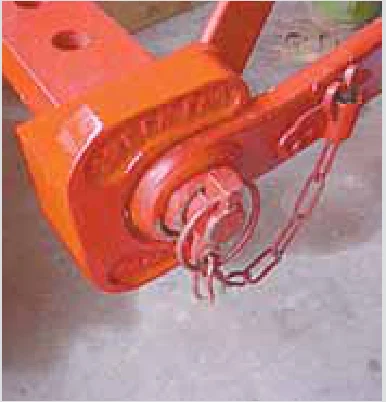
Their cast iron drawbar lock is a one-piece device that stops the 3-pt. drawbar from turning on Ford 9N, 8N, and 2N tractors, as well as some smaller Ferguson tractors. No bolts or pins are required for installation.

“The drawbar on these tractors is mounted between the 3-pt.’s lower lift arms and fitted with a series of holes. It tends to flop around, which is a problem if you want to use a ball hitch on it in order to move small trailers or boats,” says owner Phil Smith.

“Our cast iron drawbar lock slides over one end of the lift arm, and uses a rectangular hole to lock the drawbar in place.”

Sells for $70 including S&H.

From the archive · Full text
Reader shop tip

SpynTec Industries

SpynTec Industries, LLC, North Lima, Ohio ph 234 759-3105; www.spyntec. com

Their fuel-saving, free-spinning hub conversion kits are designed to solve problems associated with the wheel bearings on many Ford, Dodge, and Jeep vehicles.

The kits include forged hubs with ABS tone rings gear-cut into the hub; forged spindles with an integral ABS sensor mount; all bearings, races, seals, and spindle nuts; premium locking hubs, wheel studs, and 35-spline stub shafts. The company says the converted bearing hub assemblies are far less prone to breaking, reduce drivetrain wear, and result in 2 to 3 mpg better fuel efficiency.

The company recently introduced a new line of fixed spindle conversion kits for the 1999-2008 Ford F-250 and F-350 Super Duty pickups.

Shop feature stories

From the archive · Full text
Feature story

“Fish Hooks” Help Tighten Trailer’s Loose Floor Chain

Featured source: Ted Lacey

The floor chain on Ted Lacey’s 30-ft., self-loading round bale trailer was loose, and he was worried that it might jump off the frame. He had already taken out all the slack he could by using the trailer’s adjustable tail idler. His solution was to make a pair of inexpensive “fish hooks” that attach to an ordinary chain hoist.

He used 1/2-in. square steel to make the 8-in. long hooks, and welded an eyelet onto one end that attaches to a hook on the chain hoist. He also ground a notch into the opposite end of each hook so that it would fit over any of the chain’s rollers.

“After turning the trailer’s jam nuts out and pulling the idlers all the way back in, I use the chain hoist to pull the chains tight so I have the extra jam nut capacity for later use,” says Lacey.

“Most of the time I can remove a chain link and then use the chain hoist to pull the floor chain tight again. But I can also install a connector link, which will make it easier to remove the slack the next time the chain gets loose. It’s important to weld the eyelet vertically onto the fish hook instead of horizontally, which could cause the chain to lift too high above the trailer frame.”

Contact: FARM SHOW Followup, Ted Lacey, 24064 478th Ave., Trent, S. Dak. 57065 (ph 605 321-9226; [email protected]).

From the archive · Full text
Feature story

“Off-Grid” Propane-Powered Engine Block Heater

Featured source: Cory Miedema

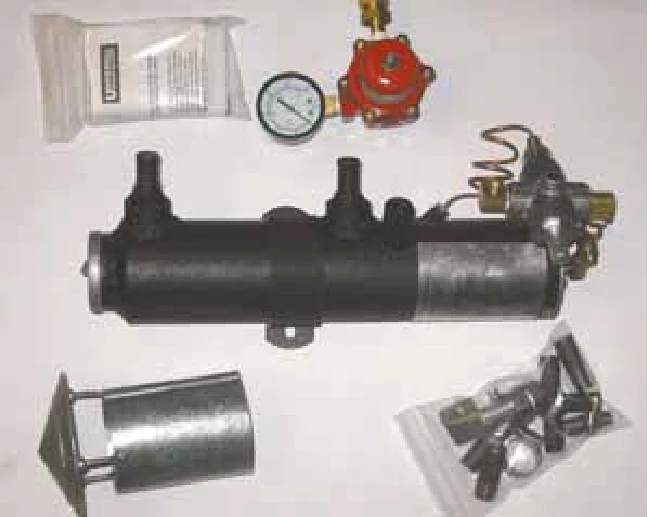
If you have an engine you need to keep running even in the coldest temps and it’s a long way from electric power, Cory Miedema has a solution. Universal Engine Heater Company has been heating off-grid, engine blocks with propane for nearly 70 years. The company also sells traditional electric-powered engine block heaters.

“My grandfather patented the idea in the 1950’s and started this company,” says Miedema.

“We have 2 models. The PG-25-RSV puts out 10,500 btu’s for engine blocks with less than 15 gal. of coolant. The PG-55-RSV is a 28,000-btu heater for systems with more than 15 gal.”

Miedema stresses that all the components of the company’s engine heaters are made in the U.S. Installation of the propane models is simple and straightforward. The heater should be installed close to and well below the point where the heated water will enter the motor. The cold water intake on the heater can draw from the motor coolant drain plug or the radiator petcock.

“All our parts are replaceable, but we have had very few replacement parts requested over the years,” says Miedema.

“They are good investments. Once you make the initial investment, it is good for a lifetime.”

The PG-25-RSV is available from the company for $1,146.80 and the PG-55-RSV for $1,211.66. Both can be converted to natural gas. An optional 12-volt igniter is also available.

“We’ve had them used on tractors, log skidders, loaders, and even stock tanks. Any place where electricity is not available,” says Miedema.

Contact: FARM SHOW Followup, Universal Engine Heater Company, P.O. Box 250, Nine Mile Falls, Wash. 99026 (ph 509 276-5923; toll free 888 566-1220; www.engineblockheater.net).

From the archive · Full text
Feature story

Chainsaw Chain Sharpening Tip: Make Marks On Vise

Featured source: Glenn Alpert

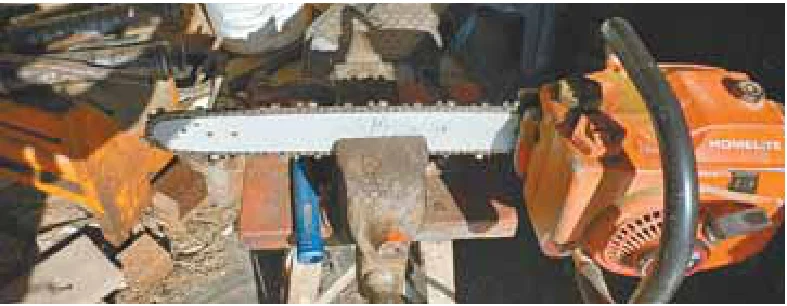
Sharpening chainsaw chains is faster and more accurate for Glenn Alpert since he added lines on his vise.

“I used a Dremel tool to mark the right angle,” he explains.

“I put the bar in the vise and run the file 3 or 4 times on each tooth and then move the chain ahead. I can sharpen a chain in less than 5 minutes.”

The Paola, Kan., man has used the method often recently, while cutting Osage orange trees.

“I have to sharpen the chain about every 2 tanks of gas. I cut 10 cords of hedge wood and sharpened the saw every time without taking the chain off,” he says.

“The vise is mounted on an old burr mill stand and easy to take to the field.”

Contact: FARM SHOW Followup, Glenn Alpert, 15163 W. 323rd St., Paola, Kan. 66071 (ph 360 241-3622; [email protected]).

From the archive · Full text
Feature story

Hydraulics Service Company Takes On Any Size Repair Job

Featured source: Cody Conway

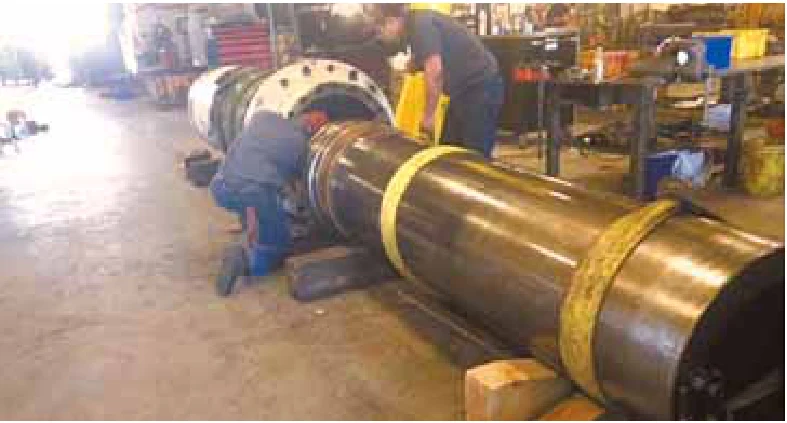
From the smallest hydraulic cylinders to giant 25,000-lb. behemoths, DNC Hydraulics technicians will take on any repair job.

The Rawson, Ohio, company started out doing hydraulic repair for local farmers and garbage haulers in 1991. While the focus is still on agriculture, the company does work for a wide range of industries, from steel mills to crane rental to injection molding plants.

“My dad Dave started out fixing telescoping cylinders, gear pumps and gear motors,” says Cody Conway, DNC Hydraulics.

“By 2008 we had 5 full-time employees. We now have 40 full-time employees and can rebuild your cylinder and hydrostats to better than OEM quality.”

DNC does cylinder repair with a 1-year warranty on completely rebuilt cylinders. The addition of a hydraulic pump repair shop added hydrostatic pump, motor and valve repair. They, too, get a year’s warranty when rebuilt. This summer, DNC added Eaton hose lines for immediate repair or replacement.

DNC services all pump makes and models. Conway promises an exact quote on price and time frame for delivery within 3 days.

DNC also provides a mobile repair service for customers within a 200-mile radius and is adding on-site servicing of equipment.

The machine shop does all types of cylinder repair, recently shipping a 15,000-lb. cylinder to a customer in Louisiana. Conway says the largest cylinder repaired to date was 27,000 lbs.

“We saw guys paying top dollar for things that we can do for half the cost, and we provide a warranty when rebuilding,” says Conway.

Conway gives his dad full credit for reinvesting in the business and the people. He says it is the people who are responsible for building the business.

“If you have a problem, give us a call,” says Conway.

“All we need to know is the reason for failure, whether leaking, heating up, or simply weak. Having the model and serial number is helpful, too.”

Conway notes that it can also help if the customer sends photos via email or text.

“Our average turnaround is 1 to 2 weeks, but hose assemblies are usually the next day, if not the same day,” he says.

“Gear pump units get cycled quickly, usually with a 1 to 2-day turn around.”

Contact: FARM SHOW Followup, DNC Hydraulics, 5219 Co. Rd. 313, Rawson, Ohio 45881 (ph 419 963-2800; [email protected]; www.dnchydraulics.com).

From the archive · Full text
Feature story

Manuals To Buy And Sell

Featured source: Mike Becker

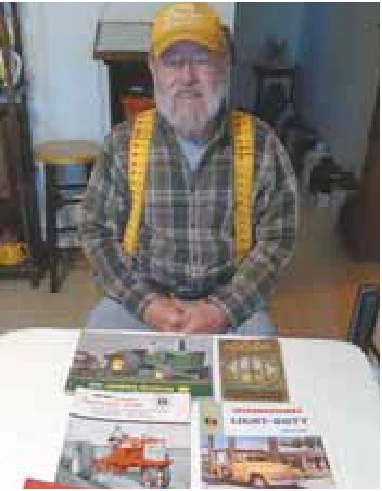
Mike Becker has no problem parting with his collection of manuals, brochures and ag equipment memorabilia. He says it helps that he is a “paper farmer”, not a collector.

“I collect other things like cream separators and Wisconsin-made tools, but the manuals, sales brochures and related items are what I sell to other collectors,” explains Becker.

Becker got his start in the 1990’s when he picked up a box of manuals. After 25 years of buying and selling, he has customers in Europe, Canada and around the U.S. One customer from Denmark is traveling to the U.S. this summer and plans to stop by.

Becker has no shortage of customers. The increasingly hard part is finding material to sell.

Small farm equipment dealerships were once a good source. He would go to auctions when they sold out. However, there are fewer and fewer left to sell out. The same holds true for older farmers who once picked up the literature or got a manual when they bought some piece of equipment.

“There is simply less to be found,” he says.

“There are fewer and fewer old places that haven’t been cleaned out. All too often when they are cleared out, a dumpster is brought in and everything goes. People don’t put a value on old paper.”

Becker recalls a John Deere pocket ledger that he bought and later sold. Printed in the 1880’s, it had been used by the farmer who owned it.

“I find some things in mint condition; perhaps they were stuck in a drawer and forgotten,” he says.

“However, most farmers didn’t have much money, and they used everything they had. Most of the brochures and manuals I come across have been well-read and used.”

Although some of his items, especially brochures, go to collectors, Becker estimates about 75 percent goes to people who own the actual equipment. Many of them want the manual to help them maintain or perhaps restore the equipment. That can include toy replicas of the equipment.

“I have some customers who are either building scale model replicas or customizing existing toy models of the equipment,” says Becker.

“They want the manuals for the specifications and the look they want to get. They may take a toy replica of a gas-powered tractor and have it customized as an LP version.”

One source of customers and supplies of materials is antique equipment shows. He recently attended the Red Power Roundup.

“I talked to folks from the Netherlands, Austria, England, New Zealand and more,” says Becker.

“They are usually looking for brochures and memorabilia. I had a couple of customers for manuals from Canada stop by, as well as a few folks with manuals and such to sell.”

Becker encourages FARM SHOW readers with unwanted farm equipment literature to contact him. He is always in the market.

“I have to keep buying stuff so I can keep selling it,” he says.

“I’m always looking for nice clean originals, whether for trucks, tractors or whatever.”

Contact: FARM SHOW Followup, Mike Becker, 19438 County Hwy. X, Chippewa Falls, Wis. 54729 (ph 715 726-1942).

From the archive · Full text
Feature story

Huge Parts Supplier For Antique Farmalls, Cubs

Featured source: Steve Beals

“International Harvester built more than 128 letter series Farmall tractor models from 1924 until 1985, and we carry parts for just about every one of them,” says Steve Beals, who runs Farmallparts.com.

“We have the largest Farmall parts collection in the U.S. west of the Mississippi.”

He started nearly 30 years ago and now has nearly 20 employees in two Oregon locations. Why isn’t he located in the center of the country, where there are many more farm tractors?

“With the internet, it doesn’t make a difference if you’re on Key West or the West Coast. People anywhere in the world can scroll through our online catalog or call us, find what they want, and order it.”

In the past 15 years Farmallparts.com has processed more than 50,000 orders, sending parts to all 50 states and at least 8 foreign countries.

Over the years Beals has purchased the complete inventory of several International Harvester dealers from throughout the country.

“We have engine, transmission, drive train, carburetor, radiator and electrical parts for virtually every Farmall and Cub tractor ever made,” Beals says.

“We have seats, hoods, manuals, decals, stickers, hitch and implement components, gauges, instruments and cables. If it’s on a Farmall or Cub tractor, it might be in our inventory,” Beals adds.

The company rebuilds carburetors and magnetos and makes about half the parts it sells. They build all wiring harnesses for any year of any IH product built before 1985. They also have many molds to make rubber parts and have a deal with the original supplier of International Harvester paint, so every drop they sell is restoration quality original color.

Beals maintains that one of the reasons for the success of the business is the excellent photography of every part shown.

“My first occupation was a commercial photographer, so when I started this I personally photographed every part we sold. There’s a staff doing that now, but the quality standard was set years ago.

“If the part is presented clearly so people can zoom in and see it close up, that’s a big advantage.”

Contact: FARM SHOW Followup, Farmall Parts, 2704 SE Steele St., Portland, Ore. (ph 888 288-0550; www.farmallparts.com).

From the archive · Full text
Feature story

Chains, Sprockets, Tensioners And Much, Much More

Featured source: Atlee Miller

Atlee Miller says if you’re looking for parts for pneumatic or mechanical systems, he likely has what you need. With more than 10,000 lines of parts on hand (30,000 in all), he may be right. That’s especially true of chains, sprockets and tensioners.

“We ship parts everywhere,” says Miller, Hershey Machine.

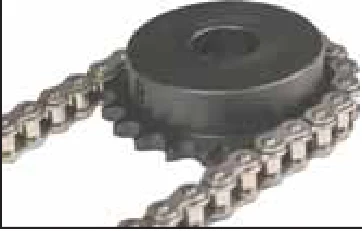
“We specialize in roller chain and double pitch chain. We have right and left swing tensioners and both spring-loaded and rigid designs. If you want offset, we can fabricate what you need.”

In addition to parts, Hershey Machine offers special services, such as revamping old gearboxes and re-Babbiting old Babbitt bearings.

“We specialize in doing the hard stuff that often stops a guy making repairs or a restoration,” says Miller.

Identifying the part needed is as simple as a phone call.

“About 90 percent of roller chains have a number on them. If you tell us the number and the number of teeth on the sprocket with the bore of the sprocket, we can find a replacement.”

When it comes to race bearings and other items, simply providing measurements is often enough. Faxing in a photo or drawing can help.

Miller reports the company will be issuing a catalog in 2020. In the meantime, call and ask.

Contact: FARM SHOW Followup, Hershey Machine, 5502 State Route 557, Millersburg, Ohio 44654 (ph 330 674-2972).

From the archive · Full text
Feature story

Sealed Bearing Service Fixes Deere Planters

Featured source: Jeff Steinke

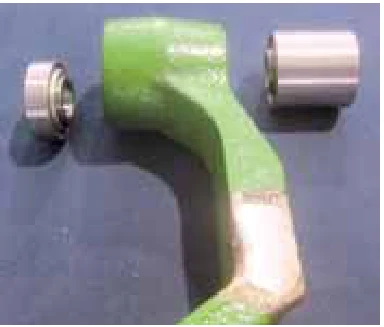
“Our new sealed bearing rebuild service for Deere planters improves the performance of old and worn parallel linkage arms. We replace the original bushings with sealed bearings that never need grease. The rebuilt arms work smooth and stay tight,” says Jeff Steinke, Coyote Machining, Hamlet, Neb.

The rebuild service was introduced at the recent Ohio Farm Science Review show, but Steinke came up with the idea about 7 years ago and has been rebuilding worn arms for local farmers ever since. Farmers send him their arms, and he builds up the worn spots and installs new sealed bearings. He works only on Deere 1720 and newer planters.

Steinke says worn parallel linkage arms and bushings are becoming more of a problem with today’s high-speed planters.

“The faster you go the harder it is to keep the planter in the ground, especially in hard soil and on no-till ground. As a result most planters are applying hydraulic or air down pressure, which makes the parallel linkage arms wear out faster.”

He says some farmers who had their parallel linkage arms rebuilt 7 years ago, have never had to replace the bearings.

“Even if the bearings would fail, there won’t be any wear on the arms,” says Steinke.

He says customers can also make an exchange with repaired parallel linkage arms he already has in stock.

The rebuild costs $70 per arm plus shipping.

“We encourage shipping from Fastenal stores to save money,” says Steinke.

“Bring the arms to your local Fastenal store and they ship them to me. I rebuild the arms and send them back to the store.”

Contact: FARM SHOW Followup, Coyote Machining, 72796 Ave. 353, Hamlet, Neb. 69040 (ph 308 883-0459; [email protected]; www.coyotemachining.com).

From the archive · Full text
Feature story

1555 Oliver Repowered With Chevy 350

Featured source: Bill Knutson

Slipping a Chevy 350 into Bill Knutson’s 1555 Oliver required nothing more than a little work with a grinder. When he first set it into position, it didn’t quite line up with the transmission input shaft.

“I had to grind out a bit of the frame, and it dropped just low enough to line up,” says Knutson.

“All I needed was a connecting joint for the 2 shafts.”

Knutson had the joint fabricated at Driveline Service in Sioux Falls, S. Dak. The firm specializes in driveshafts and parts.

The only thing that didn’t fit once the grinding was done was the 350’s fan. Before lowering the engine, the fan fit the Oliver’s shroud without a problem.

“Sturdevant’s Auto Parts said they had an electric fan that would fit the shroud and cool the engine as well as the original fan,” says Knutson.

“It can be set to either push or pull air through the radiator.”

Knutson added 4-in. black stacks to either side and mounted 3-in. mufflers inside. He compares the sound produced to a glass-pack muffler.

“The Oliver is fun to drive,” says Knutson.

“I’ve had it at speeds up to 37 mph, and it handled well. The front end was nice and tight.”

Knutson got the idea of repowering the Oliver when he first picked it up to add to his collection. He bought it because it was a “Loader Special”, built in Canada. Loader Specials required a pump on the pto to supply hydraulics. It had a separate pump on the engine for power steering.

“The Chevy 350 had been sitting unused since my son quit racing many years ago,” says Knutson.

“I did some measurements, and it looked like it would fit.”

The only problem Knutson has had with the repowered Oliver is a tendency to overheat. Knutson’s son has suggested that the 350 may have a high output water pump.

“That would push the water through so fast that it wouldn’t have a chance to cool the engine,” says Knutson, who is exploring all options.

“It certainly isn’t the radiator. It’s designed to cool a 6-cylinder engine pulling a plow all day.”

Contact: FARM SHOW Followup, Bill Knutson, 29897 Frog Creek Rd., Centerville, S. Dak. 57014 (ph 605 563-2350; [email protected]).

From the archive · Full text
Feature story

“Pop-Up” Workbench

Featured source: Affinity Tool Works

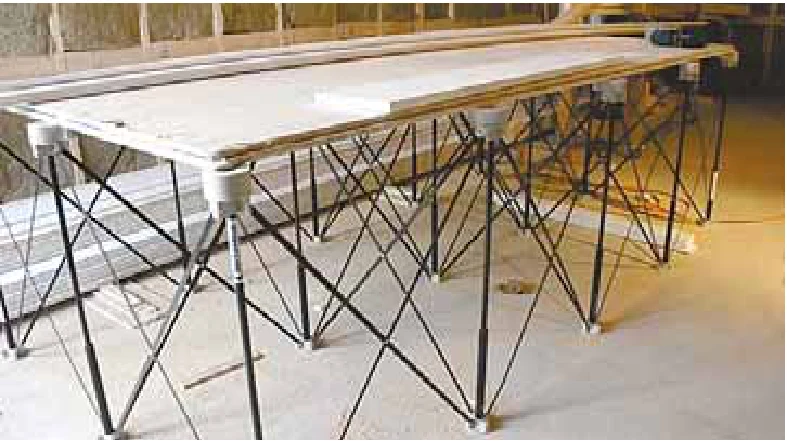
This portable work table quickly folds out like a pop-up tent to provide a 4 by 8-ft. work surface.

The Centipede workbench folds down into a compact, lightweight unit that fits into a handy storage bag. It weighs less than 20 lbs. but can support up to 3,000 lbs. when you put a sheet of plywood over the top.

Plastic tips at the top of each strut keep your saw’s blade from accidentally cutting into a steel strut.

The 4 by 8-ft. workbench sells for $159 at Amazon.com plus S&H. A smaller 4 by 4-ft. unit that supports up to 1,500 lbs. sells for $129.95. Both models come with quick clamps and “X-Cups” that hold dimension lumber as well as a clamp-on straight edge saw guide and storage bag.

Contact: FARM SHOW Followup, Affinity Tool Works, LLC, 1161 Rankin Dr., Troy, Mich. 48083 (ph 866 588-0395; [email protected]; www.boracentipede.com).