From the archive · Full text
Reader shop tip
Gary Swensen
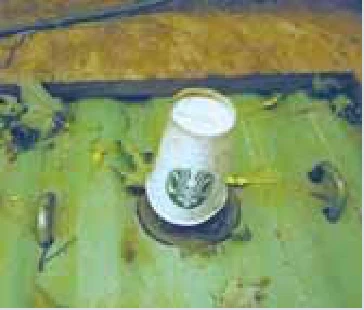
“When I use my gooseneck trailer, I like to put some grease on the ball. When it’s not in use the grease collects dirt and leaves. This little coffee cup solves the problem.”
Money-Saving Repairs & Maintenance Shortcuts · Printed section pp. 32–35
34 selected entries · Complete text of selected entries
This issue’s section includes reader tips and feature-length shop stories. Held items and editorial notices are not reproduced.
“When I use my gooseneck trailer, I like to put some grease on the ball. When it’s not in use the grease collects dirt and leaves. This little coffee cup solves the problem.”
“The brass pickup tube froze and cracked on an older Briggs & Stratton engine – the kind that has a metal gas tank with the carburetor on top. In the winter, water got into the gas and froze, cracking the tube. I cut the brass tube off above the crack and slid on a chainsaw gasoline fuel line and filter. Worked good on that rusty tank.”
“I used a Time-Sert thread repair tool to fix a stripped spark plug hole (available at amazon.com). It’s a great product, made to last. Works lots better than cheap heli-coil inserts.
“One simple idea I use in my shop is to put paper towel dispensers everywhere – in machine sheds, shop, barn and garage. Then I buy rolls of shop towels at Costco to put in the holders. Handy to have a towel whenever you need one.
“One repair we made that really saved money was when the tine bars on our old New Holland Super Hayliner baler wore out. New ones would have been $200 apiece. In 2 hrs. on a lathe we made ‘plugs’ and welded them in as good as new.”
Marshall puts “free” used vegetable oil – the stuff you can get from restaurant deep fat fryers - on equipment chains. Does a nice job because it sticks well to the chains and gears.”
“My 2014 Deere 50-75 tractor doesn’t like 15-40-weight oil in winter. It starts hard, the oil light comes on, and it won’t heat up to working temperature. I switched to 10-30 oil, which the factory okays. Problem solved.
“The insulation on electric wiring in many cars and machines is soy-based rather than petroleum-based, causing mice and rats to chew on the wiring. I’ve found I can stop the problem by tucking used Bounce dryer sheets in vents, under hoods by firewalls, etc. The idea also prevents bees from making nests. Just change them out every month or so.”
“My 1984 Ford F-250 diesel 4-WD with a Besler Bale Bed on it has to start up no matter how cold it is because I use it to feed cows. The glow plug controller failed intermittently at first, then failed completely. Troubleshooting revealed that all the glow plugs were still functional. I went online and found a YouTube tutorial for bypassing the controller and using a push-button switch to manually activate the glow plug relay to power the glow plugs. I found a push button 2-pole switch in my shop, drilled a hole in the trim panel under the steering wheel, then installed the switch. I ran the wiring as shown in the tutorial, hooked it up, and now the starting procedure is to turn the ignition switch on, mash the button for 7 seconds, and then start. Works like a champ and saved the replacement cost of the controller. Total time to install was 30 min. No need to remove the old controller.”
“One handy thing I did in my barn was to bolt a 4 by 4 to the concrete floor that I can shove against when mounting a front loader bucket on my Ford 1310 tractor. Very handy.
“Our oven door handle was falling off. The glass door made it difficult to replace. I used JB Weld to seal the handle to the glass, and after 24 years, it’s still holding perfectly.”
“I’ve extended the life of many bearings and bushings by drilling a 1/16-in. dia. hole through the seal and using a needle to inject them with grease. I seal the hole with a dab of silicone to form a gasket, if needed.”
“The control gate on my fertilizer speader rusted shut. I oiled it with WD-40 when putting it into storage but it was frozen shut the next time we went to use it. Then I read in FARM SHOW about the penetration oil made from a 50-50 mix of acetone and transmission fluid. Sprayed that on twice and it freed right up.”
“Hydraulic lines and filters were exposed underneath my 2012 Kubota L3650 HST tractor. To keep lines from getting damaged, I installed a skid plate, boxing in the hydraulic lines.”
“I’ve got a ‘global attachment’ quick-tach Deere front-end loader. To release attachments, you pull out the handle and turn. The problem I had was that if I hit a bump while the pins were out, it would snap back in again. So I would have to get off the tractor and pull it out again. I solved the problem by building up the rounded edge of the pin with weld and then grinding it smooth. The keyhole that the wider part of the pin turns into was punched in, making it slightly worn so I built that up as well. Now it takes a heck of a bump to pop it back in.”
“As my eyes get worse, I find it extremely hard to see the tire pressure numbers on the side of tires. I have to get out a magnifying glass. So now, I take a silver-colored Sharpie permanent marker and write the numbers large enough to read on the tire sidewall.”
“When repairing a pump on a washing machine, instead of bailing out the water, simply attach a wet vac to the drain hose and avoid all the wet mess.”
“I converted a non working upright freezer to a handy winter storage cabinet that I keep in my shop. I use the cabinet for items that shouldn’t freeze, such as paint and other liquids. I spend my winters in Texas and the shop is unheated while I’m gone.
“The freezer is warmed by two 60-watt light bulbs, which are turned on or off by a digital temperature controller with a remote sensor. I bought the controller on eBay for $9.99 including shipping. A refrigerator could also be used in this way.”
“I use an old Mason jar as a ‘spark guard’ to contain the sparks on my bench grinder. I didn’t want the sparks bouncing off my shop wall and back at me, and I was also worried they could start a fire.
“The jar captures the sparks surprisingly well, with very few misses, and the glass handles the heat with no problem. I plan to apply 1/2-in. weather stripping onto the jar’s sides to keep it from rolling around.”
“I work as a serviceman on medical equipment that’s used in hospitals and surgery centers. I’m also a pilot and an amateur radio operator, and help maintain some of the aircraft that I fly. In addition, I farm and try to keep all that equipment running, too. All this equipment has one thing in common – the use of plastic zip-ties to bundle wires and hoses together in confined spaces.
“The problem is that every time I get my arms down into the equipment to work on something, my hands and forearms get scratched from contacting the sharp edges where the zip-ties were cut off. My hands and arms often end up looking like I’ve been in a cat fight.
“So here’s a great tip on how to avoid the problem. After you’ve cinched a zip-tie, use side cutters to cut it as close as possible. Then follow up with toenail clippers so you can cut the loose end flush, without leaving any sharp edges. It’s a quick and easy way to protect your hands and arms.”
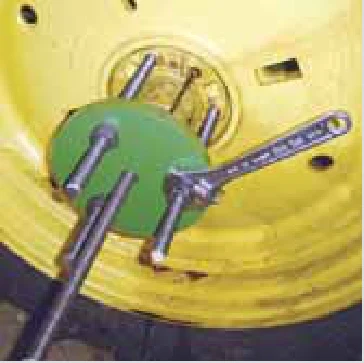
“Our Rear Wheel Puller is designed to fit John Deere A, B, G and H tractors. The kit comes with a 1-in. thick round puller plate with elongated holes in it and 4 threaded bolts. You put the nut on the center bolt with 1/2 in. of the bolt sticking out of the plate, then insert the bolt into the turning hole in the end of the axle.
“Screw the other 3 bolts into the hub, making sure the bolt sticks through the back side of the hub. Then put the puller plate on the 3 bolts and screw nuts onto them until the pressure pulls the plate up square with the bolts.
“The Rear Wheel Puller sells for $150 plus $14 shipping by USPS Priority Mail. Additional bolt assemblies for other models sell for $40 plus S&H. Comes with a money-back guarantee.”
A simple, low-cost Microbe test kit is designed to detect biological contamination in diesel fuel. In less than 48 hrs., the kit will indicate whether you have a chemical or biological problem. The kit includes a simple dip slide that comes in a plastic tube and is attached to the cap. You take the cap and dip the slide into the fuel, then reinsert the cap and slide it back into the tube. Sells for $16.95 plus S&H.
“I don’t like shop workstands that make you hold the stand at the desired height and then try to lock it in place at the same time. The problem isn’t as bad when working with fixed height surfaces like a table saw, but it’s annoying when you need an adjustable surface such as with a floor drill press.
“I decided to solve the problem by building a workstand from salvaged parts - the base of an old wheeled desk chair, a side-mount trailer tongue jack minus the wheel, and a long metal roller with mounting bracket. I welded the trailer jack upside down on the chair base, bent down the trailer jack’s wheel mount sides to form a horizontal surface, and then bolted the roller bracket onto it.
“I welded beads on at the folds where the wheel mount sides had been bent in order to add strength. The chair’s wheels make the workstand easy to move around, and I can raise or lower the workstand exactly where I want it by cranking the jack handle. Each turn of the handle raises or lowers the workstand by about 1/16 in. I can also adjust the height by spinning the roller around on its vertical axis. The roller runs smoothly enough that when I roll material the chair wheels don’t move at all.”
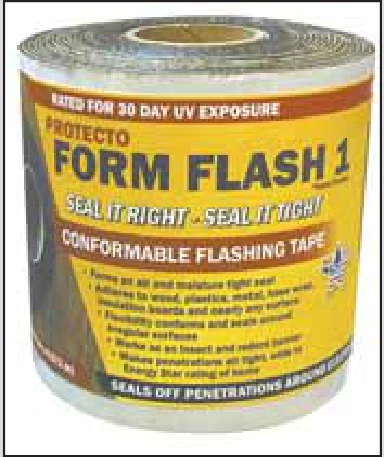
“Thanks for the report in a recent issue on WiseWrap LedgerTape, a 12-in. wide adhesive asphalt tape that protects the bottom of wood posts from water and rotting (Vol. 40, No. 5). I recently erected a 60-ft. fence and wanted to protect the posts, but I thought that product was a little pricy for my purposes.
“So I looked around and found a similar product at Menards that sells for much less (www.menards.com). It’s called Form Flash 1 and the tape comes in a roll 4 in. wide by 15 ft. long. It sells for $9.99. This ‘peel and stick’ product performs similar to WiseWrap LedgerTape, and I consider it to be a viable alternative when you only need to protect a smaller number of posts. Menards also sells Form Flash 2 in a roll that’s 6 in. wide by 15 ft. long. It sells for $14.23.”
“I needed a little belt grinder for touching up ends of threaded rod, so I made one from an old cordless 4 1/2-in grinder,” says Allan Isaac. He made a machined flat pulley on his lathe to screw on to the grinder shaft and built a steel frame to mount a 2 by 30-in. belt. He fabricated 1 1/4-in. tubing with smaller tubing inside to hold the implement bearing shaft he purchased at a farm supply store.
“The secret to keep the belt in alignment is the 3 bolts that go against the bearing shaft that can be adjusted,” Isaac says. To change the belt, he loosens the crank screw that tensions the belt, slips on a new belt, and tightens it up again lining it up with the bearing and a horizontal steel plate.
“The nice part about it is if you need something ground flat, you just hold it up against it,” Isaac says. Because it is powered with a battery, the belt grinder is portable, and Isaac keeps it handy on the edge of his workbench. Contact: FARM SHOW Followup, Allan Isaac, 4031 Old Alaska Highway, Farmington, B.C. Canada (ph 250 794-1416; [email protected]).
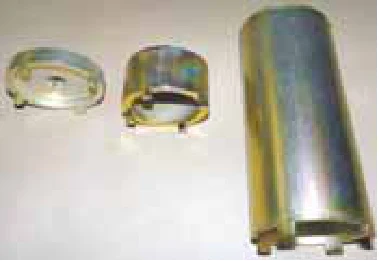
New Oliver service tools from Maple Springs Farm make working on old Olivers a lot easier. Increasingly, old service tools are hard to find, and when you do, they cost a small fortune, notes Eric Rego, Maples Springs Farm.
“We have a suite of tools for servicing Oliver tractors and some for old Chrysler transmissions,” says Rego.
“My dad and I like to work on old Olivers. When we encounter a situation where we need a tool and can’t find one that works, I’ll make it and some extras to sell.” When not working on old tractors or at his full-time job as a senior engineer with a diesel engine manufacturer, Rego operates Rego Engineering and Machine. There he machines and assembles tools and parts kits that he and his father market online and through a mail order catalog.
“I have the machining equipment needed to make tools to a 1/10,000 of an inch tolerance,” says Rego.
“Rare specialized tools can sell for several hundred dollars, but we can make them for much less.” Some of the tools the Regos offer include clutch alignment tools and spanner sockets for some of the unique nuts used on Olivers. Alignment tools sell for $19.98 each, and spanner sockets sell for $34.98.
“The Oliver auxiliary transmission bolts to the back of the engine, and if you have spare input shafts, you can use them for alignment,” says Rego.
“If you don’t, the alignment tools let you align the clutch so that when you wrestle that several hundred pound transmission back on, it will slide in correctly. We made these tools after finding ourselves battling to get the clutch, pilot bearing and over/under input shaft lined up.” Rego says the alternative to his specialized spanner sockets is often to chisel off the existing nut, make the repairs, and replace the nut with a non-original nut.
“There are some bizarre nuts holding parts on Olivers,” says Rego.
“When you replace them, you still have to get the torque right. Our spanner nut sockets let you remove the nut and get the right torque when you put it back.” Rego offers several different spanner nut sockets machined out of steel bar stock. Ones for use with a torque wrench have the standard 1/2-in. square drive.
“We are always looking for specialized tools to add to our collection,” says Rego. Rego points to a customer who owned an original spanner socket for the nut that holds the pto together on Oliver 55s and 550s.
“He knew guys were struggling to take them apart. He suggested we make some and shared drawings of it.
“If people see a need, we have the engineering and manufacturing capability to make them. We’re not tied to Oliver either. I’m working on a suite of tools for Case IH tractors.” Contact: FARM SHOW Followup, Maple Springs Farm, 1828 County Road PB, Verona, Wis. 53593 (ph 608 658-2072; [email protected]; www.msfparts.com).
Gary Swensen saw an old Farmall M snap in two when the loader was overloaded. Equipped with a Dual 345 loader and grapple, the M with its wide front end couldn’t handle the 7-ft. bucket loaded with dirt.
“My neighbor had the M loaded with weight on the rear wheels to counterbalance the loader,” recalls Swensen.
“However, as he backed up with the full loader, the front end dropped in a hole, and the strain found a weak point at the transmission. The M broke in half. Grease and gears fell on the ground. The steering shaft and gas tank were bent. It just made a mess out of the old M.” Luckily for the neighbor, a local dealer had an old M with a blown engine. Both tractors were split and rebuilt with good parts from each.
“I have a 450 Farmall with the same loader,” says Swensen.
“To make sure I didn’t have a similar problem, I added a brace to either side of the transmission.” Swensen used a flat bar of 1/2-in. steel and three 5/8-in. grade 8 bolts with a tensile strength of 150,000 lbs. per sq. in. As the shear strength of a bolt is typically 60 percent of its tensile strength, the brace bars added significant support.
“I was able to use 3 existing bolt holes in the transmission that lined up straight,” says Swensen.
“Those old tractors have multiple threaded holes for the various attachments that can be mounted, everything from planters to cotton pickers.” All Swensen had to do was drill holes in the flat steel to match the bolt holes and add washers where needed to bring all 3 bolts in line. He also noted that the support arms on the loader are short and are located about midway near the center of the engine.
“This may be a contributing factor to the M breaking apart,” says Swensen.
“I lengthened mine so they go all the way to the front of the engine.” Contact: FARM SHOW Followup, Gary Swensen, 1408 Sunrise Dr., Yankton, S. Dak. 57078 (ph 605 660-3489; [email protected]).
FARM SHOW readers often use our stories as inspiration for ideas of their own, and that’s exactly what happened when a story about a simple way to add electric power steering to a Farmall B was read by the “Tractor Doctor” (Vo. 41, No. 5). He’s a tractor mechanic with nearly 50 years experience and a writer for Red Power and Green Magazines. The FARM SHOW article spurred him to install power steering on a Farmall Super A, much to the delight of his wife, who uses the tractor for mowing. The Tractor Doctor (he prefers to remain anonymous) says his power steering unit takes up less than 12 in. in the A’s steering shaft. He says any vintage tractor with a similar amount of exposed steering shaft and a 12-volt negative ground electrical system would work for the adaptation. He mounted the electric steering unit (ESU) to a custom-made base plate that’s bolted to the tractor’s bell housing, with two upright supports. Both of the support shafts have bushings and grease fittings. The original bracket, which was used on the automobile it was removed from, also holds the ESU. The Tractor Doctor says this type of mounting reduces side thrust while allowing movement on the two shafts. Three electrical terminals connect the steering to the 12-volt electrical system. One is for the module input, one for the 12-volt power input, and another for power to the steering motor. An extension of the bell housing mounting plate holds the module terminal connector, the control box, and the potentiometer. The unit also uses a 12-volt switched input wire that connects to the potentiometer. The Tractor Doctor says the installation works exceptionally well on the A with the dial set about half way up the power range. Adding more power tends to oversteer, he says. The Tractor Doctor advises anyone adding a system like this to install restrictor diodes on the steering module input wire, or alternately use a generator or alternator with a conventional voltage regulator. All connections should be soldered and shrink-wrapped. Cost of the whole installation for the Tractor Doctor was less than $200, a worthwhile investment he says to keep his wife happier while mowing the lawn. He sells plans and instructions including contact information for the needed control module kit. It’s available by sending a self-addressed stamped envelope and $10 cash to the address below. Contact: FARM SHOW Followup, The Tractor Doctor, 4880 West 9th Street Road, Oshkosh, Wis. 54904.
Dave Hoover knows discbine mower conditioners and has the parts to prove it. With more than 200 parts in stock, the discbine expert ships parts to discbine owners across the U. S. and Canada.
“We know discbines in more depth than other parts yards because it’s all we do,” says Hoover, Ferguson Corners Repair.
“We work on them every day, and that includes all the major brands.” Wear parts like blades and skid shoes are his biggest sellers. He generally has either the aftermarket parts or good quality used parts that mower conditioner owners need.
“You can usually get parts through the OEM dealership, but if you are looking for less expensive aftermarket parts, it is more difficult,” says Hoover.
“We often buy worn out machines and tear them down, salvaging the good parts. Once you understand the different models and brands, you know which parts are interchangeable.” Hoover also provides repair service and sells used machines in the area around his Penn Yan, N.Y. shop. Those repairs can include doing steel roll conversions.
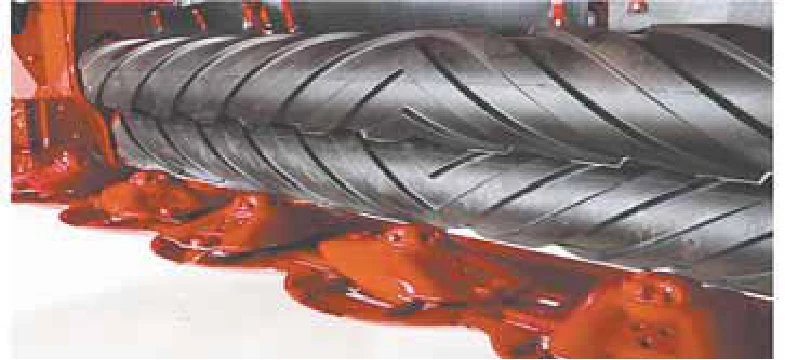
“If rubber rolls are worn, you can get after-market steel rolls,” explains Hoover.
“They can be tricky to install properly. In some cases, you need the old roll’s components to get the configuration right.” He advises working with a local mechanic or repair shop on roll conversions. Most repair and replacements on discbines are much simpler. A good place to start is his catalog. However, its 16 pages are just the beginning.
“We provide hundreds of parts, many more than what is in the catalog,” says Hoover.
“They include high demand new and after-market parts, as well as used ones. If you don’t see what you’re looking for, give us a call. There is a good chance we have it or, if not, I can tell you where to get it.” While he sells parts, Hoover says, “What I try to provide is knowledge and service.” Contact: FARM SHOW Followup, Ferguson Corners Repair, 2752 Ferguson Corners Rd., Penn Yan, N.Y. 14527 (ph 585 526-5102).
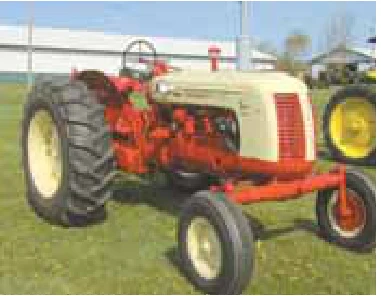
If you’re restoring a Cockshutt or Co-op tractor and need parts, chances are very good that Pennsylvania collector Phil Heisey has exactly what you’re looking for. Heisey and his wife, Noreen, have more than 1,000 parts on hand, nicely categorized in a 12-page single-spaced phone book-style catalog. They can tell you in a quick phone conversation if they have your part, what it costs, and where it’s located. If it’s not in their parts bin, Phil says it’s probably on one of the many collector tractors in their sheds. Most of those don’t run, but they’re still good for parts.
“My dad ran a dealership that sold Co-op and Cockshutt tractors when I was a kid, so I spent a lot of time in his shop watching the mechanics, often hiding the tools they needed,” Heisey says with a laugh.
“My goal in life even as a 10-year-old was to be a Cockshutt dealer. That didn’t materialize because the brand disappeared before I could own a business, so I went in another direction. While other kids were into cars and whatever, I built up a storehouse of knowledge on Cockshutt parts and company history.” Heisey worked in sales and marketing for 45 years, but his true enjoyment comes from collecting, restoring, buying and selling anything relating to Cockshutt or Co-op tractors.
“My wife and kids and grandkids think I’m crazy, but it’s not just an obsession, it’s a nice business and hobby for my wife and I,” Heisey says. They belong to the Cockshutt collector’s association, travel to vintage tractor events across the country, and personally know many people who restore Cockshutt, Co-op and Black Hawk equipment. They sell parts to people across the country and have even shipped to Ireland, Europe and the U.K. Heisey bought his first Cockshutt in 1980 and has been collecting tractors and parts every since.
“I started buying new, used and obsolete parts from dealers in the late 80’s and acquired the stock from 30 or 35 operations,” Heisey says.
“Some had a big inventory and some only had a few items, but they were all worthwhile.” At one time he had 60 Cockshutt and Co-op tractors that ran, and another 100 or so that were used for parts. These days his parts tractors include Co-op, Cockshutt, Gambles and Black Hawk models.
“All of my inventory is right here, so I’m not calling around trying to locate something,” Heisey says.
“I’ve got engine, pto and steering parts, cosmetic stuff like seat cushions, gauges and steering wheels, plus functional things like wiring harnesses, transmission parts, brakes and seals.” He also has parts and operators manuals for every Cockshutt tractor model ever built during their 1946 to 1978 production years. Contact: FARM SHOW Followup, Phil’s Cockshutt & Co-op Parts, 641 Store Road, Harleysville, Penn. 19438 (ph 215 256-8651; [email protected]).
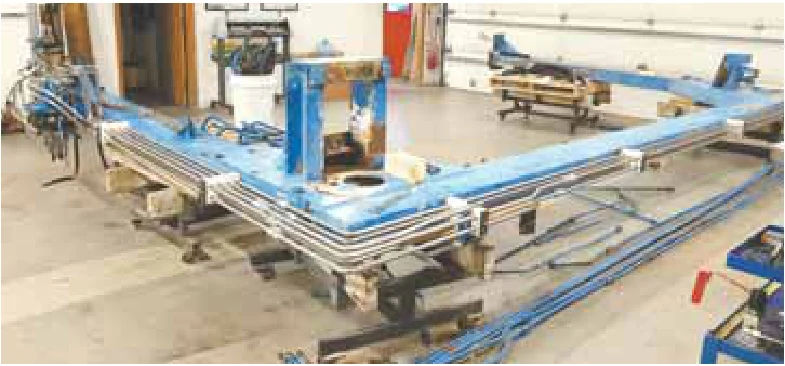
NEW Hydraulics can provide the hydraulic, fuel line, power steering and A/C tubes and hoses needed to rebuild, restore or customize equipment. Whether you need one tube or hose or multiples, no job is too big or too small, according to Paul Konopa, the owner.
“Most of our orders are 1 or 2 at a time, but one customer came in with a 50-year-old boat lift crane,” recalls Konopa.
“He said it was a diamond in the rough and asked us to replace all the hydraulic hoses and tubes. Tubes alone ran more than 350 ft .” In most cases, the request is to replace a single tube that has gone bad.
“As long as the hydraulic block or banjo fitting is okay, we can make the rest from scratch,” says Jeff Jordan, lead mechanic.
“We have the tools to bend tubes or machine parts if needed. Hoses and tubes are our niche. If only the hose is bad, we can replace it, rather than the customer having to replace the entire assembly.” Jordan says people will sometimes call and describe where on the machine a particular tube or hose they need goes. Sometimes a picture is all that is needed. Best of all is when they can send in the entire part, he adds. In addition to tubes and hoses, NEW Hydraulics sells and services snowplows. They fabricate mounts, offer repair kits for plow A frames, rebuild upper lift frames, and more.
“We can make anything people need to get their equipment up and running, even if it is a completely different modification from the original part,” says Konopa.
“Often we can rebuild for a fraction of the cost of new.” Contact: FARM SHOW Followup, NEW Hydraulics, Inc., 2389 Clay Rd., Oshkosh, Wis. 54904 (ph 920 231-0124 or 920 915-8789; [email protected]; www.newhydraulics.com).
Engine tinkerer and car enthusiast Christopher Hubbard was often frustrated with the poor performance of conventional oil filters and the fact that they haven’t changed much in 50 years or more. So he took the giant leap of inventing reusable filters. He used experience gained while working with classified agents, toxins and diseases while performing lung and liver perfusions in Army military research as motivation and inspiration for his new idea. Seven years and millions of investment dollars later, the reusable HUBB oil filter was introduced. Hubbard says the radically new design does a better job of protecting an engine, and saves time and money while keeping filters out of landfills. The patented design of a HUBB filter captures more contaminants from combustion so oil is kept clean longer. Their performance is backed by the industry’s first 100,000 mile or 5,000 hr. guarantee. HUBB CEO Scott Killips says independent tests on their filters have demonstrated that HUBB can save a typical fleet up to 50 percent on their oil change costs through longer oil change intervals. In 2018 the company introduced the Swap Filter Exchange Program. Used HUBB filters are sent back to the company for cleaning, inspection and certification, then returned for re-use. Says Killips, “We made it easy to put the HUBB Swap program in place, with no contribution to landfills and immediate savings for fleets.” HUBB filters are available for any light truck or passenger vehicle that uses a spin-on filter. Its elements are made with a surgical stainless steel weave rather than paper. Killips says the design and functionality offers 5 times better oil flow than a paper filter. Contact: FARM SHOW Followup, HUBB Filters, 233 Tamalpais Drive, Suite B, Corte Madera, Calif. 94925 (ph 844 289-7791; www.hubbfilters.com).
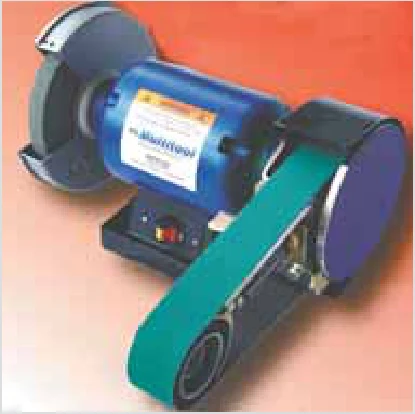
If you use a stone grinder in your shop, you’ll appreciate the Multitool, says Greg Bolton, national sales manager.
“It removes metal five times faster than a traditional bench grinder. And there are four extra work areas,” he says, for front contact wheel grinding, flat paten grinding, slack-belt grinding, and disc grinding. With different belts, the Multitool can do it all - grind, sand, shape, sharpen, clean, condition, buff and polish steel, plastic and wood.
“The Multitool has been around nearly 30 years since being developed in Australia,” Bolton says.
“What sets it apart is the easy belt change in a matter of seconds. Simply depress the belt, remove it and slip on another belt.” Since Bolton’s brother, Joe, brought the Multitool to the U.S. in 2000, several markets have found it useful. Farriers use it to shape and polish horseshoes. Welders, blacksmiths, auto and tractor restorers, fabricators, and knife makers also find it fast and efficient. It’s portable so it can be used in the field with a generator. A variety of 2 by 36-in. belts with a wide range of grits and purposes work with the tool. The $229 attachment can be installed on standard grinders, or Multitool sells it for $650 on an 8-in., 1 hp. grinder. The company plans to offer a 4 by 48-in. belt option in the near future. Bolton suggests contacting the company to find out if local dealers stock the Multitool. If not, orders can be placed directly with Multitool USA. Contact: FARM SHOW Followup, Greg Bolton, National Sales Manager, Multitool USA, 14711 Artesia Blvd., La Mirda, Calif. 90638 (ph 800 660-0880; www.Multitool-USA.com; [email protected]).
“The 12-ft. diameter by 36-ft. tall cement stave silo adjacent to my barn looked good, but I didn’t trust it because of its deteriorating staves,” says Minnesota handyman Mark Rinke.
“Instead of tearing it down I decided to rework it to use for tool and equipment storage.” Rinke knew if he was going to cut a large walk-in door into the staves he’d need to completely reinforce the bottom staves, including the support rings. To do that he dug around the inside of the staves, then poured footings for a concrete “donut” so the floor had its own support. On the outside, about 5 ft. on both sides of the new door opening, he poured 3-ft. high by 8-in. thick concrete “wings”. Two of the silo’s lower band rings were embedded in the concrete and several of the staves were bolted into the wall. The 10-in. deep I-beam door frame was also lagged into the wall. With the support system and a new door opening complete, Rinke hired a company with a vertical hoist to remove about 18 ft. of staves from the top of the silo. He bought a used 12-ft. dia. metal roof to cover the remaining lower portion, then cleaned and sealed the inside of the staves to create weather-tight storage. Rinke says he probably over-engineered the wall supports, but he wanted it extra strong to support the door opening and the remaining staves above it.
“I think it’s probably strong enough to be here forever,” says Rinke. Contact: FARM SHOW Followup, Mark Rinke, 11175 225th St. E., Lakeville, Minn. 55044 ([email protected]).