Practical ideas from FARM SHOW MagazineSubscribe · Free issue · Send us your shop tip
Subscribe to FARM SHOW
Issues / Vol. 30, No. 3 (2006)

Vol. 30, No. 3 (2006)

Money-Saving Repairs & Maintenance Shortcuts · Printed section pp. 36–39

33 selected entries · Complete text of selected entries

This issue’s section includes reader tips and feature-length shop stories. Held items and editorial notices are not reproduced.

Archive text: prices, coupons, availability and contact details reflect the original publication, not current offers. Reader methods are not universal instructions; follow manufacturer guidance and proper safety practices.

Reader shop tips

From the archive · Full text
Reader shop tip

Dave Hillix

Dave Hillix, Camden Point, Mo.

He made a “wrench” out of 1/4-in. steel plate and a 1-in. dia. pipe handle. The hole is cut right into the center of the plate, which simply slips over the coupler. The homemade wrench is left on the coupler all the time so it’s always there when needed. The tabs on the end of the coupler keep it from falling off. Very handy.

From the archive · Full text
Reader shop tip

Scott McIntosh

Scott McIntosh, Stout Tool Corp., Wixom, Mich.

FARM SHOW featured Stout Tool’s cordless hand-held bandsaw last year (Vol. 29, No. 2). Since then, the company has sold more than 5,000 saws. Now the company has introduced the Ultimate Cutting Station which is a portable “dock-ing” system that converts Stout’s saw into a benchtop stationary cutting tool. The saw fits quickly into the cutting station and can be removed just as quickly for portable use.

It sells for $69.95. The saw itself sells for $199. Contact: FARM SHOW Followup, Stout Tool Corp., 29233 Haas Road, Suite A, Wixom, Mich. 48393 (ph 877 337-8688; www.stouttool.com)

From the archive · Full text
Reader shop tip

Robert C. Lange

Robert C. Lange, W. Burlington, Iowa

“I keep seeing these tools for ‘busting grease’ out of grease zerks. My brother was a tool and die maker and years ago he made one that works fine most of the time. When it won’t work, I’ve found that taking out the grease zerk and inserting a 1/8-in. dia. pipe adapted to a hydraulic hose on your tractor will way outperform one of those tools. Of course, you have to be very careful with hydraulic fluid under pressure.”

From the archive · Full text
Reader shop tip

Tyco Plastics and Adhesives

Tyco Plastics and Adhesives, 25 Forge Pkwy., Franklin, Mass. 02035 (ph 800 248- 7659; www.tycoadhesives.com)

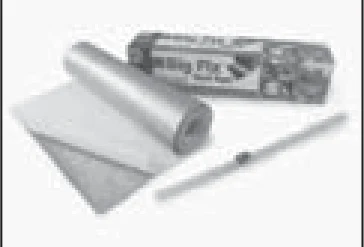
The world’s largest manufacturer of duct tape now offers tape in oversize rolls. Unlike regular duct tape, the 12-in. by 30-ft. rolls have a paper liner that you peel off. It even comes with a slicer. It’s not widely available yet but is sold at some Home Depots for $24.96.

From the archive · Full text
Reader shop tip

Michael Ray

Michael Ray, Bloomington, Indiana

“In your last issue, Cal Yapp, Littleton, Mass., reported that his 1988 Jeep Cherokee runs until it gets hot, then stalls and won’t start. Try changing the fuel relay on top of the right fender under the hood. I had a similar situation with my ’87 Jeep Cherokee and that solved the problem.”

From the archive · Full text
Reader shop tip

WD-40

WD-40, P.O. Box 80607, San Diego, Calif. 92139 (ph 888 324-7596; www.wd40.com)

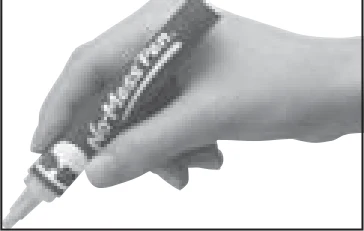
Now you can carry WD-40 with you all the time without having to carry a can around. The WD-40 No-Mess Pen carries .26 fl. oz. of the all-purpose lubricant. The felt-tipped applicator can be used to lubricate hinges and other small parts. Sells for about $2.99 at Wal-Mart, Target, Home Depot and other retailers.

From the archive · Full text
Reader shop tip

Hey Machinery Co

Hey Machinery Co, Inc., 1602 W. High St., Baldwin City, Kansas 66006 (ph 785 594-3441; www.heywheel.com)

FARM SHOW first reported on Hey Machinery in 1977. The company is still going strong selling all kinds of used aircraft wheels and rims for use on tractors, combines, brush mowers, planters and other machines. Aircraft wheels are made much heavier than most wheels, as are the tires.

From the archive · Full text
Reader shop tip

Gary Gahagen

Gary Gahagen, Wiggins, Colo.

“I bolted a 20,000 btu. wall heater to the side of a dishwasher on caster wheels. I put an 8-lb. propane tank inside with a flexible gas line to the heater. The door locks and seals the tank inside. It can be easily moved anywhere in the shop I need heat. The top also works as a portable stand for my drill press, wood planer, etc.”

From the archive · Full text
Reader shop tip

Alan Carender

Alan Carender, Williamsburg, Ind.

“I made a welding aid out of a 1-in. thick, 4-in. wide and 20-in. long piece of copper bar by drilling and then tapping several 3/8 and 5/ 16-in. holes in it. I can bolt objects to it that need repair - like a cracked or busted manifold - to hold it in perfect alignment for welding. I also use old rocker arms and washers to hold down uneven objects.”

From the archive · Full text
Reader shop tip

Arco Rosenow

Arco Rosenow, Chillicothe, Ill.

“Standing on a concrete floor at my work bench for extended periods of time made my legs and feet ache. To solve the problem, I made a wood block floor out of wood scraps.

“First, make a frame out of 2 by 4s standing on edge in front of your work bench, drill press, or other tool. Then cut wood scraps into pieces as long as the width of a 2 by 4. Put some deck sealer in a shallow pan and dip the ends of wood blocks in the solution, then stand the blocks on end in the frame. Pack them in until the frame is full. If a block is too wide, just split it with a small hatchet and wedge it in. Many of the blocks will split over time, but that won’t be a problem.

“You won’t believe how much easier the wood floor is on your legs. Also, it stays warmer during the winter and if you drop something on it, the wood really cushions the impact.

“A friend of mine went even farther and poured leftover paint on the blocks, which filled the cracks and also made it easier to find dropped screws.”

From the archive · Full text
Reader shop tip

Art Mangels

Art Mangels, Dillon, Mont.

“We’re very disappointed in operator’s manuals for tractors, combines, and other equipment. A lot of pages are wasted on obvious items such as ‘how to put key in ignition’, or ‘how to operate cigarette lighter’, but then the manual leaves out important operational details and settings. When discussing ‘oil check’, why can’t they put the quantity and type of oil on the same page? I guess that would be too simple. The worst written operator’s manual we have is the one for our Deere 567 round baler. You have to jump around to several different sections in order to get all the information needed, and then you end up calling a Deere service man just to figure out what you’ve read.”

From the archive · Full text
Reader shop tip

Willis E. Hicks

Willis E. Hicks, Shannonville, Ontario

“If you have a Deere 410 or 510 baler and want to use plastic string, bring the anvil up and mark where it meets the original knife, then cut a strip from a mower knife. Weld it onto the anvil 3/16 in. from your mark, then let up on string tension for it to hold the string. Works great.”

From the archive · Full text
Reader shop tip

Richard D. Hammond

Richard D. Hammond, Coopersville, Mich.

“The knotter on my baler kept skipping and as a result the bales would break. I switched to heavier 7,200-lb. kicker bale twine and also waxed the bale chute. Problem solved.”

From the archive · Full text
Reader shop tip 1 of 2

Ken Voigt

Individual tip 1 of 2 from this reader’s published contribution.
Ken Voigt, Wausau, Wis.

“Here’s a photo of a drill press I converted to electric drive. The drill press was probably called a blacksmith’s drill and was originally designed to be hand cranked. It was patented June 8, 1907 by CB & F Co. of Lancaster, Penn. What I like about this unit is its automatic down feed, which operates at the top. A notched wheel is turned by a pawl off a cam, which turns a threaded shaft connected to the chuck shaft. I can clamp a piece down and do something else while the machine drills away. I rigged it up with a 2 hp electric motor. It can drill 1-in. dia. holes with no problem.

From the archive · Full text
Reader shop tip 2 of 2

Ken Voigt

Individual tip 2 of 2 from this reader’s published contribution.
Ken Voigt, Wausau, Wis.

“I also made a sheet metal bending brake. The press measures 6 ft. 3 in. wide and can open up to 7 in., which is handy. The top part is made from chopper knives that have the right angle needed for that section. A 1/2-in.

drill, mounted at one end, drives a 1-in. threaded rod one way and then the other. I use a foot switch on the floor to hold the metal with both hands. A chain drive connects the two 1-in. threaded rods at each end so that it opens and closes evenly. The brake is also hinged to the shop wall at one end, allowing me to roll it out of the way whenever it’s not needed.”

From the archive · Full text
Reader shop tip

Ralph Amos

Ralph Amos, R & R Engineering Co., 801 S. Main, P.O. Box 428, Summitville, Ind. 46070 ph 800 979-1921 or 765 536- 2331; www.randrengineering.com

“We sell U-bolts and other special fasteners that farmers may not be able to find locally. Our clients include AGCO, Deere, Case IH, New Holland, and many others. We’re commited to being the best in the industry and to delivering the highest quality, most competitively priced parts on time, every time.

“We can supply a wide variety of parts including J-bolts; hook bolts with round or square bend or right angle bend; eyebolts; U-bolts with a round or square bend, battery bolts, anchor bolts, hanger bolts, cranks, pins, roller shafts, studs, etc.

“Our company got started in 1969. We’ve grown to supply most agricultural manufacturers and can compete with China in both cost and quality. Our goal is to be the most modern, efficient and competitive manufacturer of high-quality special fasteners in the world.”

From the archive · Full text
Reader shop tip

Kevin Buckstead

Kevin Buckstead, Holden, Mo.

“I bought an ordinary drop light, sometimes described as a trouble light, and converted it to a portable unit. I cut off the electric plug and peeled back the outer covering of the cord wire for about 10 inches. Then I stripped the covering off the individual wire ends enough so I could attach a clamp to each. I replaced the original light bulb with a 12-volt bulb.

“Now I can carry the drop light in a tractor or vehicle, and when problems arise I always have a convenient, inexpensive source of light.”

From the archive · Full text
Reader shop tip 1 of 2

Eric “Inch” Petrevich

Individual tip 1 of 2 from this reader’s published contribution.
Eric “Inch” Petrevich, Glen Gardner, N.J.

“Storing tie-downs is always a big job. And if you leave them in your truck, it can be a frustrating job trying to untangle them whenever you need them.

“I use a milk crate to solve the problem. I wrap the tie-downs around the outside of the crate, then tighten the straps so they’ll stay put. This idea also leaves the crate empty for other items that you may need to carry in your truck.

From the archive · Full text
Reader shop tip 2 of 2

Eric “Inch” Petrevich

Individual tip 2 of 2 from this reader’s published contribution.
Eric “Inch” Petrevich, Glen Gardner, N.J.

“Here’s another idea. Use shopping carts to hold miscellaneous metal parts.

“Go to your local supermarket and ask if they have any carts they’re not using any more. Use the carts to toss in metal parts. It’s easy to move the carts to wherever you’re working and move them out of the way when you’re done. The wire carts allow sawdust and dirt to fall though. I use one cart for wood and one for metal.”

From the archive · Full text
Reader shop tip

Gast Mfg. Inc.

Gast Mfg. Inc., P.O. Box 97, Benton Harbor, Mich. 49023 ph 269 926-6171; www.gastmfg.com

This company offers a wide variety of air-powered motors. Typical applications include mixing equipment, conveyor drives, pump drives, hoists and winches, and hose reels.

Lubricated air motors come in seven basic models up to 9 1/2 hp (7.1 kW); motor speeds are variable from 300 to 10,000 rpm’s. Oilless versions, which require no lubrication, come in three basic models ranging from .18 to 2 1/2 hp with motor speeds up to 4,000 rpm’s.

Shop feature stories

From the archive · Full text
Feature story

Rolling “Tool Tree” Saves Steps In Shop

Featured source: Patrick Alles

Patrick Alles wanted a tool storage rack for his most commonly used tools that would roll easily around the shop. He couldn’t find any commercially-built units, so he built his own 4-wheeled “tool tree”.

“When I’m working on something in the shop that requires several tools, I simply roll the Tool Tree over to my work area. There’s no need to constantly walk back and forth to get the tools I need for the job,” says the Roanoke, Ind., farmer.

The tool tree stands 5 1/2 ft. tall and rides on four caster wheels. It’s made from metal pipe with wooden cross arms. The 2-ft. wide arms simply clamp onto the main upright with bolts on either side of the pipe. The upper arm has holes drilled into it to hold screwdrivers, punches, etc. The middle and lower arms hold sockets, wrenches, and other tools.

“No matter what tool I need, it doesn’t take long to find it,” says Alles, who is looking for a manufacturer.

Contact: FARM SHOW Followup, Patrick Alles, 10170 N. 300 E., Roanoke, Ind. 46783 (ph 260 672-2444; [email protected]).

From the archive · Full text
Feature story

Portable Filter System Keeps Shop Air Clean

Featured source: Wayne Hughes

If you’re tired of breathing in welding smoke or grinder dust particles when working in your shop, you’ll like this new portable air cleaner that goes where the work is.

Wayne Hughes, owner of Air-Vac Systems, Cedar Falls, Iowa, says, “It pulls welding smoke or other fumes and particles away from your face before they can get into your breathing zone,” he says.

The first-of-its-kind air cleaner rides on four caster wheels and is housed in a 16-gauge steel cabinet that measures 3 ft. wide by 2 ft. deep by 6 ft. high. A “step-on” brake locks the unit to the floor while it’s in use.

An electric fan at the top of the unit pulls dirty air through an 8-pocket bag filter inside the cabinet. An 8-in. dia. suction arm on front draws dirty air into the unit before it has a chance to get out into the shop. The arm can be swiveled left or right 180 degrees, and also swivels at the hood and at the center of the hose. External springs counterbalance the weight of the arm, with friction joints added for stability.

“If you want you can even set the hose to reach 11 ft. straight up into the air,” says Hughes.

A metal mesh spark arrestor filter is located below the bag filters and catches sparks in a slag pan, which can be pulled out and emptied. It prevents any hot sparks from going into the bag filter and catching on fire.

“The bag filters need to be changed only about once a year. The spark arrestor filter should be cleaned about once a month,” notes Hughes.

Sells for $3,480. Contact: FARM SHOW Followup, Air-Vac Systems, 127 Stickfort St., Cedar Falls, Iowa 50613 (ph 800 234-2473; [email protected]; www.air-vacsystems.com).

From the archive · Full text
Feature story

Long-Life Clutch For 5400 Series JD Tractors

Featured source: T.C.M.

FARM SHOW readers’ complaints about the short clutch life on 5400 Series Deere tractors have been heard by T.C.M., Staceyville, Iowa. The company has built its business remanufacturing clutches, water pumps, hydraulic pumps and steering valves for 10, 20 and 30 series tractors.

“When we started rebuilding clutches for the 5400 Series, we weren’t satisfied with the materials being used,” says co-owner, Sam Katter.

“We tried different friction materials until we found one that would wear longer and take the heat better. It will double the life on the clutch.”

T.C.M. markets its clutches through existing Deere dealers. Prices may vary somewhat between dealers, but suggested retail price for the replacement clutch is around $525.

“We put in new pieces where needed, test all springs so plate loads are within specs, and put a one-year warranty on dealer-in-stalled clutches,” says Katter.

Contact: FARM SHOW Followup, T.C.M., 106 Main Street, P.O. Box 220, Staceyville, Iowa 50476 (ph 641 710-2161 or 800 447-2161; [email protected]).

From the archive · Full text
Feature story

He Melts Aluminum With Wood-Fired Furnace

Featured source: Robert Ferreira

Think you can’t melt metal with wood? Think again. Robert Ferreira uses all kinds of scrap wood to melt aluminum for his casting hobby.

“I read that you can’t use wood, but I just cube whatever wood I find, and it works great,” says Ferreira, who also built his own melting furnace and tools.

“I can get a melt going in about 20 min. with wood.”

The furnace is an old water tank lined with firebrick. Ferreira cut a door in the tank.

He drilled bolt holes in the door, the tank above the door and the bricks and then countersunk the holes on the inside surface of the bricks for nuts. After mounting the bricks, he filled the holes around the nuts with a mix of fireclay, sand and water.

The access plate at the bottom of the tank serves as air inlet. A hole cut in the top serves as chimney and a damper to control the draft in the furnace.

“I can move the fire up and down the furnace by opening and closing the door on top to control the draft,” explains Ferreira.

“All I need is 1,200 to 1,300 degrees to melt the aluminum.”

Ferreira uses his furnace to melt down cast aluminum lawn mower motors, broken pro-pellers, and any kind of cast aluminum. He has found aluminum cans and extruded aluminum to be too pure for his uses.

“I make molds of whale flukes and mana-tees as well as casting aluminum repair parts that are hard to find,” explains Ferreira.

“For example, I made a leg for a guy’s stove.”

He picks up cast iron Dutch ovens and pots at flea markets and garage sales to use as cru-cibles for holding the aluminum as it melts down. The crucible hangs from a bolt inserted through the top of the furnace. Ferreira handles the crucible with a pair of hooks he made.

“I just put the pieces to be melted in the pot, put the cover on it and let them melt down,” he says.

“As they melt, any oil or other residue burns off or floats to the top.”

To clear the dross or impurities out of the melted aluminum, Ferreira uses old steel serving spoons. When he has excess melted aluminum, Ferreira pours it into steel cup-cake tins to make ingots that can be melted down again.

“People throw away lawn mower engines, yet cast aluminum is worth about 60¢/lb.,” he points out.

Ferreira uses sand, fireclay and water to cast pieces. Here too he uses homemade tools and casting boxes. If he wants a hole or hollow center in the casting, he uses a mixture of mineral oil and silica sand to make a core material that pours out of the mold when finished.

Ferreira taught himself how to melt aluminum, make casts and pour molds with the help of books not found in most bookstores.

“If people are interested in molding their own aluminum pieces, I would be glad to suggest some books they could read or answer any questions I can,” says Ferreira.

“Just send me a paper with a stamped, self-addressed envelope, and I will send a reply.”

Contact: FARM SHOW Followup, Robert Ferreira, 9775 W. Sunny Day Ct., Crystal River, Fla. 34428 (ph 352 795-0049).

From the archive · Full text
Feature story

Simple Shop Ideas Save Space, Time

Featured source: Mike Miller

Mike Miller, Athens, Ill., jumped at the chance to pick up a section of four old school lockers for use in his farm shop.

The lockers hold a variety of items. One holds towels, another electrical tapes and miscellaneous supplies. The nice thing about the lockers is that they do all of this in a very compact place, and they keep items absolutely clean.

Miller also came up with another useful idea for his shop. He connected an old tractor oil pan to a barrel to make it easy to dump used oil. The pipe nipple on the pan fit the bung hole on the barrel.

In the bottom of the pan, he placed a screen to catch debris. He has a friend who burns oil in a furnace.

A big advantage of using the large tractor oil pan is that Miller can pour a 5-gal. can of oil into it without having to wait for it to drain down.

Contact: FARM SHOW Followup, Mike Miller, 900 W. State Rt. 124, Athens, Ill. 62613 (ph 217 971-0769).

From the archive · Full text
Feature story

Used Oil Pumping System

Featured source: Gary Elston

Some rear ends and differentials in tractors carry up to 50 gal. of oil, so you can get a lot of backache carrying oil pans back and forth.

Gary Elston, Mulvane, Kansas, used salvage materials to come up with an automatic oil pumping system in his shop. It uses an electric motor and a gear pump pump to automatically deliver used oil from his tractors to an indoor container and then to a pair of 300-gal. storage tanks outside the shop.

“We burn the oil in a furnace to heat our shop,” says Elston.

Used oil is sucked from a portable oil pan through a 15-ft. long hose to a “T” line inside a small plastic barrel cut lengthwise in half. The “T” line is hooked up to a gear pump that’s driven by a small electric motor. The oil is delivered into a nearby 55-gal. barrel with a lid cut into its top. A section of perforated bin flooring, mounted 6 in. above the bottom of the barrel, serves as a screen when draining used oil out of filters and small oil pans.

Whenever the 55-gal. barrel gets full, Elston opens an in-line valve to suck oil from the barrel through a hose that leads outside to the two storage tanks.

“It lets us pump used oil straight from the oil pan into storage tanks instead of having to carry it in buckets,” says Elston.

“A switch that mounts on a control panel inside the half barrel is used to turn the electric motor on or off. To make the portable oil pan we cut the bottom six inches off a 55-gal. metal barrel, then cut a hole in one side and attached a 1-in. dia. hose to it.”

Contact: FARM SHOW Followup, Gary Elston, 427 Franklin Ave., Mulvane, Kansas 67110 (ph 316 777-1234).

From the archive · Full text
Feature story

Big Toolbox Features Rotating Trays

Featured source: Pauline Allen

Wanted: A few good tool users to test and report back on a new power toolbox.

The Tool Turn toolbox is a new product not yet in production. Inventor Jim Young and business partner Pauline Allen are building 20 units and looking for a cross section of people to try them out.

“Ideally, we would like to see a couple of farmers, carpenters, electricians, plumbers, heavy construction workers, utility, government or municipality workers try out prototypes,” says Allen.

“We want them to evaluate it and provide suggestions for improvement before we go into full scale production.“ Young has already crash-tested his prototype. He flipped his truck, totaled it out and ended up in the hospital with a broken arm. The toolbox, which had been in the back (with no restraint), survived without a problem. In fact, it is pictured with this story, but in a new truck.

The 24-in. wide, 64-in. long and 23-in. high toolbox is designed to sit in a full size pickup box. It is available in diamond tread pattern aluminum or powder-coated black.

Each tray is 4 by 12 by 21 in. A switch on the left side turns the device on, while a toggle switch on the right rotates the trays. Suggested retail price is expected to be around $2,495. Allen and Young plan to offer a significant discount to testers and a money back guarantee.

“Once they have reported back on features they like or dislike, they can get their money back,” says Allen.

“If they like the concept, but dislike the prototype, they can give it back and apply the money against the improved production model, or they can keep their prototype” Contact: FARM SHOW Followup, Pauline Allen, Tool Turn, 12985 Tom Smith Rd., Henderson, Ky. 42420 (ph 270 860-6633; [email protected]).

From the archive · Full text
Feature story

Nifty Machines Make Notches In Pipe

Featured source: Woodward Fab

The pipe notching equipment from Wood-ward Fab in Hartland, Mich., opens up all kinds of opportunities.

They let you make quick saddle notches in pipe for making your own gates and railings. Or you can go into business making them for others.

The Variable Angle Pipe Notcher is priced at only $69.99 and works on up to 2-in. dia. pipe. It’s powered by a hand electric drill or drill press and makes cuts with standard hole saws.

The company also makes a manual notcher that doesn’t require any outside power. It can mount on a wall or bench or on the back of a truck so you can take it out to the field.

There are three models of manual notchers, all of which make 90 degree cuts only.

“The manual notcher doesn’t require any power and would be mounted to a sturdy bench or wall...or to the side of portable welding truck, allowing you to take it out in the field,” Heck says.

“There are three different manual models.”

The first one notches 1/4-in., 3/8-in. and 1/2-in. pipe or tube and is priced at $289.99 (model #WFN1) The second model (#WFN2) works on æ-in., 1-in., 1 and 1/4-in. pipe or tube, and costs $349.99.

The third model (#WFN3) is suitable for 1 1/2-in. and 2-in. pipe and tube and is priced at $399.99.

There’s also an electric version of these notchers that sells for $2,995. In addition, the company makes industrial-sized notchers that work on pipe up to 6-in. dia.

Contact: FARM SHOW Followup, Wood-ward Fab, Box 425, Hartland, Mich. 48353 (800 391-5419 or 810 632-5419; fax 810 632-6640; www.woodward-fab.com).

From the archive · Full text
Feature story

Bypass Oil Filter Extends Oil Life

Featured source: Filtration Solutions

Russ Reinholz, a subscriber to FARM SHOW, responded to our story in the last issue about add-on oil filters made by Ecofil International, Sutton, Quebec.

“Filtration Solutions World Wide of Olathe, Kansas, makes a similar but less expensive product that I really like. It sells for about $500, with replacement filters costing about $20. It does everything the Ecofilters do but for a lot less money. I use their filters on my 2005 Dodge pickup equipped with a Cummins diesel engine, and I really like it.”

The company’s FS-2500 bypass oil filter mounts outside the main oil circulation system and comes with a replaceable filter element. It only displaces a quart and a half of oil. The filter element captures soot, sludge and acid build-up. The super-clean oil is then returned to the oil pan.

The company guarantees that if you can’t at least double your oil change interval based on oil analysis, they’ll refund your money 110 percent.

“Let’s say you normally change oil on your tractor every 200 hours and install our filter for the first time. The next time you change the oil, you would want to replace the full flow factory spin-on filter as well as our filter. The reason is that the first time the filter is introduced to the engine is the hardest work our filter will ever do because the engine crankcase will have a lot of soot and sludge in it, and you’ll have to clean this soot out.

After this initial scrubbing period, the next time you change your oil you will have to change only our filter, not the factory filter. You might want to do an oil analysis to verify the condition of the engine oil.

“The average customer changes oil every 1,250 hours, so in that period you’ll change our filter at 200-hour intervals but you’ll only have to change the oil and factory filter every 1,250 hours.”

Contact: FARM SHOW Followup, Filtration Solutions, 230 North Monroe, Olathe, Kansas 66061 (ph 888 440-9056 or 913 829-9056; www.filtrationsolution sww.com).

From the archive · Full text
Feature story

Kleenoil Add-On Filter

Featured source: Kleenoil

We heard from another reader who told us he couldn’t be happier with his add-on oil filter system from Kleenoil. It removes dirt to 1 micron in size, water to 0.05%, and virtually any wear particles that work their way into your oil.

Kleenoil uses a filter that looks like a roll of toilet paper but is actually a replaceable cartridge made of long fiber wood pulp paper. It pulls water out of oil yet still allows oil molecules to pass through unchanged.

The company states that oil change intervals average 3 to 5 times longer on engines equipped with a Kleenoil filtration system.

Contact: FARM SHOW Followup, Kleenoil USA Inc., 6913 Ave K #303, Plano, Texas 75074 (ph 800 897-6937 or 972-633-2226; www.kleenoilusa.com)

From the archive · Full text
Feature story

Air Conditioner Provides “Air” On Service Truck

Featured source: Robert (Fish) Pike

“I work for a local International truck dealer and use my 1992 Dodge Dakota 2-WD pickup as a service truck. To provide the truck with on-board compressed air, I mounted an air conditioner compressor out of a Chrysler car on the pickup’s 2.5-liter, 4-cyl. gas engine,” says Robert Pike, Hollandale, Minn.

Pike uses the compressor to fill truck tires with air and to operate small impact wrenches.

“It cost very little to set up and doesn’t take up any space in the truck box like a commercial gas engine-driven compressor would,” he told FARM SHOW.

Pike’s pickup doesn’t have power steering or air conditioning, which left plenty of room to install the belt-driven air conditioning compressor. It came out of a 1970’s Chrysler. An electric pressure switch is used to turn the compressor clutch on or off.

He brazed air hose fittings to the compressor and ran the hose to a home-built air tank mounted behind the cab. He made the “tank” by welding four 4-in. dia. steel pipes together, one on top of the other.

He mounted a control panel just behind the driver’s door, complete with air gauge, regulator, and pressure switch controls.

“It works great for filling tires and to operate small air tools, but not quite as well for operating die grinders and other large impact tools. The air tanks don’t provide as much capacity as I had hoped,” says Pike.

“I plan to make the same conversion on a 1973 Dodge van equipped with a 225 cu. in., slant 6-cylinder engine so that I can use a bigger compressor. When you run the tubing from the compressor to the tanks, be sure to use a check valve in order to keep air from back-feeding through the compressor whenever it’s not running.”

The hardest part of the job was mounting the compressor to the engine and getting it lined up with the other pulleys.

“To make the job easier, I took one of the original brackets that was used to mount the compressor to the Chrysler engine and cut an exact copy out of a sheet of 1/4-in. thick steel. Then I mounted one bracket on either side of the compressor so that a bolt could be used as a pivot, extending from one end of the compressor to the other.”

He says he used the Chrysler compressor because it has a separate crankcase that allows for more reliable operation than rotary piston-type pumps, which require lubricant to be fed into them as they’re running.

“The Chrysler” compressor is built a lot like internal combustion engines equipped with a crankshaft, rods, reciprocating pistons, and a crankcase,” says Pike.

“Since the compressor already had a clutch, all I had to do was to wire it into the pressure control switch and to an on/off switch. The switch is just like the ones on ordinary plug-into-the-wall-outlet air compressors. You can set the cutout pressure and the differential pressure with small screws inside the switch.”

He used copper refrigerant tube to make an intercooler of sorts for the compressor. It’s mounted to the radiator fan bracket.

“I might switch to an aftermarket transmission cooler, because the weight of the copper one may be putting too much stress on my pickup’s radiator,” notes Pike.

Contact: FARM SHOW Followup, Robert (Fish) Pike, 27969 825th Ave., Hollandale, Minn. 56045 (ph 507 383-3985).

From the archive · Full text
Feature story

Replacement Chevy Tie Rods

Featured source: Casey Coughlin

Hearing customers complain about replacing tie rods on Chevy off-road trucks started the guys at SoCal Super Trucks thinking. With the help of a local machine shop, they developed a heavy-duty steering system that stands up to rough off-road use.

“We saw a lot of premature failure due to bent tie rods,” explains Casey Coughlin.

“We worked with the machine shop to develop tie rods made with more durable materials. They make them, and we distribute them.”

Retailing at $549, the chrome tie rods aren’t cheap. Set one alongside a stock rubber-lined tie rod, though, and you can see that the no-ticeably heavier-duty rods are worth the investment.

An added benefit of the new tie rod is an adjusting sleeve to set toe.

“We have steering systems for all 1999 and newer Chevy 1500 series, and all 2-WD and 4-WD 2001-2006 Chevy 2500 and Chevy 3500 series trucks,” says Coughlin.

Contact: FARM SHOW Followup, Casey Coughlin, SoCal Super Trucks, 774 South E. St., San Bernardino, Calif. 92408 (ph 909 383-5454; fax 909 383-5451; [email protected]; www.socalsuper trucks.com).

From the archive · Full text
Feature story

Battery-Powered Adjustable Wrench

Featured source: Black & Decker

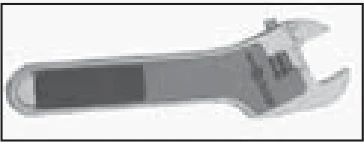
Black & Decker is getting ready to introduce a new line of “battery-powered” hand tools like this power-adjustable Auto Wrench. At the touch of a button, the 8-in. wrench uses AAA batteries to adjust to fit any nut up to 1 in. wide. The manual-adjust wheel is still usable in case the batteries are dead. Other power-adjusted tools are soon to follow, according to the company.

Auto Wrench sells for $29.99. Contact: FARM SHOW Followup, Black & Decker (ph 912 692-8902; www.blackanddecker.com).