Practical ideas from FARM SHOW MagazineSubscribe · Free issue · Send us your shop tip
Subscribe to FARM SHOW
Issues / Vol. 49, No. 6 (2025)

Vol. 49, No. 6 (2025)

Money-Saving Repairs & Maintenance Shortcuts · Printed section pp. 32–35

30 selected entries · Complete text of selected entries

This issue’s section includes reader tips and feature-length shop stories. Held items and editorial notices are not reproduced.

Archive text: prices, coupons, availability and contact details reflect the original publication, not current offers. Reader methods are not universal instructions; follow manufacturer guidance and proper safety practices.

Reader shop tips

From the archive · Full text
Reader shop tip

Aaron Walters

Aaron Walters, Bynum, Texas

“I built a hitch for my front-end loader and bought a quick-attach hydraulic end for the third function on my loader. I use it to move and raise my augers over my bins while looking forward. There’s no jacking of the auger when taking it off the drawbar of the tractor.”

From the archive · Full text
Reader shop tip

LeRoy Ellis

LeRoy Ellis, Reliance, S.D.

“Having a rotary tool in your shop is very handy. There are numerous grinding and shaping bits. It fits into small places that larger grinders can’t reach. A diamond grinding point works well for cutting super-hard metal. I’ve taken off nicks and rough spots from helical-cut drive gears.”

From the archive · Full text
Reader shop tip

James A. Benshoff

James A. Benshoff, Summerhill, Pa.

“I was able to reroute the exhaust system on my Deere 700 combine through the top engine cover. I added a 12-volt electronic fan from a junked car to help cool the radiator. I also added an electronic ignition.”

From the archive · Full text
Reader shop tip

Dylan Berger

Dylan Berger, Wasilla, Alaska

“I always lube my chains, especially on my round balers. One day, I was out of my various lubricants, but I had a $15 gallon jug of chainsaw bar oil. It stuck the best of anything I’ve ever used, and it’s very affordable. I won’t be buying any more expensive aerosol chain lubes.”

From the archive · Full text
Reader shop tip 1 of 3

Cal Miner

Individual tip 1 of 3 from this reader’s published contribution.
Cal Miner, Willmar, Minn.

“Angle grinders of all sizes need to be periodically opened up and regreased or lubed. The grease that comes with them is very thick and cakes in the housing, leaving no lubrication on the spindle and gears.

From the archive · Full text
Reader shop tip 2 of 3

Cal Miner

Individual tip 2 of 3 from this reader’s published contribution.
Cal Miner, Willmar, Minn.

“I had a dark area in my shop where it was hard to see my tools. I bought a battery-powered twin light with a motion sensor. The motion sensitivity and duration can be adjusted.

From the archive · Full text
Reader shop tip 3 of 3

Cal Miner

Individual tip 3 of 3 from this reader’s published contribution.
Cal Miner, Willmar, Minn.

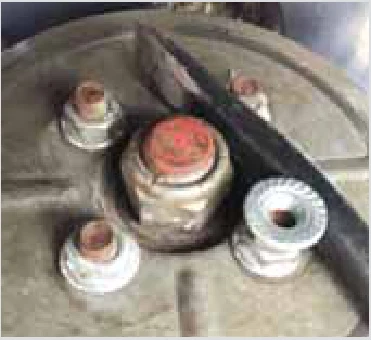
“Sometimes, it can be hard to loosen a nut. This photo shows the friction-drive wheel on a rear-engine Snapper rider. To keep the pry bar on the studs while loosening the nuts, reverse a flange nut and turn it over to create a shoulder. The bar won’t slide off the studs now.”

From the archive · Full text
Reader shop tip 1 of 2

Bern Smith

Individual tip 1 of 2 from this reader’s published contribution.
Bern Smith, Madison, Fla.

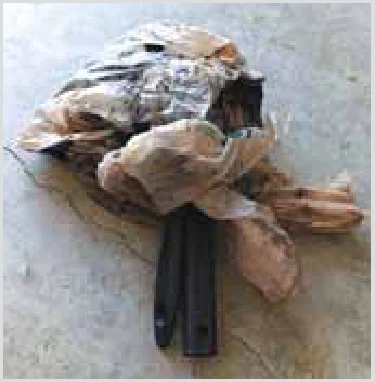
“I’ve found that if I run out of time painting and need to stop and come back later, wrapping the brush or roller in a plastic shopping bag keeps it soft, allowing me to resume painting later. I’ve come back four days later, unwrapped the plastic, and begun painting again.”

From the archive · Full text
Reader shop tip 2 of 2

Bern Smith

Individual tip 2 of 2 from this reader’s published contribution.
Bern Smith, Madison, Fla.

“A couple of springs, short pieces of chain, and U-bolts made a simple, inexpensive lift assist for my trailer tailgate.”

From the archive · Full text
Reader shop tip

Don Miller

Don Miller, North Platte, Neb.

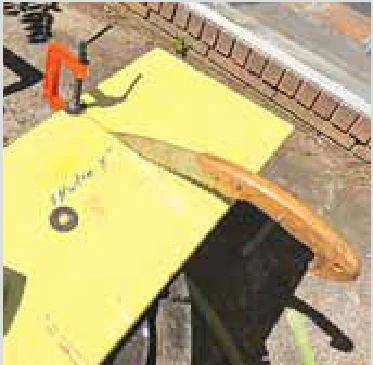
“I mulch with my zero-turn. I removed the washer on the blades and added a flat piece of metal with a small hole at each end. I then thread trimmer line through this. It helps keep the deck cleaner and mulch better.”

From the archive · Full text
Reader shop tip

David Simpler

David Simpler, Elkton, Md.

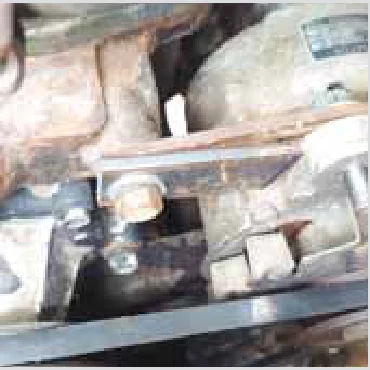
“I was having trouble with a loose belt on my Case IH 275 tractor. I just couldn’t keep the belt tight; it kept slipping and tearing. On the third replacement belt, I tried something new, and it stopped the slipping alternator issue.

“I used a 1/8 in. by 1 in. by 2 in. long bolt with a 15-degree angle cut, then installed the mounting bolt to rest against the alternator itself. It can’t go anywhere now.”

From the archive · Full text
Reader shop tip 2 of 6

John Rochester

Individual tip 2 of 6 from this reader’s published contribution.
John Rochester, Charlotte, N.C.

“Fold a piece of barrier tape into a repair manual you use often. Label if needed. It saves a lot of searching.

From the archive · Full text
Reader shop tip 3 of 6

John Rochester

Individual tip 3 of 6 from this reader’s published contribution.
John Rochester, Charlotte, N.C.

“Rubber bungee cords, hooked where convenient, make great, easy-to-use hangers for cords and hoses. Just attach the bottom hook to the top hook.

From the archive · Full text
Reader shop tip 4 of 6

John Rochester

Individual tip 4 of 6 from this reader’s published contribution.
John Rochester, Charlotte, N.C.

“These socket hangers are meant to be screwed into a wall. If you use a toolbox like I do, they often slide off and get lost. The fix is to add a small bolt, pointed upward, at each end.

From the archive · Full text
Reader shop tip 5 of 6

John Rochester

Individual tip 5 of 6 from this reader’s published contribution.
John Rochester, Charlotte, N.C.

“To ground a vehicle battery to the frame, connect the negative terminal of the battery to the vehicle’s frame using a wrench and metal clamp, making sure the connection is tight and free of corrosion. This allows the electrical current to flow properly throughout the vehicle’s electrical system.

From the archive · Full text
Reader shop tip 6 of 6

John Rochester

Individual tip 6 of 6 from this reader’s published contribution.
John Rochester, Charlotte, N.C.

“Store a 4 by 4 and a plank behind the seat until needed. Use them for parking on a hill or changing a tire.”

Shop feature stories

From the archive · Full text
Feature story

Made-It-Myself Tractor Scraper Receiver Hitch

Featured source: Jeff Buckner, Canon City, Colo.

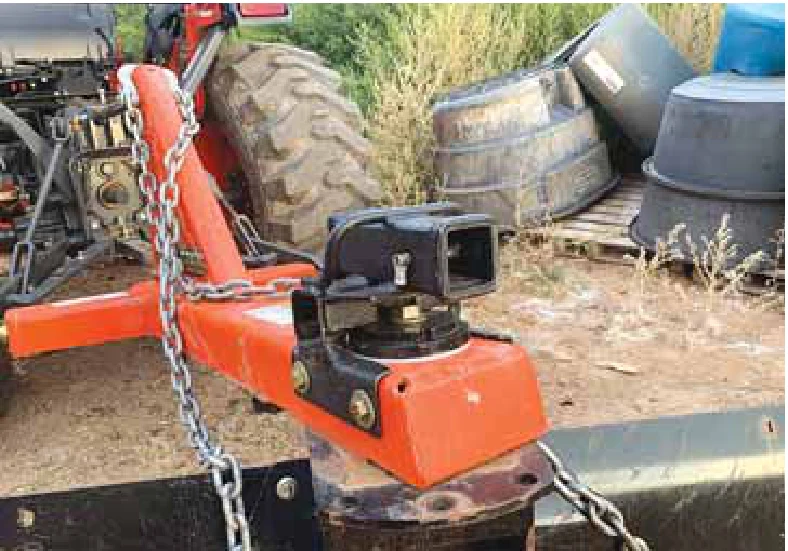
Jeff Buckner from Canon City, Colo., created a versatile tractor scraper receiver hitch.

“The scraper is usually attached to my tractor,” Buckner says.

“I needed a way to attach different tools to it, so I took a receiver hitch that a Navy buddy gave me (we served on the USS Constellation CV-64) and cut it down.”

He then used mounting brackets to fit it around the scraper’s pivot.

“I drilled and tapped holes for it so that I could remove it if ever I needed to.”

Buckner has a variety of tools and equipment that can fit in it.

“Along with the normal hitches, I have an engine hoist, vice, winch, engine mount, etc. I made it so that it wouldn’t interfere with the basic operation of the scraper.”

Contact: FARM SHOW Followup, Jeff Buckner, 45780 W. US Hwy 50, Canon City, Colo. 81212 (ph 719-275-2035; [email protected]).

From the archive · Full text
Feature story

Shop Doors Powered By 50:1 Gear Head

Featured source: Tom Harmon, Dinwiddie, Va.

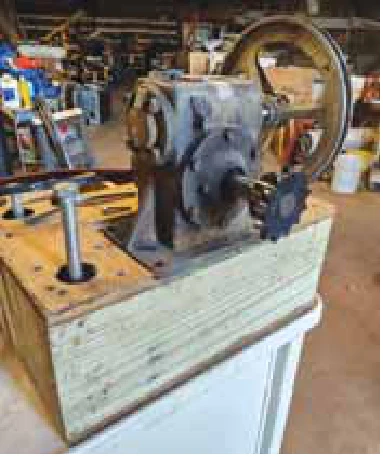
Tom Harmon of Dinwiddie, Va., built a large shop door opener using supplies he had on hand.

“I started with an old 50:1 gear head, powered by a residential garage opener,” he says.

“Then I bought a 13-tooth sprocket that moves a #50 chain, connected to both ends of the door, with two idler pulleys and a #50 chain off a 472 Haybine.”

Harmon explains that everything is connected through the bale tensioner bracket from a 1950s New Holland Super 77 baler.

“I probably put less than $50 out of pocket into this. Cables and pulleys tie the two doors together at the top.”

He estimates he spent three days working on the door.

“I got lucky. Most of it worked exactly like I wanted—not a lot of redos.”

He later installed an additional switch on the outside of the door so he wouldn’t have to walk inside to open it.

“I wouldn’t want anything different. This design works great.”

Contact: FARM SHOW Followup, Tom Harmon, Dinwiddie, Va. (ph 804-720-7514).

From the archive · Full text
Feature story

‘World’s Toughest’ Wipes Tackle Big Messes

Featured source: Anna Shapiro, Columbus, Ohio

Crocodile Cloth disposable wipes provide a better cleaning option for both household and industrial use.

“We created Crocodile Cloth after identifying a huge gap in the market,” says Crocodile Cloth Digital Brand Strategist Anna Shapiro.

“Construction, industrial and trade-related workers need a more effective way to clean tough messes, especially on jobsites without running water. We planted our roots in Columbus, Ohio, and began manufacturing the world’s toughest cleaning wipe.”

Crocodile Cloth options include Original, Fierce, PowerSCRUB, Auto, Paint, All-Purpose, Outdoor and Grill. Prices vary depending on the type and quantity. For example, the Original costs $5.99 for a 10-pack, $15.99 for a 50-pack, and $22.49 for a 100-pack. The Fierce Disinfectant is priced at $6.99 for a 10-pack, $15.49 for a 40-pack, and $20.99 for an 80-pack.

The company is committed to using only high-quality, safe and sustainable materials for its cleaning cloths. Each variety (except the surface disinfectant Fierce) is gentle enough for use on skin, while remaining tough enough for the dirtiest cleaning tasks.

“We like to say we’re bigger, better and wetter,” Shapiro says.

Each Crocodile Cloth measures 10 in. by 15 in., making it three times larger than competitor wipes. They’re made from low-lint, nonwoven material that won’t fall apart or leave residue behind.

“The cloths themselves are extremely durable. We even have a ‘Never Dry Guarantee,’ so you don’t have to worry about your pack of Crocodile Cloth drying out.”

While the different product lines use the same basic ingredients, the ratios vary. For example, Auto, Outdoor, Grill and Power Scrub all contain extra degreasers, while Original and All-Purpose have more skin softeners for everyday use.

Each wipe variety is made without added fragrance, except for Fierce disinfectant, which has a refreshing lemon eucalyptus scent. They’re safe to use on laminate flooring and vehicle exteriors, although the company recommends testing on small, hidden areas first. While the wipes are dermatologically tested and proven safe for human skin, they’re not intended for restroom use and aren’t flushable.

“We want to help anyone who gets messy,” Shapiro says.

“Whether you’re on the job, at a picnic, or fishing, hunting or off-roading, we want that person to save time and get back to what really matters—enjoying life without worrying about cleanup.”

Contact: FARM SHOW Followup, Crocodile Cloth, 1808 Deffenbaugh Ct., Columbus, Ohio 43230 (ph 855-552-5684; [email protected]; www.crocodilecloth.com).

From the archive · Full text
Feature story

Guard Blocks Mower Chutes Quickly

Featured source: Kory Ballard, Granger, Iowa

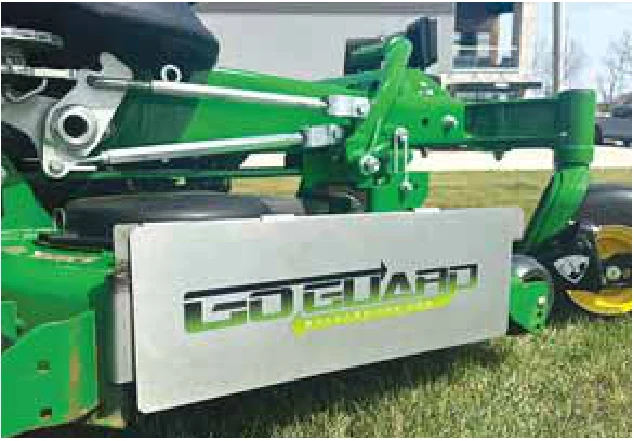
The Go Guard by Ballard, Inc. offers the fastest and most affordable method for closing the mower chute on compact commercial mowers.

“Most of the time, the Go Guard is used for controlling the discharge in tight spaces, around homes, buildings, pools, traffic ways, people, etc.,” says Kory Ballard, founder of Ballard, Inc.

“It also works great during fall leaf season, as it keeps the leaves under the deck, and mulching blades can turn the leaves into dust.”

This mower attachment allows you to quickly block a mower’s discharge when mowing in tight spaces or around areas like a courtyard or pool that you want to keep clean. It’s compatible with many compact commercial mowers but isn’t considered compatible with add-on chute blockers.

The 16-ga. stainless steel blocking plate quickly hooks on and locks securely with easy-turn knobs. Eight included magnets help hold the guard in place for easy, portable storage on the equipment’s side—clip it on and go.

The plate measures 20 in. by 7 in. to fit most commercial mowers, and the tightening knobs are spaced 10 in. apart, so this amount of space is necessary to mount it to your existing mower deck without a bracket. Some mowers will require drilling two to three holes into the deck.

Ballard, Inc. sells the Go Guard for $49.99 online, with shipping available across the continental U.S.

“On our website, simply search by mower make, model and deck size to see what machines are compatible and which will need one of our multi-use brackets.”

Contact: FARM SHOW Followup, Ballard Inc., 1703 Burr Oak Blvd., P.O. Box 70, Granger, Iowa 50109 (ph 877-965-0951; [email protected]; www.ballard-inc.com).

From the archive · Full text
Feature story

Get More Workbench Space With The Tool Swing

Featured source: Rich Meyer

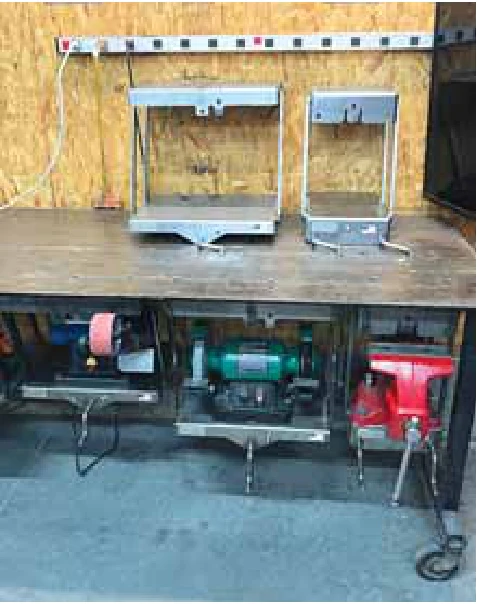
Rich Meyer, inventor of The Tool Swing, aims to improve the functionality of your workbench. This specially designed workshop aid quickly and easily swings up a vise, bench grinder, sander, chop saw or other tool, then swiftly unlatches and swings it out of your way.

“Growing up on a farm with an innovative father, I learned to create solutions,” Meyer says.

“In the early 90s, my cramped garage led to the invention of The Tool Swing. I quickly realized its potential, then patented and designed versions for vises and bench grinders.”

Meyer currently offers two models: one for a vise and the other for a bench grinder. The bench grinder model is rated for over 500 lbs. and made of 10-ga. steel, broken in four directions. It’s laser-cut and CNC-formed from a 10-ga. PO plate. The vise model is made of 1/4-in. plate, broken in four directions to create a highly solid vise platform with 3/8-in. thick swingarms. Both are laser-cut and durable enough to last several generations. Meyer plans to offer lighter-duty models in the future.

“Anyone with limited workbench space can use The Tool Swing,” he says.

“I don’t know of any other device like it out there.”

The Tool Swing Vise costs $395, and The Tool Swing Grinder is $260, with free shipping within the contiguous United States, on the Paragon Pro Manufacturing website.

“This has been a long time in the making,” Meyer says.

“I’ve done a lot of the work myself in my little backyard shop—welding, cutting, threading, you name it. Now I’m partners with Paragon Pro Manufacturing. They’ll be producing and marketing The Tool Swing.”

Contact: FARM SHOW Followup, Rich Meyer ([email protected]; www.thetoolswing.com) or Paragon Pro Manufacturing Solutions, 7251 42nd St., Grand Forks, N.D. 58201 (ph 701-775-0551 or 800-448-0822; [email protected]; www.paragonpromfg.com).

From the archive · Full text
Feature story

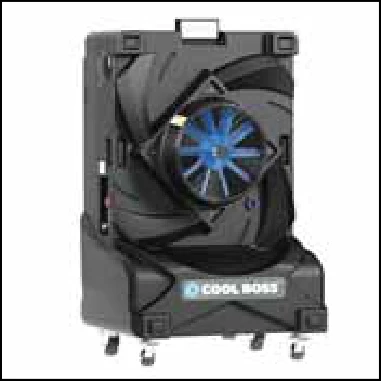
Efficient Cooling For Large Spaces

Featured source: Cool Boss, Theodore, Ala.

Traditional air conditioning isn’t always practical or affordable for large spaces like garages or warehouses. Instead of enduring the discomfort of summer’s intense heat or paying high costs for building renovations to add air conditioning, Cool Boss, a commercial cooling company, offers its evaporative air coolers to beat the heat and turn hot, uncomfortable spaces into cool, productive environments.

These portable cooling units draw in the surrounding hot air, pass it through cool water-soaked pads, and produce a refreshing breeze across shop floors, loading docks, storage facilities and other open spaces. Powered by standard 110-volt outlets, they operate with a built-in water tank or a garden hose for continuous water supply. No refrigerants or special equipment are needed. User-friendly digital controls manage swing louvres that evenly disperse cool air over a wide area.

Air temperatures can be lowered by as much as 26 degrees F without the high cost of traditional air conditioning.

“Whether you’re cooling 600 sq. ft. or 6,000, there’s a model that fits the job. Cool Boss can handle anything from small workstations to full production bays,” says a Cool Boss spokesperson.

Available models are suitable for all space sizes from small garages and patios to large warehouses and production floors.

“It really comes down to your square footage and how much cooling power you need. On top of that, you’ll avoid monthly utility spikes and ongoing maintenance fees. With evaporative cooling, all you need is water, an outlet, and a few minutes to get started.”

The Cool Boss commercial-grade evaporative coolers cost between $600 and $5,000.

“That might sound like a lot until you compare it to installing an industrial air conditioning system, which can easily cost tens of thousands for equipment, ductwork and installation alone,” the spokesperson explains.

Contact: FARM SHOW Followup, Cool Boss by BendPak, 5240 Willis Rd., Theodore, Ala. 36582 (ph 855-223-2665; [email protected]; www.coolboss.com).

From the archive · Full text
Feature story

Outlet Controls Heat When It’s Needed

Featured source: Farm Innovators, Plymouth, Ind.

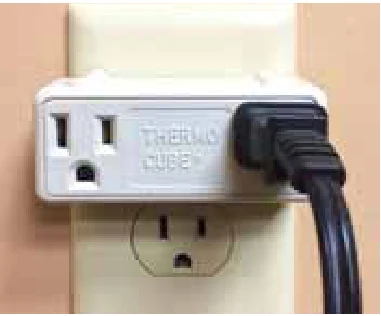
Save money by turning on heaters only when needed with a Thermo Cube thermostatically controlled outlet. Whether it’s an engine block heater, heat tape, heat lamp, or stock tank heater, why use electricity when it isn’t necessary?

Plug a Farm Innovators Thermo Cube TC-3 outlet into a wall socket before connecting a heating or fan device. When you plug your cold-weather heater into the TC-3 outlet, it powers on only when the temperature falls below 35 F. When the ambient temperature exceeds 45 F, the power supply stops.

Using a TC-3 not only saves on electricity costs but also prolongs the heater’s lifespan. It works with any 15-amp, 120-volt electric heater or fan used at home or on the farm.

As a secondary benefit, it converts any standard outlet into a double receptacle capable of supporting up to two devices. The company suggests using it as a freeze-warning system for furnace failure when you’re away from home. Plug a lamp that’s visible to a neighbor into the TC-3. It’ll turn on the lamp if the furnace stops working and the temperature in the house or outbuilding drops below 35 F.

The Thermo Cube TC-3 is sold by many retailers and online stores. It usually costs around $20, but you can find it for as low as $14.99. Other models are available for 0 F, 20 F, and fans. Farm Innovators is a family-owned Indiana company with 40 years of experience in heating, agricultural, industrial, and home-use products.

Contact: FARM SHOW Followup, Farm Innovators, P.O. Box 452, Plymouth, Ind. 46563 (ph 574-936-5096 or 800-277-8401; [email protected]; https://farminnovators.com).

From the archive · Full text
Feature story

Custom 3D Knob Replacement For Electric Fencer

Featured source: Matt Steffen, Lincoln, Neb.

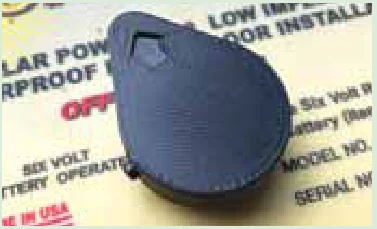
When Matt Steffen’s family member lost the control knob of his Solar Pak 6 electric fencer, he ran into an unexpected problem.

“He couldn’t tell whether the fencer was on or off,” says Steffen, owner of an agriculture design business.

“He called me to see if I could help and provide a practical solution.” Using his expertise in 3D design and printing, Steffen created a replacement knob with a small set screw to securely attach it to the fencer and an arrow to clearly indicate the on or off status.

“This customization ensured the knob was not only functional but also user-friendly,” Steffen says. The process involved drawing up the model in specialized 3D software and printing several versions to test fit and functionality. While printing proceeded smoothly, the spooled plastic filament required 12 hours of drying to remove moisture before printing.

The entire project was cost-effective, with material expenses around $2.

“He was thrilled with the result and has been using the new knob ever since,” Steffen says.

“This experience highlights how accessible technology can provide a handy way to fix something small and demonstrates the value of practical design in everyday agriculture.” Contact: FARM SHOW Followup, Matthew Steffen, 228 N. 12th St., Lincoln, Neb. 68508 (ph 402-640-8041; [email protected]).

From the archive · Full text
Feature story

Unique Welding Rods Bind Various Metals

Featured source: Simple Weld

Successfully welding different types of metals together is a challenge for even the most experienced welders. Conflicting properties, such as melting points, solubility and thermal expansion rates, cause welds to crack, warp or form brittle intermetallic compounds. Other defects, like porosity and overall weakness, also occur.

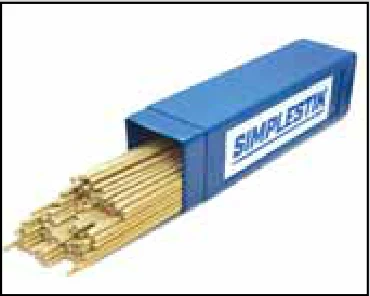
Simple Weld developed its Simplestik 757SP welding sticks to tackle these challenges.

The 757SP welding rod stands out as the industry’s most advanced and user-friendly option for joining all types of steel. Its alloyed core wire allows effective welding of mild steel, medium and high-carbon steels, stainless steel, cast steel, spring steel and tool steel.

“Widely used in repair applications, the 757SP can seamlessly join different steel types without the risk of cracking,” says a Simple Weld promotional release.

Designed for ease of use, the 757SP strikes immediately without sticking to the workpiece. It delivers a soft, stable arc and creates a weld puddle that freezes quickly, making control simple in any position. The unique rod provides deep penetration and exceptionally strong weld joints, with a tensile strength of 180,000 PSI.

“It’s so robust, the welds can’t be cut with a torch.”

Additionally, a moisture-resistant mineral coating helps keep the rods fresh for up to 50% longer than standard commercial welding rods.

The 757SP welding rods are priced at $293.70, not including S&H.

Contact: FARM SHOW Followup, Simple Weld (ph 833-373-4200; [email protected]; www.simpleweld.com).

From the archive · Full text
Feature story

Simple Device Fixes Hydraulic Down Pressure

Featured source: Lorne Glanville, Walton, Ontario, Canada

“Some seed drill equipment requires constant down pressure for seeding depth, and John Deere SoundGard cabs have little components to put in the tractor console to operate the hydraulic levers, but they don’t work very well,” says farmer Lorne Glanville.

“Most hydraulics stay in position until the cylinder reaches the end of the stroke, and then they kick back out.”

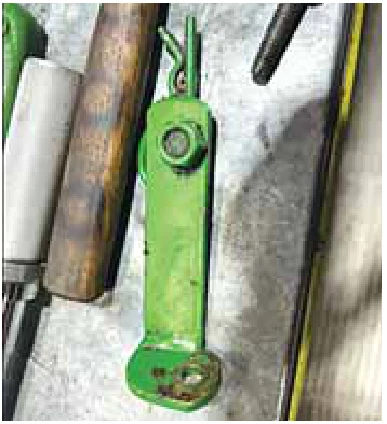
To solve this frustrating problem, Glanville created a small device to hold his tractor’s hydraulic levers in constant down pressure and lock the valve in the operating position.

The device consists of a 5-in. long and 3/16-in. thick piece of flat iron welded at a right angle. Glanville welded a 1/4-in. rod to the top of the tractor’s hydraulic valve, where one end of the flat iron snaps into place and attaches with a hairpin. The other end bolts into an existing threaded hole at the back of the valve.

“It works for all 30, 40, 50 and 60 series SoundGard tractor cabs,” Glanville says.

“It took a couple of hours and some trial and error to get it right, but eventually, I got it to work perfectly. When I don’t need the down pressure, I just remove it.”

Contact: FARM SHOW Followup, Lorne Glanville, 82578 North Line, Walton, Ontario, Canada N0K 1Z0 (ph 519-531-1943).

From the archive · Full text
Feature story

Shop-Built Gantry Trailer

Featured source: Frank Surber, Peacock, Texas

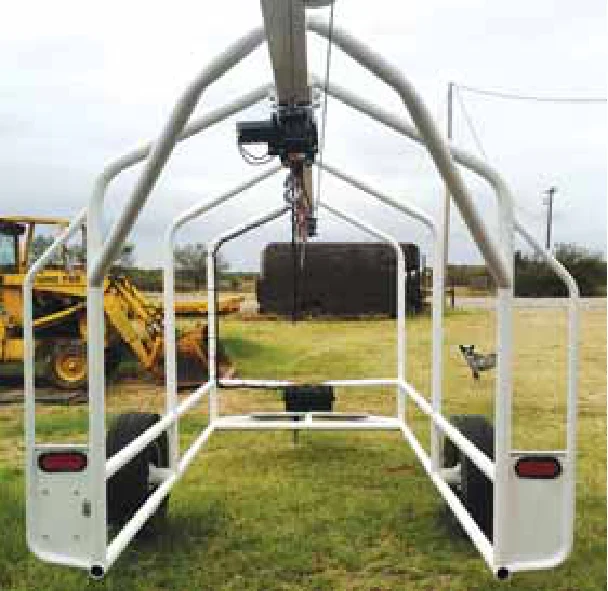
As an accomplished metalworker, Frank Surber isn’t afraid to tackle any homemade project, big or small. He mounted scaffolding on a school bus chassis to install the rafters, lighting and an overhead bridge crane inside his shop. A former oil field mechanic, he’s built welding trailers and a transmission jack, and has helped neighbors build useful equipment from scrap metal.

Surber recently built a heavy-duty gantry trailer for hauling propane tanks, totes and other items too large to fit inside a truck box. He built the framework using 2 3/8-in. oilfield tubing. The gantry beam is made from a 4-in. H-beam.

To raise and lower the payload, Surber installed a 3,500-lb. electric winch along with an old boat winch. He widened and split the drum to pay out and take up the cable for moving the hoist winch.

The hoist winch trolley is constructed from 1/2-in. plate steel with 1 3/4-in. dia. cam rollers. The trailer features a sturdy tongue hitch and rides on a pair of wheels from an old wagon. Surber says the gantry works well for safely lifting and hauling different-sized LP tanks and totes with sturdy metal frames.

Contact: FARM SHOW Followup, Frank Surber, Peacock, Texas.

From the archive · Full text
Feature story

Homemade Adapter Adds Versatility To Winch

Featured source: Cole Hardman, Irwin, Penn.

Winching non-operational equipment from yard sites and road ditches is at the core of Cole Hardman’s business. To handle these sometimes difficult tasks, he used to mount a winch near the front of his flatbed trailer, but it took up valuable space, was pulled from a low angle, and was semi-permanent, leaving it exposed to wind, rain and snow.

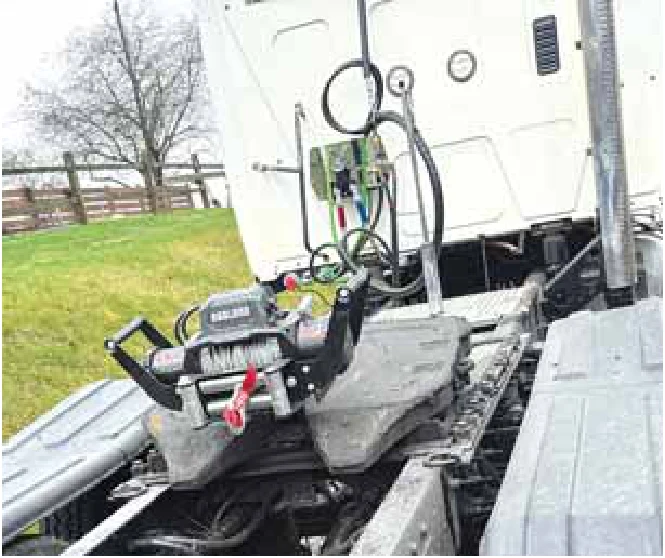
To address these challenges, Hardman built a small hitch adapter for the winch to mount onto the fifth wheel of his ProStar road tractor.

“The adapter goes from the 5th wheel kingpin to a 2-in. receiver hitch,” he says.

“Having it sit up there in a higher position provides a much better angle for winching heavy vehicles onto the trailer, plus I can use the entire deck. The adapter also swivels 360 degrees so I can get at the equipment no matter where they’re sitting.”

If the winch isn’t needed, it can be easily removed for storage by simply pulling a clip and sliding out the pin that secures it. Hardman can also use the adapter at the back of his truck or on the regular hitch carrier.

“I originally thought about welding the kingpin to the bottom of the winch carrier, but opted to go the route of the receiver tube,” Hardman says.

“That way, I can still use my winch on the front of the trailer or in the hitch of my pickup. The adapter works great, and I can quickly take it off and store it in the garage if I don’t need it.”

Contact: FARM SHOW Followup, Cole Hardman, 236 Freeman Rd., Irwin, Penn. 15642 (ph 724-309-0994; [email protected]).

From the archive · Full text
Feature story

Dual Saw Saves Space

Featured source: Mister Worker

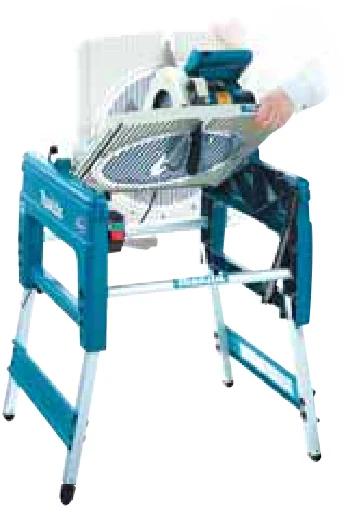
While browsing online recently, the Makita LF1000 Flipover saw caught our attention. This innovative saw serves two functions, acting as both a miter saw and a table saw by flipping the work surface over. It’s built for both workshop and job site use.

The LF1000 is designed to optimize your workspace. In a crowded workshop, this saw’s ability to smoothly switch between a table saw and a miter saw eliminates the need for multiple tools, greatly reducing clutter and cost.

“This tool has transformed my workflow. It’s compact enough for my truck and powerful enough for all my cutting tasks. I no longer drag around two saws,” said one reviewer.

With 1,650 Watts and a cutting capacity of up to 10.25 in., it features a tilt function for angled cuts.

The LF1000 is unavailable in the U.S. It costs about €1,150 ($1,350 USD). You can find it at Mister Worker and eBay.

Contact: FARM SHOW Followup, Mister Worker (www.misterworker.com).