Practical ideas from FARM SHOW MagazineSubscribe · Free issue · Send us your shop tip
Subscribe to FARM SHOW
Issues / Vol. 44, No. 1 (2020)

Vol. 44, No. 1 (2020)

Money-Saving Repairs & Maintenance Shortcuts · Printed section pp. 32–35

36 selected entries · Complete text of selected entries

This issue’s section includes reader tips and feature-length shop stories. Held items and editorial notices are not reproduced.

Archive text: prices, coupons, availability and contact details reflect the original publication, not current offers. Reader methods are not universal instructions; follow manufacturer guidance and proper safety practices.

Reader shop tips

From the archive · Full text
Reader shop tip

Gary Swensen

Gary Swensen, Yankton, S.Dak.

“My old Farmall has a cracked exhaust manifold. When it was out in the rain, water would get into the engine. So I came up with a quick fix until I have time to fix it permanently. I cut a hole in a heavy piece of sheet metal and slipped it over the exhaust pipe. The sheet metal fits tightly so it keeps water out. It’s hidden under the hood so it doesn’t change the look of the tractor.”

From the archive · Full text
Reader shop tip 1 of 2

Wess Cornelius

Individual tip 1 of 2 from this reader’s published contribution.
Wess Cornelius, Winlock, Wash.

“Silicone spray that you would normally use to waterproof leather shoes works great on shovels to keep them clean and sharp. A spray can costs about $3 at a shoe store.

From the archive · Full text
Reader shop tip 2 of 2

Wess Cornelius

Individual tip 2 of 2 from this reader’s published contribution.
Wess Cornelius, Winlock, Wash.

“When fixing a broken window, you can avoid making a mess inside the house or vehicle by putting duct tape over what remains of the window before removing it. Keeps shards of glass from going everywhere.”

From the archive · Full text
Reader shop tip

Harold Billings

Harold Billings, Kenosha, Wis.

“Our 50-year-old bathroom fan was squeaking badly. The bushings are worn out but replacing the fan would be difficult as it is an oddball one with unique mounting brackets. However, it’s easy to take it out for maintenance. I tried various oils over the years but they only last 6 mos. or so. Then I got the brainstorm to try automotive wheel bearing grease. I think it has some sort of fiber material in it that helps it stay in place. There’s enough side-to-side movement around the rotor shaft that I could work the grease into the bushings. The fan has remained as quiet as a new one for the past 3 years.”

From the archive · Full text
Reader shop tip

Kevin McLain

Kevin McLain, Albany, Ore.

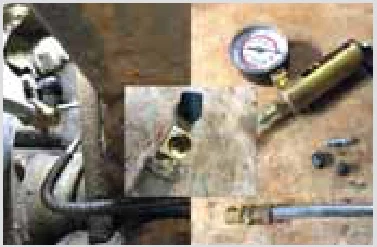
“I rigged up a little tool to put bleeder valve caps back on. There’s often no room to reach the valves so I attach 1/8 or 1/4-in. fittings to a hand-held vacuum pump which holds the caps until they’re in place. Then you release the vacuum. This is also useful for putting caps on grease zerks where dirt is a problem.”

From the archive · Full text
Reader shop tip

Dale Rogers

Dale Rogers, Mayfair, Sask.

“Like many people, we had trouble with dirt, dust, and snow from roads building up inside the back wheels of our 2013 Dodge Minivan. It would often put the wheels out of balance.

“So I made scrapers that mount to the bottom bolt of the brake calipers. They don’t do a perfect job but I would estimate that they do a 95 percent job of cleaning out road grit from inside wheels. It was relatively easy to put them together and a quick job to attach them to the wheels.”

From the archive · Full text
Reader shop tip

Richard

Richard, Batesburg, S.C.

“I use Rubbermaid stock tanks to water livestock and install stock tank heaters in the tanks each winter. Sometimes the gasket washer for the drain plug assembly gets damaged. I’ve been trying to find replacement gasket washers but Rubbermaid doesn’t sell just the washer gasket – you have to buy the complete assembly for $18. So I found a washer gasket that works perfectly. You can get it at Tractor Supply Co. There are 2 gaskets in a bag for $4.95. Part #200G BF2 for the 2-in. cam lock fitting.”

From the archive · Full text
Reader shop tip

Jake Kappelman

Jake Kappelman, Bloomfield, Iowa

“I had a warped fuel bowl mount that leaked fuel, even after I replaced the gasket. Instead of buying a new mount, I took a socket the same dia. as the fuel bowl, wrapped it with sandpaper, and sanded the mount flat. It stopped the leaking and I saved money by not having to buy a new part.”

From the archive · Full text
Reader shop tip 1 of 2

Joe Eilert

Individual tip 1 of 2 from this reader’s published contribution.
Joe Eilert, Jewell, Kan.

“We have had problems with vaporlock in our 427 Chevy trucks. I’ve found the best solution is to avoid gas with ethanol, which boils at a lower temp.

From the archive · Full text
Reader shop tip 2 of 2

Joe Eilert

Individual tip 2 of 2 from this reader’s published contribution.
Joe Eilert, Jewell, Kan.

“Also, Sea Foam additive in all small gas engines and all old gas tractors is like a mechanic in a bottle.”

From the archive · Full text
Reader shop tip

Marvin W. Anderson

Marvin W. Anderson, Glyndon, Minn.

“If you use ethanol in small engines, plan on replacing the carb inlet needle and seat regularly. To minimize problems, I use carb cleaner instead of starting fluid to start small engines having trouble. The bonus is that it cleans out the carburetor, too.”

From the archive · Full text
Reader shop tip 1 of 2

Fred Wieck

Individual tip 1 of 2 from this reader’s published contribution.
Fred Wieck, Canyon, Texas

“When you need just a drop or two of oil to lube something, just pull the dipstick from whatever engine is close by and use what drips off the end.

From the archive · Full text
Reader shop tip

Norman Bennett

Norman Bennett, Newport, Vt.

“One of the remotes on my tractor stopped working and the dealer wanted $2,500 to install new ones. I solved the problem with a Summit Manufacturing outlet multiplier that I bought on Amazon for about $450. Everything you need is included, including 4 quick couplers. Plug the well-machined aluminum billet block into your existing remote and mount the switch in a handy location on your tractor.

Hook up power and run the two leads to waterproof connectors on the solenoids, and you’re done. Works like I expected, I saved money, and now I can run extra cylinders.”

From the archive · Full text
Reader shop tip

Fred Yutzy

Fred Yutzy, Vermontville, Mich.

“To keep shovels and other tools clean and rust-free, I fill a 5-gal. bucket with sand and then saturate the sand with diesel fuel and motor oil. After I use a shovel, hoe or other such tool, I clean them and then run them through the sand. It applies oil evenly to keep them from rusting.”

From the archive · Full text
Reader shop tip

Butch Beck

Butch Beck, Hope, Arkansas

“The use of a 2-post car lift is not only great for working on cars and light trucks, but the arms can be used to hold equipment at a convenient working height. Very handy.”

From the archive · Full text
Reader shop tip

Mike Grubb

Mike Grubb, Georgetown, Ind.

“I like to tinker with small engines and am always amazed that so many string trimmers, chainsaws, and lawn mowers are thrown out simply because of clogged carburetors. I don’t even bother fixing carbs anymore because you can buy entire new ones online for $7 to $15 new. You’ll spend only about $20 or so for the carb, 6 in. of fuel line, filter, and primer bulb. Makes a machine destined for the junkyard run like new.”

From the archive · Full text
Reader shop tip

Ron Nahrwold

Ron Nahrwold, New Haven, Ind.

“While I was changing oil in my New Holland L220 skid loader, the oil fill cap fell underneath the engine and I spent hours trying to retrieve it. To make sure I don’t lose the cap again, I attached a steel brake cable off an old bicycle. I used electrical wiring terminals to attach one end of the cable to the cap, and the other end to the skid loader’s frame.”

From the archive · Full text
Reader shop tip

Lyle Smith

Lyle Smith, Defiance, Ohio

“I use bags of dry ice to help remove stubborn bearings. I wrap a rag around the ice bag and place the bag on the shaft, then wait for about 20 min. The cold ice will shrink the shaft just enough so that the bearing falls off. Once the ice bag has been removed it doesn’t take long for the shaft to expand back to its original size, so when I’m ready to put a bearing back on, I repeat the process.”

From the archive · Full text
Reader shop tip 1 of 3

Carl Miner

Individual tip 1 of 3 from this reader’s published contribution.
Carl Miner, Willmar, Minn.

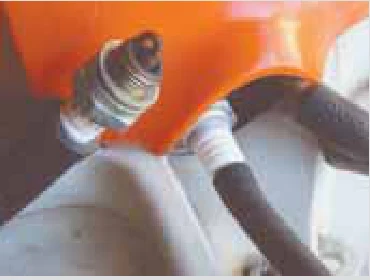
“When I need to install or remove a spark plug in a tight place, I slip a short length of rubber fuel line over the plug. Makes it easier to thread the plug in without ruining the threads, which often happens when using a wrench in tight quarters.

From the archive · Full text
Reader shop tip 2 of 3

Carl Miner

Individual tip 2 of 3 from this reader’s published contribution.
Carl Miner, Willmar, Minn.

“Aerosol cans on my metal welding table would start rolling around whenever the table got bumped, so I started using inexpensive welding magnets sold at discount stores to hold the cans in place.

From the archive · Full text
Reader shop tip 3 of 3

Carl Miner

Individual tip 3 of 3 from this reader’s published contribution.
Carl Miner, Willmar, Minn.

“I use swimming pool noodles to protect my knees when resting them against a ladder rung in order to keep my balance. The noodles can be easily moved from one rung to another.”

From the archive · Full text
Reader shop tip

EverGreen Restoration

EverGreen Restoration, Spooner, Wis. (ph 715 520-7876; www.evergreengauges. com)

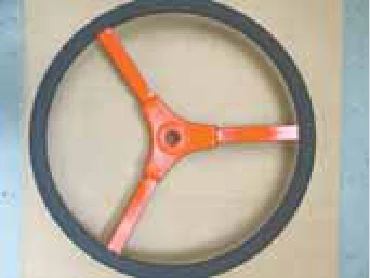
They recover old tractor steering wheels, using a manmade rubber material that doesn’t leave marks or residue on your hands. They can recover both flat and round spoke wheels. Prices range from $95 for 14, 15, and 17-in., 3-spoke flat or round spoke wheels, to $110 for 19-in., 4-spoke wheels.

“Customers can send their steering wheel core to have it recovered, or exchange for a core that I’ve already recovered. Or, they can buy a new steering wheel from me,” says owner Jerry Trcka.

“I got started recovering old tractor steering wheels about a year ago, when I was able to buy some molds that had been sitting unused in an Iowa rubber shop for a long time.

“Most of the steering wheels that I recover are from tractors built in the 1930’s to the 1950’s. I don’t sandblast or prime them because many people prefer to leave their tractors in original condition without adding anything new to them.” Trcka also sells replacement gauges for antique tractors including oil, amp, temperature, and fuel gauges for Two-Cylinder and New Generation tractors. In addition, he sells dash lights, tachometers and cables, cigarette lighters, Fiber Optics, indicator lights, and ignition switches for various tractor models.

From the archive · Full text
Reader shop tip

Jeff Prose

Jeff Prose, Lakeville, Minn.

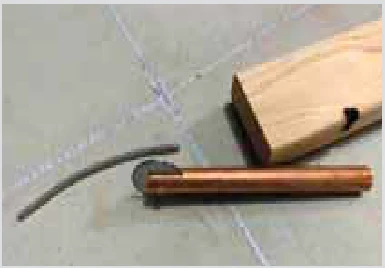
Jeff says he was shocked to see the $49 sticker price on a simple plastic tool he needed to shove insulation into concrete expansion joints.

“An absolutely stupid price to pay, especially when I decided I could make one myself in 20 min. for less than a dollar,” says Prose. Using his hand-held grinder with a metal cutting disk, Prose cut a 1/4-in. wide slot about 1 in. deep into the end of a piece of 3/4-in. dia. copper tubing. Then he mounted a 1 1/2-in. dia. washer in the slot, securing it with a 1-in. long sheet metal screw.

“The washer easily rotates when I push the insulation 3/4 of an inch into the expansion joints. The screw that holds the washer in place guides the insulation to the exact depth needed all along the joints. Once the insulation is in place, I caulk all the joints, let the caulk dry, then scrape the surface smooth to create a seam that won’t collect dirt or gravel in my new shop floor. It couldn’t have worked any better if an engineer had designed it on CAD.”

From the archive · Full text
Reader shop tip

AirSHIM™

AirSHIM™, www.calculated.com; ph8008548075 (as printed)

AirSHIM acts like a third hand when you’re working alone. And it’s a strong hand with the ability to securely hold up to 500 lbs. as you level and secure a window frame or door, for example. With an internal plate to hold its shape, the 10 3/4 by 5 1/4-in. tool can slip into openings as narrow as 3/32 in. and be pumped up to 3 in. to perfectly align and level a variety of things. Simply squeeze the bulb pump by hand or with a foot, and twist the bleeder valve to adjust the correct placement. Once leveled and held in place, the installer has both hands free to secure a window or door frame, adjust appliance wheels, or shim cabinets. Since putting it on the market, the company has heard from customers who use it for a variety of other uses, from spreading calipers when changing brakes to using it in place of a wedge for cutting down a tree. The AirSHIM sells for about $15 on Amazon.com.

Shop feature stories

From the archive · Full text
Feature story

Wheel Rim Tractor Stands

Featured source: Michael Heron

“I made these garden tractor stands by cutting a wheel rim from a 1/2-ton pickup in half, then welding a pair of wide channel iron brackets onto each half rim. The plates are the same width as the rim and spaced about 1 1/2 ft. apart to hold the wheels in place,” says Michael Heron, Rivercourse, Alberta.

He uses a floor jack or chain hoist to raise the tractor high enough to clear the stands, then lowers the tires down between the brackets and onto the rims.

“It makes working under a garden tractor much safer and doesn’t take up much room,” says Heron.

“I had been using conventional axle stands, but a garden tractor’s frame rails are so close together that it’s hard to find a safe place for them. Also, with 2 axle stands on each side of the tractor there’s very little room to work. My wheel stands don’t take up much space and the extra room is especially handy for servicing deck mower blades.”

Contact: FARM SHOW Followup, Michael Heron, 452078 Range Rd. 13, RR 2, Rivercourse, Alberta Canada T0B 3X0 (ph 306 821-6367; [email protected]).

From the archive · Full text
Feature story

Winch-Operated Mower Lift

Featured source: Harold Curie

About 10 years ago, Harold Curie of Gaithersburg, Md., came up with a winch and pulley system to lift his Deere riding mower, allowing him to more easily service the machine. The 90-year-old is still using it. The system consists of a wall-mounted, 12-volt ATV winch that’s attached to a pair of pulleys – one mounted on the wall about 5 ft. above the winch and the other 12 ft. away on a rafter over the center of the opening to his shed. Cable from the second pulley extends down to a wide neck yoke, which has straps at each end that attach to the mower’s front end. Whenever the system isn’t in use, Curie attaches a weight on the end of the cable to keep it aligned and to prevent twisting. Contact: FARM SHOW Followup, Charles G. Curie, 18508 Fontana Lane, Gaithersburg, Md. 20879 (ph 301 519-8961; [email protected]).

From the archive · Full text
Feature story

Need A Chain, Sprocket Or Bearing?

Featured source: Eric Fery and Cindy Octobre

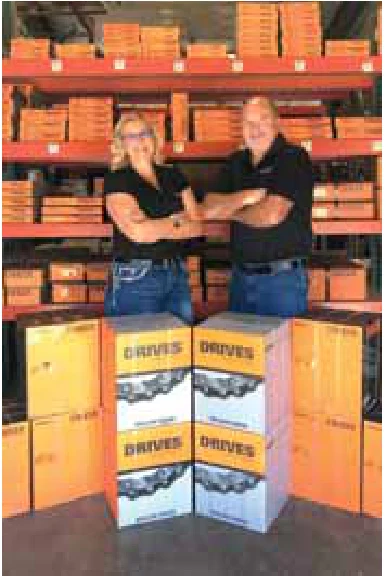
“My brother and I grew up in a small rural community surrounded by farms, lumber mills, food processors, and other manufacturers that had all kinds of machinery. So when the opportunity came to provide support with chains, bearings and sprockets, we jumped at the chance,” say brother and sister team Eric Fery and Cindy Octobre, who founded Ag Chains Plus in 2010. Eric and Cindy started small and grew into the sale of a wide range of power transmission products.

“We have a very loyal client base in the Pacific Northwest and beyond, and we really enjoy solving client’s issues that arise with their equipment,” says Cindy. Ag Chains Plus is housed in a warehouse lined with racks and bins full of parts for all types of equipment. Their chain selection includes roller chain, pintle, steel detachable, t-bar, stainless steel, nickel, mill, welded, and hook-belted chains to name a few. Fery says they can supply just about any type of chain used in agricultural or industrial applications. Getting into chains led to supplying sprockets and bearings, which later led to sheaves, pulleys, couplers and miscellaneous items like cam followers, UHMW plastics and bushings. Ag Chains Plus distributes for a variety of chain, bearing and sprocket manufacturers. They promote USA-made products as much as possible across the country. Contact: FARM SHOW Followup, Ag Chains Plus, 1079 Wilco Road, Stayton, Ore. 97383 (ph 503 769-1500; www.agchainsplus.com; [email protected].)

From the archive · Full text
Feature story

He Made His Own Custom-Built Vise

Featured source: Alexandre Bigunas

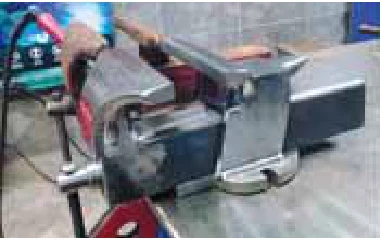
As a metalcrafter and blacksmith who needs excellent tools in his shop, Alexandre Bigunas was continually frustrated with his old bench vise that could no longer hold objects tightly. Rather than buy a new one, which might not be tough enough for his needs, Bigunas decided to build his own.

His new vise has a 1/2-in. thick carbon steel circular base that he cut out with his Sumig gas torch. He honed the rough edges with his hand and bench grinders, and bolted it to his metal workbench.

Bigunas made the slide from 1/2-in. thick carbon steel tubing that glides back and forth through a channel opening that he made from 1/2-in. steel plate welded to the top of the base. He inserted thin metal wafers around the slide as he welded the channel together to avoid pinching.

Bigunas made the screw from a 3/4-in. thick shaft and welded a 2-in. anchor nut to the base at the opposite end of the slide. He trimmed the radius edges of the nut flat on two sides so it could be welded securely in the U channel and still allow the slide and screw to glide freely.

Bigunas made jaws for both sides of the vise from 1/2-in. thick by 2-in. dia. pipe, tracing the angular outline with chalk before cutting with his Sumig torch. Metal spacers and magnets held the jaws in place as he welded them with gusset supports to the main vise frame.

The anvil was made from solid XS300 metal and welded to the base of the stationary jaw, providing more structural support for the vise. He made the free-sliding handle from 1/2-in. metal stock and welded bolts on both ends to keep it from sliding through the hole in the screw shaft.

He says his new vise is built stronger than anything he could’ve purchased.

Contact: FARM SHOW Followup, Alexandre Bigunas (www.facebook.com/alebigunas).

From the archive · Full text
Feature story

Easy-To-Store Portable Lift

Featured source: QuickJack

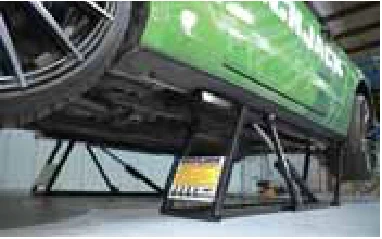
Anyone who does a lot of maintenance work on cars and trucks in their shop will like this new QuickJack portable car lift that eliminates the need for conventional jacks and stands. The electric-hydraulic lift raises and lowers your vehicle with the push of a button, lifting all 4 wheels off the floor at the same time. It collapses to a 3-in. overall height for storage.

The QuickJack features a completely open-center design that doesn’t block the vehicle’s undercarriage, a rapid 30-second lift up to 21 in., and heavy-duty lift capacities up to 7,000 lbs., says the company. The system includes 2 lift frames, one for each side of the vehicle, and an electric-hydraulic power unit operated by a remote control. The power unit attaches to both frames using quick-connect fittings. A mechanical safety locking bar that works automatically is built into both frames to keep the vehicle suspended.

The lift assembly includes the electric-hydraulic power unit, hoses, lift blocks, and quick-connect fittings.

The frames mount on urethane wheels, making it easy to roll them across a floor.

Three models are available with weight capacities of 3,500, 5,000, and 7,000 lbs. The 3,500-lb. model sells on Amazon for $1,333.99, including shipping.

You can watch the QuickJack being installed and activated at www.farmshow.com.

Contact: FARM SHOW Followup, Quickjack, 250 Dove Court, Santa Paula, Calif. 93060 (ph 888 262-3880; www.quickjack.com/smarter).

From the archive · Full text
Feature story

Air Compressor Used To Activate Truck Air Brakes

Featured source: Lucas Greff

“When working on semi trailer air brakes, it’s difficult to diagnose problems by yourself. You have to walk back and forth from the tractor to activate and deactivate the brakes. Also, with the tractor engine running it was difficult to hear any air leaks,” says Lucas Greff, Mott, N. Dak.

“I solved the problem by using the air compressor in my shop, or the one on my service truck, and coming up with a simple valve system with a couple of 50-ft. hoses. It lets me activate and deactivate the brakes from anywhere around the trailer, without having to hook up the truck to it. When used in the shop, it also provides for silent activation which helps in diagnosing issues.”

He bought several brass fittings, a pair of ball valves, and an air coupler, hooking them all together to make a U-shaped splitter that hooks up to the compressor. Hoses hook up to the splitter and run to a pair of couplers that he attached to the “gladhand” interlocking hose coupler that was already on front of the trailer. The hoses supply pressurized air from the compressor to the brakes on the trailer.

“I just park the trailer in my shop or in the field, and then turn the valves on to activate the brakes and listen for leaks,” says Greff.

“If I want to I can ‘feather’ the valves to slowly activate the brakes. It works equally well on the trailer’s service and emergency brakes.

“My total cost was only about $25.”

Contact: FARM SHOW Followup, Lucas Greff, 5751B 96th Ave. S.W., Mott, N. Dak. 58646 (ph 701 824-4485).

From the archive · Full text
Feature story

Trailer Jack “Roller Stand”

Featured source: Lee Johnson

“I built this infinitely adjustable roller stand out of round stock and square tubing. I use it with my bandsaw when handling long material. A trailer jack makes it easy to adjust the height,” says Lee Johnson, Richburg, S.C.

Johnson uses the roller stand in his shop, along with a couple other ones that he built. When spaced 6 ft. apart, they provide a sliding surface for moving long objects into the saw.

The roller stand’s base is made from an old 20-in. disk coulter. Johnson welded a length of 1/2-in. round stock vertically onto the coulter and then slid 1-in. square tubing over it, welding the tubing to the jack. At the top of the stand, a 12-in. long conveyor roller with spring-loaded ends spins freely on a 13-in. horizontal steel bracket made from 1/2-in. wide, 3/16-in. thick metal. The bracket has a short vertical piece at each end with a hole drilled into it, where the spring-loaded ends fit through. A welded-on, triangle-shaped metal gusset reinforces the bracket.

Contact: FARM SHOW Followup, Lee Johnson, 4036 Hayward Lane, Richburg, S.C. 29729 (ph 803 517-4131; [email protected]).

From the archive · Full text
Feature story

Many Uses For Rare Earth Magnets

Featured source: Alvin Beechy

When Alvin Beechy started using magnets in his Amish buggy shop to hold windows open or shut, he had no idea others would find so many uses for the magnets. Now his LaGrange, Ind., business carries a large inventory of rare earth magnets that are shipped across the country to individuals and businesses.

“I don’t know what all the uses are but we sell to furniture, canvas, and leather shops among others,” Beechy says.

A 1-in. magnet is about the size of a quarter and can lift 60 lbs. The imported rare earth magnets are about 10 times stronger than normal ferrite magnets.

People typically use the magnets to hold things securely in place, Beechy says. He has a pole barn builder that buys 1,000 at a time. Other customers use magnets to hold guards and shields in place, instead of hard-to-get-at bolts that need to be removed when changing a belt or other maintenance.

Other uses include holding sheet metal together for welding, securing a small vise, pulling out dents, holding tarps on trucks, and even holding an outhouse door shut.

Beechy stocks magnets in sizes from 3/8 in. dia. to 1 in. dia., and sells them individually or in lots of 10, 100, 1,000 or more with reduced per/unit prices. For example: 1-in. magnets cost $2.50/each or $1.30/each for 100 or more (plus shipping). Beechy also sells steel cups to hold the magnets, which increases magnet strength and protects them from breaking, and he sells strike plates for magnet contact.

Contact: FARM SHOW Followup, Alvin Beechy, Beechy Buggy Shop, 1475 S. 250 W., LaGrange, Ind. 46761 (ph 260 499-3277, ext. 4).

From the archive · Full text
Feature story

Where To Buy Parts For Old Scouts

Featured source: Steve Beals

“I started the business after looking for parts for my tired old 1974 International Scout II and nobody had them,” says Steve Beals.

“I ended up making the seals and wiring harnesses I needed, and when the internet started I decided to sell some of my parts there. One thing led to another and soon I was getting calls for all sorts of Scout parts from across the country.”

Twenty years later, Scoutparts.com is a thriving business that has shipped more than 110,000 orders to customers across the U.S. and around the world. An associated business (Travelallparts.com) sells parts for IH Travelall and IH pickup trucks. Loadstarparts.com is the website for larger farm trucks and another site sells mostly discontinued wiring harnesses for IH 4700 models.

“We make many discontinued electrical connectors and the wiring harnesses for all years of Scouts and and most pickups and Travelalls made by International Harvester,” Beals says.

“For 1940’s and 1950’s harnesses we use cloth-covered wire, which is extremely durable and high quality. That quality is so widely recognized that it’s gotten us in to building harnesses for autonomous and electric cars and trucks for some of the world’s largest manufacturers.”

Over the years Beals has purchased the parts inventory of many Scout and IH dealers, including all manuals and parts books. He says they’ve also had many families contact them to liquidate basements and garages filled with parts left by a deceased family member. Their inventory includes everything that a dealer would carry.

“There’s a big demand for ‘high wear’ parts such as axles and engine parts,” Beals says.

“We also do a good business in body parts, wiring harnesses, rubber parts, lift kits, body mounts, door parts, disc brake conversion kits and anything electrical. Steel bumpers are all parts exclusive to Scoutparts.com, and we’re just starting to make carbon fiber body parts for Scout II’s.”

Beals says there are Scout clubs around the world, particularly in Germany, and they’ve even sold parts to customers in the Congo and Libya.

“It’s a great business because we’re helping people rebuild and preserve vehicles that are still very useful.”

Contact: FARM SHOW Followup, Scout Parts, 2704 SE Steele St., Portland, Ore. 97202 (ph 888 288-0550; www.scoutparts.com).

From the archive · Full text
Feature story

Sleeve And Piston Kits For IH, Deere Tractors

Featured source: Gerald Carr

Carr’s Repair in Barwick, Ontario, sells hard-to-find parts for International Harvester tractors, including sleeve and piston kits for IH Super MD-450 diesels and IH W-9-650 gas and diesel tractors. He also sells sleeve and piston kits for Deere 2-cylinder tractors and Deere 730 tractors, as well as Case 400, 500, 600, and 900 diesel models and Case 400, 600, 700, 800, 900, 730, 930, 770, and 970 gas models.

“I sell to farmers, repair shops, larger agri engine parts businesses, and vintage tractor restorers,” says owner Gerald Carr.

“The kits include 4 piston sets, 4 sleeve sets, and 4 ring sets. They fit right into the old block with no machining required.

“I also sell bearing sets and gasket sets.” Carr got started with sleeve and piston kits in 2010 when he was rebuilding an IH 600 diesel tractor and discovered it had 2 cracked sleeves.

“Finding replacement sleeves for this tractor was very difficult,” says Carr.

“When I discovered others were also having trouble finding engine parts for older IH Farmall and McCormick tractors, I got my business up and running. I had a lot of help from various suppliers and expert mechanics from around North America.”

Contact: FARM SHOW Followup, Carr’s Repair, P.O. Box 219, Barwick, Ontario, Canada P0W 1A0 (ph 807 487-2548; www.carrsrepairvintageparts.com); in the U.S., go to: Carr’s Repair, 1801 2nd Ave. PMB497, International Falls, Minn. 56649 ([email protected]).

From the archive · Full text
Feature story

Handy Hint For Grinding Valves

Featured source: Michael Heron

“Anyone who has ever tried to grind down worn engine valves knows that unless the valve head is perfectly smooth and clean, the suction cup on your valve grinding tool won’t stick very well and can easily fall off. It’s very annoying,” says Michael Heron, Rivercourse, Alberta.

“To solve the problem, I came up with a way to rotate the valve head using a 2-in. long wood plug from a hole saw. I rotate the plug with my fingers to grind the valve, and once I’ve finished I can easily pop the plug off without damaging the head.

“I remove the valve, hot glue the plug onto the valve head, and then apply valve grinding compound around the sealing surface of the head. Then I put the valve back in and use my fingers to rotate the plug a few times, until the valve and valve seat make a continuous lap seal. I then pull the plug off the valve head. It comes off easily because hot glue doesn’t form a real strong bond.

“Instead of using my fingers, I could use a screwdriver to rotate the plug. Also, the cork from a wine bottle could be used instead of the wood plug as long as it has a slightly smaller diameter than the valve head.

“The same idea would also come in handy on side valve or airhead engines, where there isn’t enough room to use a grinding tool.”

Contact: FARM SHOW Followup, Michael Heron, 452078 Range Rd. 13, RR 2, Rivercourse, Alberta Canada T0B 3X0 (ph 306 821-6367; [email protected]).