Practical ideas from FARM SHOW MagazineSubscribe · Free issue · Send us your shop tip
Subscribe to FARM SHOW
Issues / Vol. 37, No. 3 (2013)

Vol. 37, No. 3 (2013)

Money-Saving Repairs & Maintenance Shortcuts · Printed section pp. 36–39

31 selected entries · Complete text of selected entries

This issue’s section includes reader tips and feature-length shop stories. Held items and editorial notices are not reproduced.

Archive text: prices, coupons, availability and contact details reflect the original publication, not current offers. Reader methods are not universal instructions; follow manufacturer guidance and proper safety practices.

Reader shop tips

From the archive · Full text
Reader shop tip 1 of 2

Dan Hyer

Individual tip 1 of 2 from this reader’s published contribution.
Dan Hyer, Lancaster, Wis.

“A bearing went out on a tractor front hub, chewing up the area that holds the seal. I couldn’t find a new part for that and I needed the tractor right away, so I installed new bearings and put a speedy sleeve on the spindle. Then I used JB Weld around the new seal, assembling it before it set up so the seal stayed centered. It’s still working fine.

From the archive · Full text
Reader shop tip

Danny Holder

Danny Holder, Kerneysville, N.C.

“My Ford 3930 had an oil filter under the left footrest that was exposed so it could get damaged. I welded a shield under the filter and also made a low step on the shield to make it easier to climb onto the tractor.”

From the archive · Full text
Reader shop tip

Simon Gordon

Simon Gordon, Irvington, Ky.

“The gas tank on my 1963 Massey Ferguson tractor rusted out and I could not find a replacement. So I turned a 30-gal. propane tank into a gas tank and it has worked out well for the last 10 years. It holds about 12 gal. of fuel.”

From the archive · Full text
Reader shop tip

Daniel Bullock

Daniel Bullock, Mt. Sterling, Ill.

“The rubber caps around gear shift levers eventually rot out and leak water into the transmission. I came up with a no-cost waterproof fix using the top off a plastic water bottle.

You just cut off a few inches and slip it down over the gear shift lever, sealing the top with electrical tape.”

From the archive · Full text
Reader shop tip 1 of 2

James Tostenson

Individual tip 1 of 2 from this reader’s published contribution.
James Tostenson, Fremont, Wis.

“Adding a couple gallons of gas to the fuel tank of a worn out diesel engine can save you the use of a lot of ether. It also cuts down a lot on the smoke and misfiring.

From the archive · Full text
Reader shop tip 2 of 2

James Tostenson

Individual tip 2 of 2 from this reader’s published contribution.
James Tostenson, Fremont, Wis.

“If you’ve got a weak battery, it can be renewed with a teaspoon of white sugar in each cell. Just be sure the water is at the correct level and be careful not to generate sparks around the battery because it will make gas, like when you charge the battery. I have no idea why this works but it sometimes gives you an extra year or two.”

From the archive · Full text
Reader shop tip

Arthur Freymiller

Arthur Freymiller, Fennimore, Wis.

“Last year I bought a new Toro 2-stage, walk-behind snowblower and noticed that there is more than 1/4 in. of clearance between the blower paddles and the walls of the chute. So much clearance allows snow to leak by, which is why many snowblowers don’t blow snow very far. I got to thinking that silo blowers have very little clearance, which is why they can blow silage all the way up a silo. So I decided to install a poly liner in the snowblower chute to remove the excess clearance.

“I cut a strip of poly, softened it up in hot boiling water, and bent it into a circular shape. I drilled two holes into it and bolted it onto the chute, countersinking the bolts so nothing can catch on them. The liner rubbed on the paddles in a couple of places, so I ground those spots down a bit.

“It worked - right away the snowblower started throwing snow out much farther. Over the years FARM SHOW has published stories on farmers who converted old forage blowers into snowblowers that blow snow out a long ways, and it’s easy to see why.”

From the archive · Full text
Reader shop tip

Dean Pingel

Dean Pingel, Hilbert, Wis.

“Here’s how I built an electric starter for my Farmall F-12 tractor. The ring gear is from a Ford Taurus and the starter is a Ford marine starter, which I used because it turns in the same direction as the crankshaft on the tractor’s engine.

“I unbolted a spacer from the tractor’s driveline and replaced it with the Taurus ring gear, drilling holes in it to match. This setup was the only mounting option because the overdrive on the tractor’s transmission takes up a lot of space.

“The photos show how the starter fits through a hole in the plate and is bolted to a 3/8-in. thick steel plate that’s attached to the tractor’s frame.

“My nephew works for a company that uses laser machines and designed the mounting plate to fit. Before he did any cutting he made a cardboard model, and then a light metal model which he reworked until it fit.

“The hardest part was getting the ring gear to run straight, which I did by adding some spacers and washers. My total cost was less than $200.”

From the archive · Full text
Reader shop tip

Lieske Tractor

Lieske Tractor, (ph 612 203-9256; [email protected])

Their Sloppy Shifter Fix stops your IH tractor from jumping out of gear or shifting into the wrong gear. It’s for use on IH 300, 350, 400, 450, 460, 560, 600, 650 and 660 tractors; Models H, SH, M and MD; T-6, TD-6, T-9 and TD-9; W and 0 series tractors, 504u, MTA, 300u, 350u tractors, and crawlers. Sells for $25 plus S&H.

From the archive · Full text
Reader shop tip

O.E.M. Tractor Parts

O.E.M. Tractor Parts, Chenoa, Ill. (ph 800 283-2122; www.oemtractorparts. com)

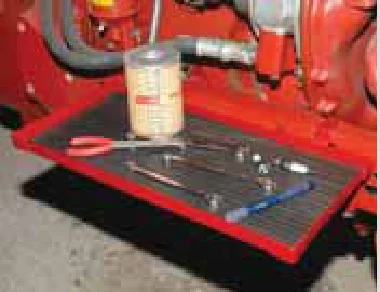
This company’s Tractor Tool Tray is designed for IH tractor models H through 1568. The tray snaps onto the tractor rail to keep tools at your fingertips. It measures 22 in. long by 10 in. wide and comes bare steel. A heavy duty tool protector mat (included) fits onto the tray. Sells for $39 plus S&H.

From the archive · Full text
Reader shop tip 1 of 3

Vern Goodwin

Individual tip 1 of 3 from this reader’s published contribution.
Vern Goodwin, Lincoln, Neb.

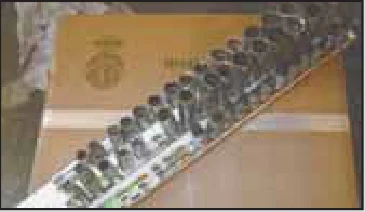
“I came up with an easy way to carry sockets to a job site. I screwed 3 socket-holding metal strips onto a 2-ft. long, 4-in. wide piece of kitchen countertop. I keep a 6 and 12-point socket next to each socket size.

“It really comes in handy with rounded off nuts and bolt heads. For example, if a 7/16-in. socket won’t catch on the bolt head I can quickly switch to the corresponding 6 or 12-point socket, which has a better chance of grabbing all sides of the bolt head. I drilled a big hole into one end of the tray to hang it on my shop wall.

From the archive · Full text
Reader shop tip 2 of 3

Vern Goodwin

Individual tip 2 of 3 from this reader’s published contribution.
Vern Goodwin, Lincoln, Neb.

“I converted a stationary 3-jaw lathe chuck into a portable model by mounting the lathe chuck on a round stand made from 1/2-in. thick steel. At the center of the stand I welded a big pipe that screws into the back side of the lathe chuck. I also drilled a hole into the stand to hang it on a wall. I use the lathe chuck’s T handle to move the jaws in or out.

“Works great whenever I have to work on something round, such as a wheel hub. I’ve used it many times to install wheel spokes.

From the archive · Full text
Reader shop tip 3 of 3

Vern Goodwin

Individual tip 3 of 3 from this reader’s published contribution.
Vern Goodwin, Lincoln, Neb.

“I use an old hospital bed clamp in my shop’s drill press to hold any round parts that I want to drill into or work on. The bed clamp was designed to hold food trays on hospital beds. I got it from a friend who worked in the maintenance department at a local hospital. The clamp’s moveable jaws are designed to secure any round tube up to 2 in. in dia.”

From the archive · Full text
Reader shop tip

Larry Wade

Larry Wade, Abernathy, Texas

“A small to medium-sized, flat-topped ice chest works well to store items such as pliers, screwdrivers, tape measures, dust masks, flashlight, and keys - anything that you don’t want to lose in a big toolbox. You can set the ice chest beside you as you drive. The ice chest makes a good armrest and you can access the small items easily and quickly, without having to open up big toolboxes in your pickup bed.

“If you’re in town and forget to lock the pickup, people passing by will just think the ice chest contains soft drinks and sandwiches so it won’t tempt thieves.”

From the archive · Full text
Reader shop tip

Matt Studer

Matt Studer, Ken’s Standing Seam, LLC, Bloomville, Ohio

“My dad Kenny and I own a standing seam metal roofing business, and we get steel coils on pallets.

We use the pallets to heat our shop, and to break down the pallets we use a tool that my dad made.

“It consists of a 3-ft. long, 1 1/4-in. dia. heavywall pipe welded at an angle to a U-shaped ‘prybar’ - a length of 1/2-in. thick by 1 1/2-in. wide flat steel bent into a U shape. The operator places the prybar under the slat on both sides of the rail the slat is nailed to, and then presses down on the pipe and against the rail to work the nails up and out. Works great.”

From the archive · Full text
Reader shop tip

Michael Moldenhauer

Michael Moldenhauer, (moldenhauer. [email protected])

“Recently I had to remove the fan clutch on my 1997 Dodge diesel pickup. The nut is a 36 mm size, but all my bigger wrenches are SAE sizes. A 1 1/4-in. SAE wrench was slightly too small, and a 1 1/2-in. wrench was too big. To solve the problem I tach-welded a piece of steel to one side of the 1 1/2-in. wrench, effectively decreasing the opening to about 1 3/8 in. so that it fit perfectly. After I was done with the job I ground the weld off, so I got my 1 1/2-in. wrench back. I think this idea would work any time a wrench is a little too big for the nut.”

From the archive · Full text
Reader shop tip

Todd Hutter

Todd Hutter, Freeland, Mich.

“Any grass that stuck to the deck on my riding mower would cause rust and scale to build up. So when I bought a new Cub Cadet lawn tractor equipped with a 50-in. deck, the first thing I did was drop the deck, flip it over and spray on several coats of pickup bedliner spray that you can find at any auto parts store. The spray puts a nice, hard, durable plastic finish under the deck. Grass won’t stick to the deck, and therefore it seems to cut faster in tall, wet grass. The spray will wear off over time, but then you just apply a quick touch-up.”

From the archive · Full text
Reader shop tip

Fifth Avenue Antique Auto Parts

Fifth Avenue Antique Auto Parts, 415 Court St., Clay Center, Kan. 67432 ph 785 632-3450; fifthaveinternetgarage.com

Their “remote battery stud” allows multiple electrical accessories to be powered directly from your battery. Works great when adding GPS monitors and related accessories in tractor cabs. The studs can be mounted anywhere and provide power direct from the battery to multiple accessories from a single source. Protects solid state accessories from voltage spikes and power surges. Available in red for the battery’s positive post and black for the negative post. Rated at 200 amps. Comes complete with instructions. Sells for $22 each plus S&H. Specify red or black.

From the archive · Full text
Reader shop tip

Bradley Ballard

Bradley Ballard, Robinson, Texas

“My 2001 Ford Sport truck developed a vacuum leak, which caused the ‘service engine’ light to come on. The usual way to find a vacuum leak is to spray the engine with carburetor cleaner or spray WD-40 around the engine.

“I didn’t want to use any chemicals or oils on the engine to find the leak, so I made my own inexpensive tester using a pair of ear muffs I bought at Harbor Freight. On one side I drilled a 3/8-in. dia. hole and inserted a length of 1/4-in. dia. tubing. I taped a length of small dia. pipe to the other end of the tubing. Now I can probe around the engine and hear the vacuum leak, which makes a hissing sound in the ear muffs.

“This idea works great to find a leaky intake manifold, or anywhere you’re looking for a leak in a vacuum hose connection. Don’t use metal on the end of the tube because if it accidentally touches a spark plug wire you’ll receive a shock.”

Shop feature stories

From the archive · Full text
Feature story

Specialty Carburetors Rebuilds Common And Classic Carburetors

Featured source: Carlos Rosario

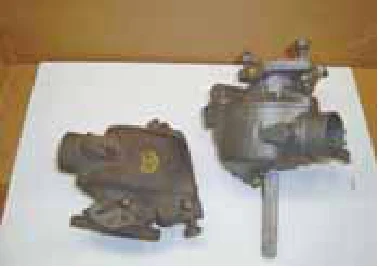
If Specialty Carburetors doesn’t have the carburetor you need, they can rebuild the one you have. The company works with classic carburetors from the 1930’s to modern units in auto, truck, tractor, industrial and marine engines. They also repair and service most fuel injection systems and throttle bodies.

“Our biggest challenges come with the older carburetors,” says Carlos Rosario at the company.

“They are often warped so we have to do some surface milling. If we need parts, we have them made.” Rosario and his partner Carlos Nunes have many decades of experience in the business. They worked for a large carburetor rebuilder for 22 years and have run Specialty Carburetors for 23 years.

“We often have to rebuild a customer’s core, though we do have quite a few in stock,” says Rosario.

“We work on them all, imported and domestic, 4-barrel, 2-barrel or single.” In most cases, customers can simply call in an order for a rebuilt carburetor, and the company will ship it out with a label for sending back the old core.

“When it comes to industrial and marine carburetors, there are so many variations we ask that they ship the original core in first,” says Rosario.

“The number can be the same, but they have different shafts and components for different uses.” Prices vary with the condition of the carburetor, explains Rosario. While some people call to find out a price first, others simply send their carburetor in for repair or rebuilding.

“We tell them what it will cost to fix it,” he says.

“It will still be less expensive than buying a new one, whether OEM or after market.” Contact: FARM SHOW Followup, Specialty Carburetors, Inc., 53-B Algie Ave., Etobiocoke, Ont., Canada M8Z 5J9 (ph 416 259-7877; toll free 877 292-9751; [email protected]).

From the archive · Full text
Feature story

He Restores Tractor Tachs

Featured source: Haim Zeevi

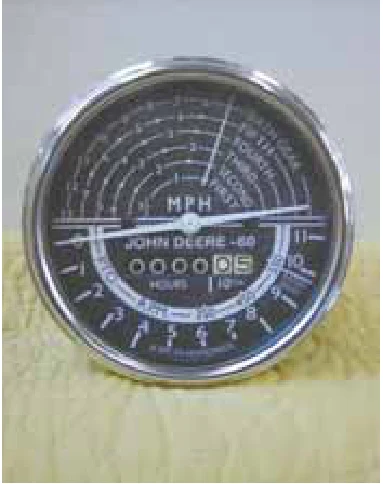
Haim Zeevi offers a service to put the finishing touch on the tractor you have just restored. He restores tachometers. Customers can choose to keep the face as is, or he’ll make it look brand new with a face decal specific to your tractor. Zeevi has 150 decals for most tractor models including Deere, International Harvester, Massey-Harris, Massey-Ferguson, Minneapolis Moline, Allis Chalmers, Oliver and Case. About the only model he doesn’t carry is Ford. Restoring tractor tachs is a very specialized business that keeps Zeevi busy in his garage in his “retirement”.

“You need a special calibration machine. I made my own,” he says. His experience includes fixing electronic components on large trucks used in the mining industry. When he accepted a job in a speedometer shop, he discovered he liked working on tachometers. When the shop closed, he started his own business repairing tachs for all types of vehicles. When he retired and moved to Florida he decided to focus on tachs for tractors.

“It’s lots of detail – like fixing watches – and very sensitive. I have tons of patience. I can stand there for 12 hours and not move,” he says. When customers call, he finds out exactly what level of restoration they want. His services include sandblasting and painting the housing, replacing faces and needles, fixing cables and calibrating.

“About 7 out of 10 customers want to keep the original hours on the tachometer,” Zeevi notes. He charges between $185 and $195 and warranties his work.

“Customers don’t have to pay ahead,” Zeevi says.

“I send it finished to them, and they see what they are paying for. The farming community is so honest.” And apparently, they are also grateful for his quality work and attention to detail. He does a lot of repeat business, he says, and receives notes of gratitude. Contact: FARM SHOW Followup, Haim Zeevi, Star Speedometer, 12 Federal Ln., Palm Coast, Fla. 32137 (ph 386 569-5284).

From the archive · Full text
Feature story

Experts Repair Diesel Injectors

Featured source: Erik Schroeter

Arnold “Fred” Schroeter opened his diesel injection repair business in Sioux City, Iowa, almost 50 years ago. Today that business has locations in Omaha, Neb. and Estherville, Iowa, operated by Fred’s daughter Amy and son, Erik. A staff of trained technicians can clean, repair and rebuild injection pumps, injectors and turbos for virtually any diesel engine made. The company does business with customers in the U.S., Canada and Mexico. The Estherville operation works on rebuilding injection pumps, nozzles and turbos for older tractors. The Omaha operation is authorized to work on Robert Bosch, Delphi, Stanadyne, Zexel and Ambac fuel systems. They’re also factory authorized on Garrett and BorgWarner (Schwitzer) turbochargers.

“We probably have the largest supply of injector pumps and nozzle cores in the world,” says Erik.

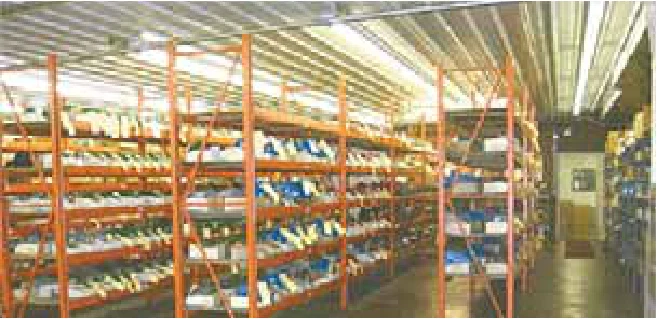
“Dad collected cores throughout his life and having that huge inventory allows us to work on nearly any pump that’s ever been made.” The cores are located in 9 quonset buildings at the Estherville location and inventoried by name and serial number. Says Erik, “if we don’t have it, chances are good it doesn’t exist anywhere else either.”

With such a large parts inventory, the company often exchanges injection pumps, nozzles and turbochargers to customers using overnight delivery. Failed diesel injection components that are traded in are cleaned, rebuilt, recalibrated and put into inventory, usually within a week after they’re received. The company works on rotary pumps, inline pumps and newer rail high pressure pumps. Erik says the older pumps they repair usually have faulty valves and gaskets that diminish pressure and don’t supply enough fuel to the engine. Newer rail pumps can have mechanical as well as electronic issues. Exchange prices run from $500 to $1,500. Their Estherville staff of 4 technicians and 4 in support provide service on injectors for all major vintage tractor brands, including Minneapolis-Moline, White-Oliver, Cockshutt and others that aren’t around anymore. Omaha also has 4 technicians who focus primarily on diesel fuel injection equipment. Contact: FARM SHOW Followup, Erik Schroeter, Central Fuel Injection Service Company, 2403 Murray Rd., Estherville, Iowa 51334 (ph 712 362-4200 or 800 548-9464; www.centralfuel.com).

From the archive · Full text
Feature story

Amazing New “No Wobble” Funnel

Featured source: Hester Enterprises, LLC

The first-of-its-kind “no wobble” funnel system is designed to make changing oil or pouring other liquids a much easier and faster job. The WonderFunnel holds steady so you can pour more easily with virtually no spills. The system comes with interchangeable parts and numerous adapter attachments, allowing it to be used as a regular funnel, hose funnel, barrel funnel, or Secure Lid funnel.

“I offer nine different WonderFunnel kits, so there’s something for everyone from mechanics to cooks,” says inventor Dale Hester. FARM SHOW readers will probably be most interested in his 10-in. farm and ag large funnel kit with hose. The 10-in. funnel is big enough to hold both 1-gal. and 5-quart oil containers.

“This funnel comes with a long tip that screws onto the bottom of the funnel. As a result it won’t dislodge as easily as most large funnels on the market,” says Hester.

“The kit also comes with a screw-on 5/8-in. dia. by 26-in. long clear hose for hard-to-reach places. The hose may be cut to shorter length if desired. However, the funnel’s threaded bottom will accept any garden hose of any diameter or length. Optional hoses for special applications are sold separately. A barrel adapter can be screwed onto the bottom of the funnel, converting it from 3/4-in. garden hose threads to 3/4-in. pipe threads that fit onto many 5-gal. buckets and most 16, 30 and 55-gal. drums.

“Once in place, there’s no need to hold the funnel so you have both hands free as you pour out of the container,” says Hester. Using the company’s secure lid, you can attach the funnel through the lid of virtually any container to create a solid, one-piece attachment. The kit includes the 10-in. WonderFunnel with removable tip, 28-in. hose, removable screen washer, barrel adapter, and SecureLid. It sells for $19.95 plus S&H. Hester also offers a similar funnel kit with hose that lets you dispense 3 quart bottles at one time while changing the oil in your vehicle. A 3-wing divider snaps into place inside the funnel and is used to contain the bottles. A chain with a large S-hook at the top is used to hang the funnel from the vehicle’s hood latch, and 3 smaller snap hooks at the bottom attach to the funnel. The oil change kit with a 10-in. funnel sells for $24.95 plus S&H; with a 6-in. funnel, $19.95 plus S&H.

“There’s much more to say. The easiest way to understand this product is to go to our website. Watching the 3 1/2-min. video will tell you more than I can tell you in a 15-min. conversation,” says Hester. Contact: FARM SHOW Followup, Hester Enterprises, LLC, 136 W. Hwy. 152, Suite C, Mustang, Okla. 73064 (ph 405 613-7000; [email protected]; wonderfunnel.com).

From the archive · Full text
Feature story

Vertical CNC Table Takes Up Less Space

Featured source: Matt Kool

Even a crowded garage, shop or work area has room for a CNC plasma cutting table if it’s a vertical unit from BurnTables. The full-size table takes up only a 26-in. strip of floor space, yet handles up to 60 by 60-in. sheets of material.

“Many people don’t have room for a full-size plasma cutting table, so we put ours on its side,” says Matt Kool, BurnTables.

“You can use plasma torches, engraving pens or routers, both steel and wood. Just lay the edge of the material you are working in the holder, lean it against the grating and mount the cutting or engraving tool.” The $11,500 table and computer come complete with CNC controls and full CAD/CAM and Torch Control software. Drawings can be scanned and imported for use in cutting designs. The table itself is designed with no upper rails allowing completely open access. Carriers keep cables out of the way when loading material. The gantry offers full movement up, down and across the table, including up to 6-in. depth control with all devices. Though designed for use with a plasma torch, the company also offers an air pen engraver, tube notcher and oxygen acetylene torch attachments. The company makes horizontal CNC plasma tables as well. Kool says they originally designed the vertical table as a way to attract attention as they broke into an established industry.

“We needed a burn table for our own use, but found industrial style tables too expensive and hobbyist tables too lightweight or temperamental,” says Kool.

“We introduced ours with industrial components, but it’s simple and easy to use.” The vertical table has indeed attracted attention. What Kool didn’t expect was the broad spectrum of users it attracts. Instead of engineers and fabricators, buyers were as likely to be husbands and wives, both with plans for use.

“Our cutting table appeals to the OEM that had been outsourcing cutting needs,” says Kool.

“However, it also appeals to the do-it-yourself market, including the small manufacturing company or shop that does custom cutting. We have a lot of customers in agriculture, sign shops and especially hot rod enthusiasts.” Kool says the table has found special appeal with people with full-time jobs who want to start their own business on the side. The compact size makes it easy to fit into an existing shop or garage. The software lets users take a design off the internet and turn it into a final product.

“Customers describe making complete off-road buggies, including gussets, motor mounts, dashboards and seat pans, everything but the drive train and motor,” says Kool.

“Others do signs or metal art for church bazaars or to sell at markets. Others make parts for dry ice and soda blasting equipment.” To see the vertical CNC plasma table in use, check out the video at www.farmshow.com. Contact: FARM SHOW Followup, BurnTables Manufacturing Facility, 524 Tradesman’s Park Dr., Hutto, Texas 78634 (ph 512 843-2621; www.burntables.com).

From the archive · Full text
Feature story

Simple Fix For Faulty Case 1190 Power Steering

Featured source: Joe Victory

“Anyone who has ever owned a Case 1190 tractor and had the power steering go out knows that it’s almost impossible to find a replacement pump,” says Joe Victory, Culleoka, Tenn.

“Then one day I was talking to my cousin, who’s a good mechanic, and he suggested that we look at replacing it with a pump from a car.” His cousin checked the specifications from the 1190 pump and found that a pump from a 2000 Nissan Exterra had a similar rating. With that information in hand, Victory pulled a pump from a salvaged Nissan and devised a plan to mount it on the 30-year-old Case 3-cylinder diesel. Victory says the salvaged pump was about the same size as the one he pulled from his tractor, so the mounting brackets worked just fine. They changed out the pulley to match the tractor, adapted a new pressure line, and put on a new belt.

“As soon as we fired up the tractor, the steering worked just like a new tractor,” Victory says. He’s used the tractor several months without any problems. Joe says he just checks the power steering fluid once in awhile and keeps a little extra automotive steering fluid on hand in case he needs to add some. Contact: FARM SHOW Followup, Joe Victory, 2988 Valley Creek Rd., Culleoka, Tenn. 38451 (ph 931 987-0972).

From the archive · Full text
Feature story

Lift Stores Big Stuff On Shop’s Upper Level

Featured source: Dan Grasser

Dan Grasser gets the most use he can out of his shop thanks to his big lift platform. It allows him to store items as large as a Model A Ford on the shop’s second level.

“I bought an old 6,200-lb. electric forklift for my lift,” explains Grasser, a former highway bridge contractor.

“It was worn out and had seen lots of hours, but the mast still seemed good. I built a 6 1/2 by 10-ft. platform for it with two uprights that are topped by small, rubber-tired wheels. As the platform is raised, they push against a hinged ceiling panel on the upper level, forcing it to lift and make room for the platform.” The free-span shop is 60 ft. square with sidewalls made from 14-ft. long by 6-in. thick by 17 1/2-in. wide recycled bridge stringers. Grasser used 8-in. square steel plates to tie the stringers together. The sidewalls sit on 2-ft. concrete stem wall foundations. The shop has a gable roof that peaks at about 28 ft. Clear span trusses are 60 ft. long and made from 8 by 8-in. square, 1/4-in thick tubular steel beams. They rest on two similar beams that run the length of the walls.

Spacing between the trusses varies from 12 to 20 ft.

“I figure those trusses would hold up to 56 lbs. per sq. ft.,” says Grasser. Ceiling or second floor joists are 2 1/2-in. by 6-in. bridge decking. Plywood sheets attached to the decking forms the ceiling/floor. One 20 by 60-ft. section has a 10-ft. high ceiling. The second floor of this section is suspended about 4 ft. below the trusses by U-shaped steel saddles attached to the trusses. Similar U-shaped supports extend up from the trusses to support the roof beams. The remainder of the shop has a 14-ft. ceiling. Here the floor joists are attached directly to the clear span trusses. The lift is placed in the shop so that both levels can be accessed. When raised to the 10-ft. height, smaller items like motorcycles, parts and equipment (anything under 4 ft. high) can be rolled off and under the trusses. Larger pieces, including Grasser’s Model A Ford, can be raised to the 14-ft. level and rolled off and down the floor between the end wall and the nearest truss.

“With the lift, I can make use of every bit of space above the ceilings,” says Grasser.

“If anybody is in the area, I’d be glad to show them what I did and how it works. Just give me a call.”

Contact: FARM SHOW Followup, Dan Grasser, 17980 County Road 30, Stratton, Colo. 80836 (ph 719 348-5363 or 719 349-1035).

From the archive · Full text
Feature story

How To Make White Tractors More Fuel Efficient

Featured source: Ed Welters

Ed Welters of Welters Farm Supply, Verona, Mo., recently contacted FARM SHOW about a couple of modifications he makes to older White diesel tractors to improve fuel economy. Welters is a White farm equipment dealer who services equipment throughout North America.

“One modification is to add about 4 ft. of soft copper tubing along the engine to pre-heat fuel,” says Welters.

“We cut the fuel line and run the new copper line along the bottom of the engine, then up to the manifold and back down. It warms up the fuel between the fuel tank and the diesel pump by up to 20 degrees.” The other idea is to replace the tractor’s original pto unit with one from a bigger tractor. The replacement pto gearcases are geared much slower, which allows the engine to run at a slower speed.

“We recently made both modifications to a 1976 White 2-105 tractor. Many farmers still use these tractors to operate hay equipment that’s designed to run at 540 pto rpm’s,” says Welters.

“We replaced the tractor’s original pto gearcase with one out of a White 4-150 4-WD articulated tractor. The 2-105’s engine normally runs at 2,200 rpm’s when using the pto, but by replacing the pto gearcase we can run the engine at only 1,500 rpm’s and burn less fuel.

“We used the tractor to operate a round baler or a Gehl 9 1/2-ft. discbine equipped with rubber rolls. Fuel consumption went from 2 or 3 gal. per hour down to 1 1/2 gal. or less, and the tractor still has plenty of power. Since this tractor has 15 speeds below 10 mph, it’s easy to shift up or down and get the right speed for the job.” Welters says the pto replacement generally costs $800 to $1,000. He says the pto gearcases on White tractors are designed to be interchangeable, but the idea won’t work with many other tractor brands because they don’t have the variation in pto gearcase speeds.

“Call to find out which tractors will properly change pto,” he says. The company also offers update kits for fuel injection pumps and turbos, too.

“On Deere tractors with 140 hp and up we’ve seen fuel improvement of up to 2 gal. per hour,” says Welters. Contact: FARM SHOW Followup, Welters Farm Supply, 14307 Lawrence 2190, Verona, Mo. 65769 (ph 417 498-6496).

From the archive · Full text
Feature story

“Floor Jack” Shop Hoist

Featured source: John Blackwell

“I sat in my shop thinking one day that I needed a hoist for my riding mowers and ATV’s. I didn’t want to spend a lot of money, so I built one that makes use of an ordinary wheeled floor jack,” says John Blackwell, Brantford, Ont. The jack is used to raise and lower ramps made from a pair of aluminum running boards off an old Ford pickup. Each running board is reinforced with bolted-on 2 by 8’s underneath. A 4-in. length of angle iron connects the running boards, about 3/4 of the way toward the front end of the ramps. The angle iron stabilizes the ramps and also serves as a lifting point for the floor jack. A pair of 2-ft. high wooden blocks bolt permanently onto the back end of the ramps. To operate the hoist, Blackwell starts with the front end of the ramps laying on the floor. He rolls the floor jack under the angle iron, and then backs the tractor up onto the ramps. Then he manually pumps the floor jack to raise both ramps until they’re level. To drive the tractor off the ramps he simply lowers the floor jack.

“I modeled it after a commercial frame straightener that I saw at a local car body shop. I have a one-car garage and do part-time small engine repair. The ramps sit about 2 ft. off the floor, which allows me to work safely and easily around all sides of the equipment. I can lay on a creeper all day without ever having to stand up, which is a lot better than laying on my back on a cold cement floor. It saves me an hour of labor per tractor.”

Contact: FARM SHOW Followup, John Blackwell, 1092 Colborne St., Brantford, Ont., Canada N3T 5M1 (ph 519 755-9446; [email protected]).

From the archive · Full text
Feature story

“Dustless” Blaster Uses Glass & Water

Featured source: MMLJ Manufacturing

Using only water and glass, the Dustless Blaster from MMLJ Manufacturing can strip a car in about two hours. It can clean graffiti off a wall or remove paint from a motorcycle fender. The combination works on steel, brass, aluminum, other metals and even fiberglass, thick and thin.

“A typical abrasive blaster shoots dry sand or other dry abrasives,” says Jacob Gardner.

“Ours introduces water, which cuts down on dust and increases productivity. It’s like throwing a handful of wet sand...it hits harder and yet it doesn’t fly everywhere.” While any dry medium that sinks in water can be used, he recommends recycled bottle glass. It’s environmentally inert, won’t disintegrate into dust and is easy to clean up.

“It settles around whatever you’re blasting, and you can just sweep it up or lay down plastic and roll it up when you’re done,” says Gardner.

“Less containment (often none) is needed around a work area.” The water in the mix also reduces the potential for warping due to friction, which can occur with dry blasting mediums. The water reduces friction and heat. Dustless Blaster comes in a wide range of models, starting with the DB150 priced at $5,000. It delivers 50 lbs. of blasting medium in about 15 min., is 12 in. wide and 45 in. tall. It weighs 115 lbs. and requires at least a 60 cu. ft./min. compressor. The DB800 Mobile, one of their larger models, is trailer-mounted with a diesel compressor delivering up to 210 cu. ft./min. at 150 psi. The medium tank holds up to 8 cu. ft. of blasting material and has a separate 200-gal. water tank for full mobility. MMLJ is the original manufacturer of the blast equipment and offers a lifetime warranty on tank assemblies. To see a Dustless Blaster in action, check out the video at www.farmshow.com. Contact: FARM SHOW Followup, Dustless Blasting, MMLJ Manufacturing, 5711 Schurmier Rd., Houston, Texas 77048 (ph 713 869-2227; toll free 800 727-5707; www.dustlessblasting.com).