Practical ideas from FARM SHOW MagazineSubscribe · Free issue · Send us your shop tip
Subscribe to FARM SHOW
Issues / Vol. 36, No. 4 (2012)

Vol. 36, No. 4 (2012)

Money-Saving Repairs & Maintenance Shortcuts · Printed section pp. 36–39

40 selected entries · Complete text of selected entries

This issue’s section includes reader tips and feature-length shop stories. Held items and editorial notices are not reproduced.

Archive text: prices, coupons, availability and contact details reflect the original publication, not current offers. Reader methods are not universal instructions; follow manufacturer guidance and proper safety practices.

Reader shop tips

From the archive · Full text
Reader shop tip 1 of 2

Robert McMahon

Individual tip 1 of 2 from this reader’s published contribution.
Robert McMahon, Knoxville, Tenn.

“I was tired of having to break fittings to relieve hydraulic pressure when connecting the grapple on my front-end loader and backhoe attachment. So I made a clamp to connect the hydraulic connectors that are under pressure. Works on both standard and flat-faced connectors. U-shaped ends fit locking collar factory grooves on female hydraulic fittings. I made the ends using a hole saw and side grinder, welding them to a standard bar clamp.

From the archive · Full text
Reader shop tip 2 of 2

Robert McMahon

Individual tip 2 of 2 from this reader’s published contribution.
Robert McMahon, Knoxville, Tenn.

“I came up with a method to drill 1/2 in. or larger holes in steel pieces that I could not bring to my drill. I had previously had problems breaking large, expensive bits. Now I use bimetal hole saws in a hand drill. I first make a guide plate out of a scrap piece of plate steel with a hole drilled in it. Then I clamp or tack weld the plate where I want to drill the hole.

“I recently had to drill 5/8-in. holes in the frame of a tractor to mount a backhoe. Removal of the frame members would have taken half a day. Instead I clamped a guide plate to the frame and cut the holes with a 1/2-in. pneumatic wrench (I remove the holesaw mandrell drill bit so I can drive it with an impact wrench). I had perfect holes cut in minutes. Sometimes I use the guide plate to enlarge a hole, or to enlarge worn holes in bucket teeth mounts. I use a liberal amount of cutting fluid when cutting with holesaws.”

From the archive · Full text
Reader shop tip

James Leinen

James Leinen, Tigerton, Wis.

“I had a 1938 U Minneapolis Moline that needed new brake shoes. I found a great company called All Friction Co. (ph 860-342-2001; www.allfrictions.com) that relined them. Anyone with older equipment who needs shoes relined should contact them. They do good work.”

From the archive · Full text
Reader shop tip

C.F. Marley

C.F. Marley, Nokomis, Ill.

“A ‘check engine light’ recently came on in my car indicating a problem somewhere in the system. We couldn’t find the problem so we hunted around to find a shop for diagnosis. Turns out the gas cap was not on tight enough. It cost us $20, a bunch of time and a bit of worry to figure that out.”

From the archive · Full text
Reader shop tip

Drew Strazar

Drew Strazar, Nokomis, Ill.

This scissoring wheeled “gizmo” comes in handy around the farm for Drew and his son, Kyle.

The two angled frames pivot on each side and ride on four caster wheels. Lengths of chain on either side make it easy to raise and lower it to hold truck beds, big parts, and other loads around the farm.

From the archive · Full text
Reader shop tip

Dick Clevenger

Dick Clevenger, Letts, Iowa

“I have an old screw-drive garage door opener that’s so noisy it hurts my ears. I tried several different lubricants but after 2 or 3 openings it would be noisy again. Then, while visiting relatives in Kentucky, I went to the Grizzly Tool warehouse in Springfield, Mo., and found a product called Slipit. They told me it was really good for preventing rust and wear so I bought a quart can for $10. When I got home, I first treated my iron top tables and then wondered if it would work on my door opener. I put a few gobs on the screw and, after one cycle, I thought the motor had quit because it was so quiet. Here’s what’s amazing – I haven’t put any more Slipit on there since then, about 3 years ago, and it’s still working great. I’ve also used it on old drawer slides, front bushings on an old lawn tractor, and many other places. Best lubricant I’ve ever come across. You can find out more at www.Grizzly.com or www.slipit.com.”

From the archive · Full text
Reader shop tip 1 of 2

George Bagnall

Individual tip 1 of 2 from this reader’s published contribution.
George Bagnall, Paincourt, Ont.

“The Woodruff key kept breaking on the elevator on my Massey 300 combine after I welded it twice. The third time I used stainless steel rod and that did the trick. No more problems.

From the archive · Full text
Reader shop tip 2 of 2

George Bagnall

Individual tip 2 of 2 from this reader’s published contribution.
George Bagnall, Paincourt, Ont.

“I stripped the threads in the aluminum head on a GM engine that held the power steering pump in place. I used 7/16-in. redi-rod to tap into the hole without drilling. Put loctite on the redi-rod and applied a nut. It was a metric hole but it tapped easily to the 7/16-in. redi- rod.”

From the archive · Full text
Reader shop tip

Anonymous

Anonymous

“The electric clutch on my 1974 Deere 112 lawn mower stopped working. When I went to the dealer, they told me the part was no longer available. I took it apart and found a wire broken off where it entered into the epoxy covering the windings. I took my Dremel tool and cut the epoxy back to expose enough wire so a new piece could be soldered on. That done, I filled back in around the wire with some epoxy. That was four years ago and this ‘best buy’ tractor is still running fine.”

From the archive · Full text
Reader shop tip

Vernon Bratton

Vernon Bratton, San Antonio, Texas

“I’ve never tried this idea myself but a guy down the road used it to rescue a car that had been sitting out in the weather for 2 years with no hood. The engine was totally seized up. He pulled out all the plugs and poured Coca Cola into all the cylinders. Before too long, he was able to get the parts moving. He pulled the engine, put it in a truck, and put it to work. Amazingly enough, the engine burned no oil.”

From the archive · Full text
Reader shop tip

Alton Eliason

Alton Eliason, Northford, Conn.

“I’m 95 years old so steering my Cub Cadet has gotten a bit more difficult. I was looking for a power steering unit when my nephew, a brilliant young mechanic, suggested I just get a couple of thrust bearings and attach them to the front axle where the steering mechanism rests. I first ground off a layer of metal, the thickness of the bearings. This way you don’t have metal rubbing on metal. It’s like having power steering. The idea will work on any similar steering mechanism.”

From the archive · Full text
Reader shop tip

Allan Wayne Bradberry

Allan Wayne Bradberry, McEwen, Tenn.

“I invented this windshield washer fluid preheater in 1998 and recently installed it on my new Chevy S-10 pickup. It has been working great ever since. Heating the washer fluid, by wrapping the fluid line around the radiator hose, helps clean the windshield faster during the summer and melts ice off the windshield faster during the winter. It’s easy to install on most any vehicle.”

From the archive · Full text
Reader shop tip 1 of 2

Tavish Presswood

Individual tip 1 of 2 from this reader’s published contribution.
Tavish Presswood, Canton, Ga.

“When I purchased my Mahindra 4110 tractor, hay dust had plugged up the radiator so tight I couldn’t dislodge the dirt with my 120 psi air gun. To solve the problem I removed the radiator and took it to a car wash. There, I applied an engine degreaser foam, let it sit, and then used the car wash’s high pressure spray wand with soap. It cleaned the screen right up.

From the archive · Full text
Reader shop tip 2 of 2

Tavish Presswood

Individual tip 2 of 2 from this reader’s published contribution.
Tavish Presswood, Canton, Ga.

“I needed to get rid of some big dents in the sides of my Bush Hog mower, which were caused by turning too short around trees. To straighten out the dents I made a notch in a 1/2-in. thick piece of flat steel bar and welded it to a 6-ft. length of 2-in. dia. pipe that’s curved upward at one end. I use the pipe like a crowbar, placing the notch under the edge of the bush hog’s sides to pry the dents out. It was a lot easier than climbing up under and using a hammer.”

From the archive · Full text
Reader shop tip

Innovative Ag Products

Innovative Ag Products, (ph 919 926-8516; www.zplusag.com)

ZPlus-AG is an additive designed to protect older engines from premature wear. According to the company, EPA changes can cause trouble in engines built before 1985. EPA forced changes in engine oil, removing most of the Zinc Dialkyl Dithio Phosphate (ZDDP) from regular engine oil in order to lengthen the life of catalytic converters in modern engines. Z P l u s - A G w a s d e v e l o p e d a s a n additive to bring ZDDP levels back to proportions needed in pre-1986 engines. The company says ZDDP reduces the wear on flat tappets, camshafts and high pressure surfaces in older tractors and agricultural engines. Packaged in 4-oz. containers, add one bottle to each 5-quart oil change. Sells for $9.95 per bottle plus S&H.

From the archive · Full text
Reader shop tip

Richard Faber

Richard Faber, Tiffin, Ohio

“I bought a can of BlueMagic Brush-On Electrical Tape that’s designed to waterproof electrical connections and is brushed on in a thin liquid coat (ph 888 522-2746; www.bluemagicusa.com). However, the shelf life wasn’t very long so I bought a new can and put an O-ring on it so the can’s cap pressed down on the ring for a seal. Then I put the can upside down inside a plastic peanut jar and twisted the lid shut. After that the product lasted a lot longer. I think the O-ring keeps the air from circulating and carrying away the fumes.”

From the archive · Full text
Reader shop tip

Brian Peifer, Jr.

Brian Peifer, Jr., Temple, Penn.

“Last winter my 2000 Ford F-250 blew out a spark plug. After doing some research I found Timesert, a company that sells a repair kit for blown-out spark plugs (www.Timesert.com). The kit comes with everything you need to drill out, tap and install the new threaded insert. The instructions are laminated and easy to read and follow. All reaming tools have stops on them so you can’t go too far. This company makes a good product.”

From the archive · Full text
Reader shop tip

Mark Parrish

Mark Parrish, Carman, Ill.

“Got a rough-running Deere 3020 or 4020 gas or LP-powered tractor that you can’t cure with spark plugs or points? Try cleaning and then freeing up the distributor flyweights. Works wonders.”

From the archive · Full text
Reader shop tip

Delbert Hayes

Delbert Hayes, Norwalk, Iowa

“I made a jig that makes it easy to remove a wornout pin from the wobble box on my IH 1460 combine’s 820 bean head. It eliminates the need to take the bean head’s crankshaft completely apart and remove a lot of bearings, etc. I cut the pin even with the bar that holds it, press the pin out, then cut the pin off again on the bottom side. Then I press the pin once more and it’ll come right out.”

From the archive · Full text
Reader shop tip

John W. Collins

John W. Collins, Sherburne, N.Y.

“My new Cub Cadet riding mower equipped with a 60-in. deck was mowing low on one side. It needed to be adjusted. I knew there had to be a better way to measure than using a tape measure. So I cut a 1-ft. long piece off a 2 by 4 and cut the piece at an angle. I slid this angled piece under the deck at each end, both front and back. Then I put a mark on top of the angle for each point checked. The difference was readily visible, and I was able to raise the low side up to match the other side, as needed.”

From the archive · Full text
Reader shop tip

Merrill Smith

Merrill Smith, Deer Park, Wash.

“I plumbed my entire shop with compressed air and electrical outlets every 12 to 15 ft. I use them to operate a big 10 hp, 3-phase air compressor equipped with a 200-gal. air tank that sets in back of the shop. I ran 2-in. dia., schedule 80 pvc pipe from the compressor up into the shop’s ceiling. From there I dropped an air line on each side of my hoist, on each side of 4 bays, and on each side of the shop’s big doors. As a result, I’m never more than 6 ft. away from being able to plug in air-operated tools, and I don’t have air hoses strung all over the shop.

“At the bottom of every air outlet I mounted a 1 1/2-ft. long straight pipe fitted with an end cap so water can’t build up in the bottom of the main line and get pushed into my air tools. The pipe comes down the wall and forms a T, with the air outlet on one side of the T and the 1 1/2-ft. long pipe extending down from the other side allowing moisture to escape. The biggest killer of air tools is moisture, and this setup solves the problem.”

From the archive · Full text
Reader shop tip

Wilson Rickenbaker

Wilson Rickenbaker, Lexington, S.C.

“When checking the gas level in my 1955 Ford 600 tractor in the field one hot day, I noticed the gas in the tank was boiling. I made a heat shield from a piece of tin and installed it between the tank supports and tank. I used a hole saw to cut an opening for the fuel valve. Problem solved.”

From the archive · Full text
Reader shop tip

Richard Smith

Richard Smith, Piketon, Ohio

“The differential failed on my 2003 Murray medium-size hydrostatic drive riding mower. I spent $300 for a complete new differential. A mechanic later told me the problem was with a $12 sliding ring inside the differential that wears out. I took the gearbox apart and replaced the worn out ring with a new one. The repaired differential is ready the next time when needed.”

From the archive · Full text
Reader shop tip 1 of 3

Richard M. Huckeby

Individual tip 1 of 3 from this reader’s published contribution.
Richard M. Huckeby, Elberon, Va.

“People use pressurized canned spray paint for everything from tractor repaints to graffiti on other people’s barns and fences. However, it can be a real pain to shake the spray can in order to mix the paint.

“Instead, I use my Ryobi 18-volt reciprocating saw to shake the cans. I get the stiffest saw blade I can find and clamp the can to the blade, then operate the saw at its slowest speed. It does a great job.

From the archive · Full text
Reader shop tip 2 of 3

Richard M. Huckeby

Individual tip 2 of 3 from this reader’s published contribution.
Richard M. Huckeby, Elberon, Va.

“I always store pressurized spray cans upside down. That way they can’t leak the gas, or if they do you sure know it right away.

From the archive · Full text
Reader shop tip 3 of 3

Richard M. Huckeby

Individual tip 3 of 3 from this reader’s published contribution.
Richard M. Huckeby, Elberon, Va.

“I always wear latex gloves when I spray paint as I can then handle objects, turn them over or around, and generally manage to keep my hands paint-free. That’s important so when I read my FARM SHOW in the evening, I don’t get paint on it.”

From the archive · Full text
Reader shop tip

Countyline Creations

Countyline Creations, Marshall, Minn. ph 507 626-0327; wayneseehusen@yahoo. com

“Our new Bin Defender is designed to keep debris from collecting on your grain bin where the vent meets the bin roof,” says Wayne Seehusen.

“The vent tends to block debris from sliding down off the roof, and the debris that builds up can cause rust and eventually water will leak into the bin.

“The Bin Defender consists of a UV-resistant, wedge-shaped piece of plastic that silicones in place just above the vent. It causes debris to slide off to both sides. Any debris that may catch will be washed away in the rain. The debris won’t sit there long enough to cause costly damage or require you to climb up and clean that area.

“To install, you set the Bin Defender in place, then draw a line around it, apply the silicone, and stick the Bin Defender on it. We make it in multiple sizes from 10 to 22 in. wide or custom-build on request. The 10-in. sells for $9; 15-in for $22; and 22-in. for $48.”

Shop feature stories

From the archive · Full text
Feature story

“Car Ramp” Maintenance System

Featured source:

“I made a simple service ramp for my Kawasaki Mule utility vehicle out of 2 sets of car ramps with planks bolted on between them,” says Delbert Hayes, Norwalk, Iowa. He set the 2 sets of car ramps up to face each other, then welded a short length of 2-in. angle iron onto each ramp and drilled holes into them so he can bolt on the boards. The boards span the distance between the vehicle’s front and rear wheels, which rest on the ramps.

“I just drive onto the ramps, change the oil, and drive off. The boards can be easily removed while the vehicle is still on the ramps so I have more room to crawl around under the vehicle,” says Hayes.

“I came up with the idea because there isn’t enough clearance to get under the Mule with a creeper. I also made a system for my Kawasaki 4-wheeler ATV that’s a little shorter.” Contact: FARM SHOW Followup, Delbert Hayes, 5930 Hwy. 28, Norwalk, Iowa 50211 (ph 515 981-4911).

From the archive · Full text
Feature story

Low-Cost Filter Cleans Shop Air

Featured source:

When Noah Hubbard picked up some surplus wall cabinets, he had a brainstorm that he could use one to pull dust from his shop/garage.

“When I parked my car in the shop, it would get covered with a film of dust,” recalls Hubbard.

“Some of it was probably ash from the wood burning stove. Now I can park it in there for days, and it stays clean.” Hubbard cut out the back side of a cabinet. He then framed the front and back so each would accept two 16 by 25-in. furnace filters. At one end, he installed a small squirrel cage fan. The 1/20 hp motor can run steady for hours, pulling shop air through the filters.

“It pulls a lot of air through,” says Hubbard.

“I angle the discharge on it at the ceiling to help circulate air.” Hubbard says he changes the filters with the seasons. Contact: FARM SHOW Followup, Hubbard Rapid Tool LLC, 5558 West 800 North, Michigan City, Ind. 46360 (ph 219 874-1028; [email protected]; www.hubbardrapidtool.com).

From the archive · Full text
Feature story

Replace Tractor Points With Electronic Ignition

Featured source:

Converting to an electronic breakerless ignition system is a simple option for owners of old tractors with points and condensers. It improves fuel economy and makes starting easier.

“It only takes 15 to 30 min. to install,” says Gary Catron, president of CBS Performance Automotive, which is a distributor of Ignitor® Electronic Ignition systems (www.pertronix.com). Remove the points and condenser, install the Ignitor module, push the Ignitor’s magnetic sleeve on the distributor’s cam lobes, and connect the module wires to the coil. CBS sells systems for Deere 2-cylinder and older 4-cylinder tractors for $79. Ignitor systems for some unique tractors run slightly higher. It’s not required, but customers often change the coil ($39) when they upgrade to the electronic ignition.

“I get feedback that they are getting 10 to 15 percent gas savings,” Catron says. Tractor pullers install the electronic ignition to get more horsepower and torque, and the Ignitor extends spark plug life.

Best of all, there are no points that require constant tune-up. Ignitor has rotating cobalt magnets and a 1/4-degree timing accuracy from zero to 15,000 rpm’s. It’s encapsulated and protected from moisture, dirt and dust. Contact: FARM SHOW Followup, CBS Performance Automotive, 52 Co. Rd. 5, Divide, Colo. 80814 (ph 800 685-1492).

From the archive · Full text
Feature story

Locking Pliers Fitted With Slide Hammer

Featured source:

The new Easypuller takes a set of locking pliers and adds a 2-lb. slide hammer for an added jolt of pulling power. The slide hammer is attached to the top of the pliers. You clamp the pliers onto the item you want to remove and quickly slide the hammer back against the stop to pull. Because the slide hammer pivots it can be pointed in any direction it needs to go. The hammer can be removed easily so the tool can be used as a traditional locking pliers. You can use it to pull nails, cotter pins, oil seals, dowel pins, and more. Sells for $39.95 plus S&H. Contact: FARM SHOW Followup, Las Vegas Tool, 1191 Center Point Dr., Henderson, Nevada 89074 (ph 702 992-0202; www.lasvegastool.com).

From the archive · Full text
Feature story

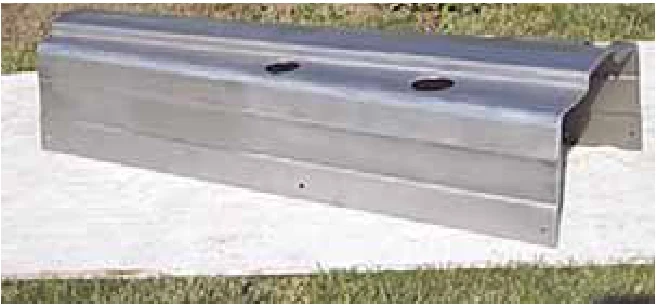
He Specializes In Replacement Hoods

Featured source: Dave Geyer

If you need a hood for a tractor you’re restoring, Dave Geyer can help. For the past 14 years, Geyer has made hoods and other sheet metal parts. He has shipped orders to customers in each of the 48 continental states, Canada, England and elsewhere.

“I don’t restore old hoods; I fabricate new replacements,” says Geyer.

“I have 30 to 40 different products that I make, from hoods to side panels, nose cones and more. In addition, I do custom fabrication.” Geyer got his start with hoods when his dad needed one for an old style G. He decided to try making one, and when it worked out, he made more. While he makes hoods for other brands, he specializes in Deere, making both unstyled (pre 1941) and styled.

“The unstyled have a very simple look to them,” says Geyer.

“The fancy styled look came in around 1941 or so. Mostly, it was a cosmetic improvement.” The extra work involved in the styled hoods comes at a premium. While prices vary, styled hoods for the M, 40, 320, 330 and 430 sell for $420. Unstyled hoods, like those used on pre 1940 A and B Deere tractors, are priced at only $150. Shipping for both styled and unstyled hoods is $35. Geyer laser cuts the hoods and parts listed in his catalog, but hand cuts custom orders.

“If the hood you need isn’t on my list, you can send the original or a blue print,” he says.

“I’ve done a lot of special orders. The oldest was a hood for a 1923 Deere D. The most unusual was a 7-ft. long hood for a Huber and one for a Rock Island.” Contact: FARM SHOW Followup, Dave Geyer, 1251 Rohret Rd. S.W., Oxford, Iowa 52322 (ph 319 628-4257; [email protected]).

From the archive · Full text
Feature story

Cam Caster Kit Removes Wheel Wobble

Featured source:

A leveler kit installed on your Ford truck makes it easier to pull heavy loads, but can cause wheel wobble and tire wear. BD Diesel has a simple solution – a $225 Cam Caster Adjuster kit, which installs in just a couple hours.

“It’s a common thing that happens with Fords,” says Ron Clift, who works in advertising for the British Columbia company. The kit is specifically designed for Ford Super Duty pickups (2005 to 2010). Installing suspension lift or leveling kits can cause the steering pivot axis and tire position to swing rearward, which results in wandering, wobble, pulling, stiff steering and tire cupping. To install the casters, the truck’s frame is supported on a hoist or lift to drop the control arms and slip on the cam casters, which are adjusted to set the caster at a positive angle. Welding is required to attach the brackets to the control arm, and the wheels need to be aligned after the installation.

“We hear comments that it straightens the wheel, and they drive straighter,” Clift says.

“One of our salesmen who puts on lots of miles says he’s reduced wear on his tires.” The kits are available through many automotive warehouses in the U.S. and Canada or through BD Diesel. Contact: FARM SHOW Followup, BD Diesel, 33541 MacLure Rd., Abbotsford, B.C. Canada V2S 7W2 (ph 800 887-5030; www.dieselperformance.com).

From the archive · Full text
Feature story

Deck Tools Make Maintenance Easy

Featured source:

If you’ve got a wood deck, you know it takes a lot of regular maintenance to keep it looking good. Two new tools are designed to help out. The Sprayglide® attachment (www.sprayglide.com) is a simple device that attaches to any pressure washer wand. A wheel glides along a deck to keep the pressure washer wand at a consistent distance to avoid gouging the wood. John Kirkpatrick of British Columbia invented Sprayglide after he became frustrated trying to pressure wash his home’s large deck. Distance can be set anywhere from 2 to 14 in. with the standard Sprayglide, and up to 26 in. with an extension. Attaches tightly with a hood and loop strap. Sells for $25 at major retail outlets. Shur-Line (www.shurline.com) recently introduced the Shur-Line Stain System, which holds 1/2 gal. of stain or sealer in a canister. Pull a trigger on the handle to release stain into a pad that glides over the deck. Retail cost at major home supply stores is $35. To make it easier to paint the grooves between deck boards, Shur-Line sells the Stain Pad with Groove Tool that slips between 1/4-in. and larger gaps. The 3/4-in. long groove on the paint pad is retractable for flat surfaces, and the tool can be put on a standard extension handle. It sells for $18 plus $10 for additional pads. Contact: FARM SHOW Followup, Sprayglide, 202 15388 24th Ave., Surrey, B.C., Canada V4A 2J2 (ph 646 396-7557; www.sprayglide.com); or Shur-Line, 8935 NorthPointe Executive Dr., Huntersville, N.C. 28078 (ph 877 748-7546; www.shurline.com).

From the archive · Full text
Feature story

Diesel-Repowered Toyota Gets 28 Mpg With Propane Boost

Featured source:

Kenneth Schlabach runs longer for less money in his full-size Toyota truck, thanks to propane injection, a Cummins engine repower, and other modifications. On a recent 980-mile road trip, he burned 20 gal. of diesel and 15 gal. of propane. That gave him 28 mpg. Even better, with propane costing close to a third that of diesel, they were cheap miles.

“The propane injection system kicks in when I am on the road,” says Schlabach, a Kentucky logger.

“It gives 30 percent more horsepower and a substantial increase in mileage. When the engine boost goes up, the variable regulator pulls in more propane. In the mountains I burn more propane than on the flat.” Adding the Power Shot 2000 propane system was actually the second big modification. The first was to swap out a bad motor in the Toyota for a Cummins diesel he pulled out of an older Frito Lay delivery truck. He modified the Toyota frame and the Cummins engine slightly to get it to fit.

“I was able to use the original motor mounts out of the delivery truck after I made some brackets to fit them into the Toyota,” says Schlabach.

“The Toyota had an automatic transmission, but I installed an NV4500 five-speed manual transmission from a one-ton Chevy.” He knew the NV4500 would fit the Cummins with no modifications, but he then added a Gear Venders overdrive.

“Without the overdrive, mileage would drop considerably on the road,” says Schlabach. He had the stage 2 fuel pump tuned at Scheid Diesel, a specialty shop in Indiana. With the pump tuned to maximum flow, he gets an extra 40 hp for a total of around 200 hp. He also advanced the timing to about 21°, which added still more power. "I just idle along at 1,400 rpm's and 75 mph and do 60 at 1,000 rpm's," he says. On the road, the propane saves about 5¢ per mile. I spend a lot of time on the road, so I'm always looking for fuel savings." Schlabach asked that readers not contact him, as he’s not interested in building similar rigs. He suggests contacting Scheid Diesel or Diesel Performance Products, maker of the PowerShot 2000, for more information. Contact: FARM SHOW Followup, Scheid Diesel, 4960 N. 13th St., Terre Haute, Ind. 47805 (ph 812 466-7202 or 800 669-1593; www.scheiddiesel.com) or Diesel Performance Products, 7459 Flickinger Dr, Utica, Mich. 48317 (ph 586 726-7478; www.die-selperformanceproducts.com).

From the archive · Full text
Feature story

How To Use One Charger On All Batteries

Featured source:

Steve Konieczki devised a way to use his DeWalt 18-volt battery charger to charge any brand of battery. In fact, he’s already moved on to an improved second-generation version. It all started when the Wasilla, Alaska, resident found a good deal on a used Milwaukee worksite radio. Unfortunately it didn’t come with a battery charger.

“I didn’t want to buy a $50 Milwaukee charger, but I had a worn-out DeWalt battery cable and a multi-volt DeWalt charger,” he says. He disassembled the battery and soldered three wires to the positive, negative and temperature sense terminals. He drilled a hole in the battery case for the cable to exit. The cable runs to a plug he made out of LPS steel putty, fitted with spade connectors that attach to the wires. To charge a battery, he simply slips on the plug and places the dummy battery in the DeWalt charger.

“This could be adapted to any other brand battery and tool combination. You could even have multiple plugs coming from one dummy battery and eliminate the need for a dozen different chargers,” Konieczki says. The light on the DeWalt charger operates the same way to let you know when the battery is charged. Konieczki made two suggestions for others interested in making adapters for their chargers.

“Don’t go too long on the wire,” he says, suggesting no more than a foot. Also, keep the plastic cap that comes with the battery to make a plug – instead of using putty. He notes that his setup works for batteries from 7.2 to 18 volts. He hasn’t used it for lithium batteries. But, Konieczki says he knows if he sees good deals on battery tools at garage sales and they don’t come with a charger, he can make them work. No matter what brand they are. Contact: FARM SHOW Followup, Steve Konieczki, 2846 W. Discovery Loop, Wasilla, Alaska 99654 (ph 907 351-9055).

From the archive · Full text
Feature story

Sheeps Wool Lubricant Works Better Than Oil

Featured source:

A natural lubricant made from lanolin, the natural lubricant found in sheep’s wool protects against corrosion and lubricates better than petrochemical lubricants, according to the New Zealand manufacturers of Prolan. Environmentally friendly, it’s non-conductive, resistant to saltwater, acid and alkali and won’t break down rubber or wiring. The heavy-grade liquid even handles extreme temperatures as low as 49 degrees below zero.

“It can be used directly on electrical connections to prevent moisture corrosion,” says Hugh Carroll, North American distributor.

“It creates an airtight barrier, preventing electrolysis between dissimilar metals, rusting and corrosion. You can use a cutting torch or welder on Prolan-treated surfaces without the spattering or burning you get with petroleum lubricants. It just melts away.” The lubricant qualities of lanolin are no surprise to anyone who has worked with sheep or their wool. Lanolin sheds rain and moisture, yet keeps wool from drying out in the sun and heat. Prolan puts those qualities to work in an industrial grade quality and form, says Carroll.

“Prolan converts raw wool grease into environmentally friendly products that are safe and easy to apply,” he adds. Prolan products resist being washed off after the carrier has evaporated. Treated surfaces can even be pressure washed without loss of the protective surface.

“It frees up seized parts and is a great workshop lubricant,” says Carroll.

“It’s even certified for the food industry.” Prolan is available in a broad range of container sizes of light, medium and heavy-grade liquid and as an anti-seize grease. Prices range from $18 for a 10.5-oz. aerosol pack to $414 for a 5.3-gal. container of heavy-grade oil. Prolan can be sprayed on, wiped on with fingers or cloth, or the item to be protected can be dipped. Even with the excess wiped off, a protective coating remains. If left overnight before the treated surface or system is used, the carrier evaporates and less dust and dirt will collect.

“New Zealand farmers use it as a rust protectant under ATV’s and UTV’s on dairy farms,” says Carroll.

“One treatment generally lasts 9 to 12 months. Spraying it on fiberglass or plastic surfaces and rubbing it into the surface rejuvenates the color.” Contact: FARM SHOW Followup, Hugh Carroll, Thermo Boat Ltd., 2064 Henry Ave. West, Suite #5, Sidney, B.C. Canada V8L 5Y1 (ph 250 472-8495; toll free 888 769-8495; www.thermoboat.com).

”

From the archive · Full text
Feature story

Chop Saw Mounts On Portable Stand

Featured source:

Stew Kunkel made a nifty portable stand for his metal chop saw. It supports long pieces of steel to be cut, lets him swivel the saw easily to cut angles, and carries the saw into storage when not in use. It even holds extra blades.

“The only thing I bought for it was aluminum C-channel for the work supports,” says Kunkel.

“The steel frame table was being discarded at work, and I used a slewing bearing salvaged from an old swivel recliner.” Kunkel stripped the 6-ft. long table down to its 42-in. high, 18-in. wide steel tubular frame. He reinforced it at the corners with bracing and welded steel plate at one end for a saw mount. On the opposite side of the saw mount, Kunkel welded a short length of threaded rod. He hangs extra blades for the chop saw on the rod with spacer disks cut from poly sheets.

“The blades are held out of the way, and the spacers help protect the blade tips,” explains Kunkel. He used angle iron and steel plate to make a frame for the saw to set in and attached it to the saw mount with the slewing bearing in between. When the saw is set into the frame, it can be swiveled to any desired angle for cutting. A pin lock welded to one side of the framework locks the saw into position. Lengths of the aluminum C-channel were mounted on spacers to match the height of the chop saw cutting surface. They provide support for longer pieces of metal being cut with the saw. When not in use, Kunkel removes the saw and tips the table on end. Round stock welded to one end of the table and to legs at that end serve as wheel mounts. They also serve as grab bars for tipping. He fabricated a second angle iron frame and mounted it to the inside of the legs as a place to store the saw.

“I mounted fixed wheels on the ends of the legs and caster wheels to the corner of the table and the legs,” says Kunkel.

“If the table is down and in use, I can tip the other end up and wheelbarrow it around as needed on the fixed wheels. When it’s in storage mode, the caster wheels make it easy to move the table around.” Contact: FARM SHOW Followup, Stewart Kunkel, 15728 153rd Ave. S.E., Yelm, Wash. 98597 (ph 360 701-1177, [email protected]).

From the archive · Full text
Feature story

“Factory Look” Cigarette Lighters

Featured source:

If you own an antique tractor with a cigarette lighter, chances are it doesn’t work. That’s why Steiner Tractor started making replacements.

“They look just like the real factory lighters that originally came with the tractor,” says Dan Steiner, Steiner Tractor, Lennon, Mich.

“They’re built to the original factory specs and are anodized and embossed to look authentic. It’s not unusual for cigarette lighters to be missing on antique tractors. People who restore antique tractors like our cigarette lighters because the closer the tractor is to its original condition, the more valuable it becomes.” The lighters are available for a wide variety of tractor brands. Prices range from $24.95 to $34.95 plus S&H. Contact: FARM SHOW Followup, Steiner Tractor, 1660 S. M-13, Lennon, Mich. 48449 (ph 800 234-3280; www.steinertractor.com).