Practical ideas from FARM SHOW MagazineSubscribe · Free issue · Send us your shop tip
Subscribe to FARM SHOW
Issues / Vol. 30, No. 6 (2006)

Vol. 30, No. 6 (2006)

Money-Saving Repairs & Maintenance Shortcuts · Printed section pp. 36–39

33 selected entries · Complete text of selected entries

This issue’s section includes reader tips and feature-length shop stories. Held items and editorial notices are not reproduced.

Archive text: prices, coupons, availability and contact details reflect the original publication, not current offers. Reader methods are not universal instructions; follow manufacturer guidance and proper safety practices.

Reader shop tips

From the archive · Full text
Reader shop tip

Wilford Barnhart

Wilford Barnhart, Bovina Center, N.Y.

“A reader in the last issue said his Deere 425 lawn tractor was his worst buy because it was a major ordeal to get it started every time he used it. He said it would stall whenever he tried to engage the blades. I have the same tractor and it had the same problem. My dealer showed me how to solve it. Before you engage the blades, run the throttle all the way up and put the choke at the level where the engine is sputtering and almost choking out. Then engage the blades. The problem with this tractor is the pollution equipment on it. The dealer said this info should be in the owner’s manual.”

From the archive · Full text
Reader shop tip

Jere Allan

Jere Allan, Blythe, Calif.

“I have a suggestion for Tom Mack, Westville, Ind., concerning his Deere model 425 lawn tractor. I have one and was experiencing the same problem he’s having with the engine killing when he engages the mower. Here’s the solution I found: 1. Let the tractor warm up for a couple minutes before engaging the mower. 2. Use 89 octane or higher gasoline and use a gasoline stabelizer in the gas. Since I took both these steps, I haven’t had any problems.”

From the archive · Full text
Reader shop tip 1 of 2

Elmer Pinkerton

Individual tip 1 of 2 from this reader’s published contribution.
Elmer Pinkerton, Elmwood, Neb.

“The big bronze bearing failed in the rear of my Craftsman drill. In the past I might have tossed it but this time I took all the measurements to my bearing outlet and they had a perfect match in a sealed ball bearing. Now the drill should last forever.

From the archive · Full text
Reader shop tip 2 of 2

Elmer Pinkerton

Individual tip 2 of 2 from this reader’s published contribution.
Elmer Pinkerton, Elmwood, Neb.

“To lubricate a roller chain that will not be exposed to dirt, I mix 80 weight gear oil with an equal amount of gasoline. Apply with a brush and it will stay on there for a very long time. The gasoline soon evaporates and the oil stays in place. If you’re inside, make sure the room is very well ventilated to pull out the fumes.”

From the archive · Full text
Reader shop tip

Charles Klein

Charles Klein, Columbia, Ill.

His advice to anyone making a shop table: Be sure to make it big enough. That’s what Charles did when he used a full 4 by 8-ft. sheet of 5/ 16-in. steel for a table top when making a rolling work table. He built a sturdy wood frame below and added locking caster wheels. He says the heavy steel top takes a beating and is plenty big for all kinds of repair work.

From the archive · Full text
Reader shop tip

Alden Judnitsch

Alden Judnitsch, Pengilly, Minn.

“The left wheel broke off our IH 990 mower conditioner. We replaced it with the left wheel and axle off an IH 46 baler. We had to shorten the axle a few inches and a local machine shop drilled a new anchor pin hole. Worked great and we saved a lot of money.”

From the archive · Full text
Reader shop tip

D&S Hydraulics

D&S Hydraulics, 605 Highway 75 North, Moorhead, Minn. 56560 ph 218 236-6135; www.dshydraulicsmn.com)

D&S repairs all makes and models of hydraulic pumps, motors, hydrostatics, valves and cylinders. They also custom-make cylinders from 1 1/2 to 6-in. bore with a 1 to 60-in. stroke. Ends can be customized for any unique application or for replacement of obsolete or odd-sized cylinders.

The company also stocks hydraulic motors and pumps and has a huge stock of hydraulic seals, fittings, and ready-made cylinders of all types and sizes.

From the archive · Full text
Reader shop tip

Chad Travis

Chad Travis, Drusco, Ark.

There was a complaint in a recent issue from a reader in South Carolina who had trouble shifting his 5400 Deere tractor. I have one myself and clutch problems are common with this model because of a design problem. The clutch doesn’t line up properly and some of the parts are too light and tend to flex. This all adds up to the clutch sticking. There is an updated clutch rod for this tractor that helps a little but doesn’t fix the problem entirely. There is, however, an aftermarket clutch that is supposed to solve it. It was featured in FARM SHOW’s Vol. 30, No. 3 (T.C.M., Staceyville, Iowa ph 800 447-2161). Here’s what I do to solve the problem. I insert a fiberoptic scope into the inspection port on the side of the clutch to find the input shaft. Then I insert a small hose down into the housing so a small amount of oil can be applied to the shaft. It helps the binding problem without having to replace the entire unit.”

From the archive · Full text
Reader shop tip

Joe Staadegaard

Joe Staadegaard, Lynnville Farm Equipment, LaSalette, Ontario

“For anyone looking for carburetor parts and kits for English Zenith carburetors, Lynnville Farm Equipment has them for Ferguson T.E.A., Ford Dexta, David Brown, Leyland-Nuffield, and IH 250, 275, and 414 models. We also carry other parts for these tractors. Call for a free parts list at 519 443-7591.”

From the archive · Full text
Reader shop tip 1 of 2

Gordon Black

Individual tip 1 of 2 from this reader’s published contribution.
Gordon Black, 42042 E. Lane 16, Burns, Oregon 97720

“I wanted to cut the lid off a 55-gal. steel barrel, but I was afraid to because I didn’t know what kind of material the barrel originally contained. To solve the problem, I closed the jaws of a pipe wrench just enough to get the jaws over the folded rim of the barrel. Then I used a big hammer to hit the back side of the top jaw until the jaw punched through the barrel. Once I made that initial hole through the rim, I was able to tip the wrench on its side and take half bites with the wrench. I kept tapping the wrench. It shears a clean hole and works better than using a cold chisel, where you risk hurting your hands. It rolls the rim down so there’s no sharp edge sticking up to get cut on.

“You can sharpen the top jaw of the wrench with a grinder to make it cut better. Makes the wrench look funny but it doesn’t affect its usage.

From the archive · Full text
Reader shop tip 2 of 2

Gordon Black

Individual tip 2 of 2 from this reader’s published contribution.
Gordon Black, 42042 E. Lane 16, Burns, Oregon 97720

“No one can live without duct tape or a coffee cup. My favorite pickup is a 1971 Ford Ranger and it didn’t come equipped with fancy cup holders, so I simply set a ‘travel’ coffee cup into the middle of a roll of duct tape. The cup’s bottom is smaller than the body so it fits perfectly into the hole. The side of the roll is somewhat sticky, so when I set it on the seat it stays put. My homemade cup holder can be easily moved from vehicle to vehicle.”

From the archive · Full text
Reader shop tip 1 of 5

Richard Gribbins

Individual tip 1 of 5 from this reader’s published contribution.
Richard Gribbins, 1915 Merrimac Rd., Bradfordsville, Ky. 40009

“Over the years I’ve made several different metal brackets that let me mount extra toolboxes on my three Ford New Holland tractors - a 3930, TN 70DA, and 2600. The factory toolboxes on these tractors are either too small or located too far off the ground to see into them without having to climb into the cab. With my add-on toolboxes I always have enough tools on hand, and they’re easy to get at. They also provide extra room for bolts, fencing materials, and other miscellaneous stuff.

“I used angle iron to make L-shaped brackets that bolt onto the side of the tractor using existing holes. The toolboxes set inside the angle irons and are bolted on.

From the archive · Full text
Reader shop tip 2 of 5

Richard Gribbins

Individual tip 2 of 5 from this reader’s published contribution.
Richard Gribbins, 1915 Merrimac Rd., Bradfordsville, Ky. 40009

“I also made a metal feed carrier bracket for my TN 70 DA tractor. I use it to haul three 5-gal. buckets full of corn to my heifers on pasture. I used angle iron and rebar to make the carrier’s sides and bucket dividers, and expanded metal to make the floor.

From the archive · Full text
Reader shop tip 3 of 5

Richard Gribbins

Individual tip 3 of 5 from this reader’s published contribution.
Richard Gribbins, 1915 Merrimac Rd., Bradfordsville, Ky. 40009

“I also mounted a homemade bracket inside the cab on my TN 70 DA tractor that holds a 1-gal. plastic jug of water. The bracket has plastic sides and an expanded metal floor. It mounts under the dash and keeps the jug from bouncing around. I fill the jug 3/4 full and freeze it overnight so the water will stay cold for a long time.

From the archive · Full text
Reader shop tip 4 of 5

Richard Gribbins

Individual tip 4 of 5 from this reader’s published contribution.
Richard Gribbins, 1915 Merrimac Rd., Bradfordsville, Ky. 40009

“I used angle iron and steel plate to make footrests on both sides of my 3930 tractor. The footrests mount forward and above the cab platform and provide room for me to stretch out my legs.

From the archive · Full text
Reader shop tip 5 of 5

Richard Gribbins

Individual tip 5 of 5 from this reader’s published contribution.
Richard Gribbins, 1915 Merrimac Rd., Bradfordsville, Ky. 40009

“I have short legs and had trouble fully depressing the clutch pedal on my TN 70 DA tractor, so I fixed metal brackets onto the existing clutch pedal that add 3 in. of height. The bracket is made from flat metal. I spot welded beads onto the bracket so that my foot won’t slip off.”

From the archive · Full text
Reader shop tip

Kimball Midwest

Kimball Midwest, Columbus, Ohio ph 800 233-1294; www.kimballmidwest.com)

This company stocks more than 35,000 cutting tool maintenance and repair items, with a special order department having access to more than 300,000 hard-to-find parts. They offer a complete line of high performance cutting tools including super primalloy drills, super fast heavy duty hole cutters, high performance drill bits, frame masters and reamers, power taps, and high speed taps.

Other cutting products available include hacksaw blades, reciprocating saw blades, jig saw blades, band saw blades, hole saws, and circular saw blades.

The company also offers high performance cutting tool fluids and chemicals designed to enhance cutting tool safety and performance.

From the archive · Full text
Reader shop tip

Marv Abels

Marv Abels, Worthington Ag Parts, 6149 N. State Road 15, Leesburg, Ind. 46538 ph 800 426-6960 or 574 453-4713; [email protected])

“Anyone who uses their Deere 4020 tractor for loader work will be interested in our axle replacement service. We replace the original front axles on Deere 4020 tractors with heavier duty front axles off late model Deere 30 and 40 series models. These replacement axles come with heavy duty 8-bolt hubs and rims and will stand up to heavy use. The axles we use come off 3010, 4010, 3020, 4020, and 4320 models. Cost is about $1,500.”

From the archive · Full text
Reader shop tip

Lester Rosenthal

Lester Rosenthal, Clarence, N.Y.

“The original side-mounted pto engagement lever on my 1946 Ford 2N tractor was hard to reach from the tractor seat. The problem is that the lever is located too far down and too far back. To solve the problem, I clamped a 12-in. length of strap iron on top of the lever and mounted a ball knob on one end of it. The knob extends much farther forward than the original lever, and brings it right up near the driver where it’s easier to reach.”

From the archive · Full text
Reader shop tip

Bill Reeks

Bill Reeks, Cromwell, Ky.

“I started using a power chair about a year ago after arthritis made walking too painful. But I still manage to do what’s needed. Here’s a photo of my ‘hand truck’, which I use with a cardboard box to rake yard debris and pick up small tree limbs. The box mounts on a 4-wheeled metal frame that’s pushed ahead of the power chair. A long 1/4-in. dia. bolt goes through a handle, which fits into a 3/8-in. dia. hole drilled into the chair’s foot rest. I also added homemade cane brackets and an umbrella on back.”

From the archive · Full text
Reader shop tip

Leonard Seltzer

Leonard Seltzer, Manhattan, Ill.

“I made this 9-in. long drawbar pin out of an old 3/4-in. dia., solid steel compressor valve. I ground one end of the valve down to a point and then welded a washer on about 2 in. from the top end of the pin, so I can grab hold of it. I got about a dozen valves from an old friend who worked at a refinery about 20 years ago where they had torn down some industrial compressors. I took the valves to the maintenance shop at a local pipeline company, to grind the points on the pins.

“Compressor valves are built strong and won’t break. I’ve used my valve drawbar pin to pull two big gravity wagons filled with corn, one behind the other, to the elevator. The wagons weighed about 15,000 lbs. apiece, but I didn’t have any problems with the pin. I also used it in a clevis hookup while pulling a 4-bottom moldboard plow behind my Deere 720 tractor, and it worked fine. A little chrome did get chipped off, but that was it. If you wanted, you could drill a hole in the bottom of the pin and use a cotter key to make sure the pin can’t jump out.”

Shop feature stories

From the archive · Full text
Feature story

Make Your Portable Drill Work Like A Drill Press

Featured source: Don Bragdon

If you’ve ever wished you could put more down pressure on a handheld electric drill, you’ll be interested in this simple tool built by Don Bragdon of London, Arkansas.

“It makes any portable drill work like a drill press, making it much easier to apply down pressure,” says Bragdon.

The tool consists of a metal cup that fits over the end of the drill and an 18-in. long, 1/2-in. dia. metal handle that hinges on the cup. A hook is welded to the end of the handle to hold a piece of chain. The free end of the chain can be fitted with either a hook or a large magnet.

To use the drill, Bragdon attaches the magnet or hook to the working surface, and adjusts the chain links until the chain is tight. Then, while holding the drill with one hand, he uses his other hand to pull down on the handle to provide leverage.

“It makes drilling a much easier job,” says Bragdon.

“I came up with the idea because I’m in a wheelchair and sometimes can’t reach up high enough to apply adequate down pressure for drilling. With this tool I can drill anywhere I can reach.

“I use the hook any time I can find a place to hook it onto. When I’m drilling on a flat metal surface I use the magnet, which I bought for less than $10 at Harbor Freight. My only cost was for the magnet. Everything else was built from scrap metal.”

Contact: FARM SHOW Followup, Don Bragdon, 426 Rnd. Mtn. Ln., London, Arkansas 72847 (ph 479 293-4256).

From the archive · Full text
Feature story

Advice On Buying A Waste Oil Heater

Featured source: Ray Thompson

For the past 22 years, Ray Thompson has been in the business of selling, servicing and repairing waste oil furnaces. He has seen both the good and the bad as the industry has ma-tured.

He says that if you follow a few simple rules, you can avoid most problems and re-ally benefit your pocket book.

“First get references from a user in your area,” says Thompson.

“Don’t buy based on a magazine ad or flyer.

“Second, deal with a reputable company that has been in the business a while.”

He sells Reznor waste oil furnaces, but performs maintenance on a wide variety of others including Black Gold, Clean Burn, Shenandoah, Lanair and Omni.

“If you don’t know who is producing a good furnace, go to businesses that produce a lot of waste oil and burn it themselves,” he suggests.

“Find out who they bought from and how it’s working out.”

Thirdly, he says you should always buy through a dealer to get the right furnace and to get it installed properly.

“Proper installation takes care of the most serious potential problems,” he notes.

Thompson learned about waste oil furnaces the hard way. As an owner of a service station and automotive repair shop in the early 1980’s, he had plenty of waste oil to dispose of. The first two furnaces he bought didn’t work out. As he fixed them, he became familiar with how they worked. Today, his Oregon Commercial Heating company services and repairs 1,200 to 1,400 waste oil furnaces on an annual schedule and another 1,700 on an emergency basis.

“A lot of companies sell waste oil furnaces, but don’t service them,” he says.

“Waste oil burners need to be cleaned regularly so they will burn efficiently. There are many different waste oil furnaces, a ton of different types of equipment, and lots of them don’t work very well.”

Rather than simply replace poorly functioning parts, Thompson has developed his own burner, metering pump and heat ex-changer that install into existing units.

“We borrowed ideas from all the different equipment we sell and service,” he says.

“This way our customers don’t have to buy a new furnace or spend a lot of time trying to adjust equipment that doesn’t work properly.”

Thompson notes that due to the sulfides in waste oil and the high temperatures involved, heat exchangers and combustion chambers tend to burn out faster than the rest of the furnace.

To keep equipment operating properly, Thompson suggests getting regular service from someone who knows codes for installing equipment, including Class A high temperature chimneys. He points out that im-proper installation could cancel insurance coverage if it results in a fire.

Quality of fuel is also important. He emphasizes storing waste oil by itself and avoiding the accidental addition of antifreeze or water. He suggests a minimum tank size of 500 gal. with secondary containment and a drain valve.

“Crack the drain valve periodically, and dribble out what water is there,” he says.

“If at all possible, filter waste oil before it goes into the tank. If contaminants get into the tank, they will create a sludge that has to be removed at some point.”

Avoiding sludge is why Thompson also recommends against mixing greases and gearbox oils with acceptable waste oil.

“Some companies claim they can burn grease and gear box oil, but most of it will just drain to the bottom of the tank,” he says.

Thompson suggests limiting waste oils to motor oil, cooking oils, hydraulic oil, transmission fluid, combustible synthetic oils, and any other oil up to 50 S.A.E.

Contact: FARM SHOW Followup, Oregon Commercial Heating, 9684 S Wildcat Rd., Molalla, Ore. 97038 (ph 503 829-9670; fax 503 829-9684; [email protected]; www.oregoncommercialheating.net).

From the archive · Full text
Feature story

Separate Sandblast Building

Featured source: Charles Klein

Charles Klein’s wife, Alice, suggested to Charles that he needed a small building to do his sand blasting in because the silica sand dust had a way of getting into everything, and it also made the shop floors slick to walk on.

So Charles put up an 18 by 28-ft. building adjacent to his machine shop that holds his sandblaster. He’s happy to have the mess separated from the rest of his shop, and so is his wife.

Contact: FARM SHOW Followup, Charles Klein, 104 Gall Street, Columbia, Ill. 62236 (ph 618 281-5064).

From the archive · Full text
Feature story

Farmer-Designed Parts For Deere Combines

Featured source: Kim Tschetter

Years of driving combines have given Kim Tschetter first hand knowledge of combine repairs. The cost of high-priced replacement parts prompted him and his family to start a company to design and build aftermarket parts.

Tschetter looks for opportunities in areas that used to frustrate him when farming. Two parts he recently added are a Center Section Repair Kit for JD 900 Series platform augers and a telescoping hitch for JD 50 and 60 Series combines.

“If a rock gets into the center section of the soybean head auger, Deere’s answer is to sell you a $2,800 auger,” says Tschetter.

“With our part, you can replace just the 5 to 6-ft. center section, and it’ll cost you $425 plus your labor.”

Tschetter advises that replacing auger sec-tions is not a job for everybody, although most local machine shops can probably tackle the job if the combine owner isn’t confident of his own expertise.

“The auger can be 25 to 30 ft. long, and the center section has to be absolutely true,” he warns.

An easier product to install is Lankota’s $420 telescoping hitch. The hitch lets you tow wide headers from field to field.

“We built it heavier than most farmers or other after-market suppliers do,” says Tschetter.

“It telescopes for easier one-man operation and will handle the 600 to 700-lb. weight of a header transport trailer tongue.”

A convenient feature is the steel cable that lets an operator release the latch to telescope the hitch. Once the trailer tongue is connected, the operator simply backs up to relatch the hitch.

Tschetter notes the entire hitch can be dropped by removing four bolts. Installing it is equally easy. Lankota takes advantage of four holes factory drilled into the heavy-duty tow plate on the rear center frame of the combine.

A third new product that Tschetter is especially pleased with is the upgraded feeder house tilt frame for JD Contour Master combines. It lets farmers with 50 or 9000 Series combines use 600 Series platform heads and 90 Series corn heads.

“Farmers can go to Deere and pay $1,500 for a new bracket with two hooks on top, or send us theirs, and we’ll send them an upgraded bracket for $425.”

Tschetter adds hooks and some sheet metal, sandblasts and paints the traded-in bracket, and sends it off with the next exchange. Brackets are also available for outright purchase for $1,170.

Another popular product offered by Lankota is their $425 spring-loaded stalk stompers.

“We use a standard pickup receiver hitch design so they can be easily removed for transport,” says Tschetter.

These parts and others are available by catalog or on the internet. Prices do not include shipping.

Contact: FARM SHOW Followup, Lankota, Inc., P.O. Box 914, 1090 21st St. SW, Huron, S. Dak. 57350 (ph 605 352-2693; toll free 866 526-5682; fax 605 352-2927; [email protected]; www.lankota.com).

From the archive · Full text
Feature story

Glass Storage Bottles Keep His Shop Neat

Featured source: Mel Primrose

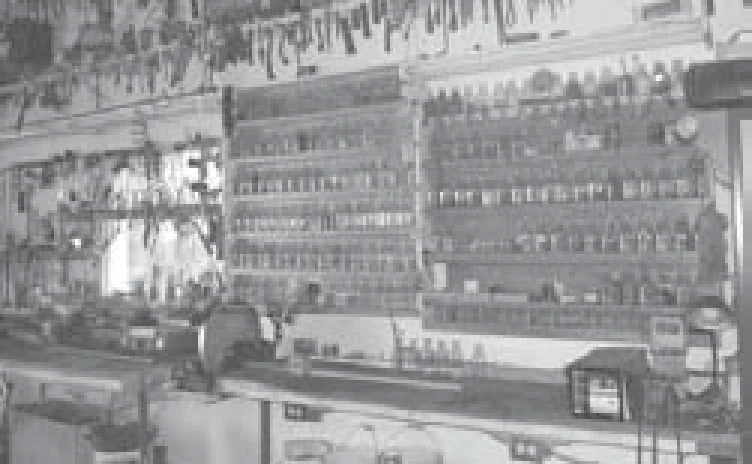
Glass juice bottles make great storage containers for screws, washers and small bolts.

With more than 100 bottles lining his shop wall, Mel Primrose is a big believer on the idea. The Westlock, Alberta, man says the clear bottles make it easy to find just the right nut, bolt or screw.

“The ones I use are about 4 inches tall. Before I retired, I did plumbing and heating for the local school so I was able to collect a lot of discarded bottles. I threw away the lids and made wooden shelving for my shop wall. The shelves have lips on the front so the bottles can’t slide off. This eye-level wall rack makes the bottle’s contents quite visible.”

Contact: FARM SHOW Followup, Mel Primrose, Site 10, Box 1, R.R 1, Westlock, Alberta, Canada T7P 2N9 (ph 780 349-2477).

From the archive · Full text
Feature story

Replacement Main Bearing For Deere Diesel Tractors

Featured source: Scott Wichlacz

If you own a Deere 80, 820, or 830 diesel tractor, you’ll be interested in these new replacement main bearings for the engine crankshaft.

“Our bearings are manufactured to Deere specifications from the correct aluminum alloy, unlike Deere’s own bronze replacement bearings which will seize up,” says Scott Wichlacz, Manitowoc Motor Machining & Parts, Inc., Manitowoc, Wis.

There’s a need for these bearings, says Wichlacz.

“The problem is that Deere re-cently changed from the original aluminum alloy to a bronze alloy that is incorrect for rotating motion. When this new bearing is installed it can seize the crankshaft almost immediately, sometimes stopping the engine dead within 15 minutes of start-up. Some owners have even had to replace expensive engine parts that got damaged.

“The bearings we sell are made from the same special aluminum alloy that Deere used in the past. They won’t seize up.”

Sells for $139.58 plus S&H. Contact: FARM SHOW Followup, Manitowoc Motor Machining & Parts, Inc., 2308 Franklin St., Manitowoc, Wis. 54220 (ph 920 684-8577; fax 920 684-8599; [email protected]; www.motor machining.com).

From the archive · Full text
Feature story

Portable Cart Keeps Tools Organized

Featured source: Chris Kornkven

“It has a lot of space for tools, yet it’s small enough to maneuver into tight spaces,” says Chris Kornkven about the low-cost, portable tool cart he built out of scrap metal and peg-board hooks.

The 5-ft. high cart measures 4 ft. wide by 14 in. deep and rides on four small caster wheels. It’s made from welded-together angle iron with pegboard hooks welded to horizontal cross members. Kornkven used 1 1/2-in. angle iron for the bottom part of the cart’s frame and welded it to the caster wheels. He used 3/4-in. dia. pipe for the uprights and 3/ 4-in. angle iron for the cross members. Then he tack welded the pegboard hooks to the cross members, spacing the hooks about 2 in. apart.

He also attached some magnetic strips to the cart for storing smaller tools.

“It cost me only about $40 to build,” says Kornkven.

“I like being able to roll the cart right up to where I’m working without having to go back and forth to a peg board on a wall in my shop. It also helps keep my tools organized, since I put each tool right back after using it. There are plenty of hooks on both sides of the cart for tools, along with loops that can be used for hammers or screwdrivers. I can reach through the cart for a tool rather than having to go around to the other side. And the hooks are welded on solid so they can’t fall out like the hooks on conventional pegboards.”

The bottom part of the cart has enough clearance to place socket sets or toolboxes on the cross members.

“I plan to add some cross pieces to the top of the cart so I can add halogen work lights. I might also add some extra cross pieces for a shelf or box for extra nuts and bolts, or other odds and ends,” he notes.

Contact: FARM SHOW Followup, Chris Kornkven, N6280 County P, Helenville, Wis. 53137 (ph 920 699-2376).

From the archive · Full text
Feature story

New Hammer Has A Front-Mounted Claw

Featured source: David Stewart

Once you’ve tried it you’ll never go back, says the inventor of this new front-claw hammer.

Inventor David Stewart of LaFollette, Tenn., has 45 years of construction experience, and says his patented hammer is ideally weighted and balanced to drive long nails with only a couple of blows. The front claw pulls 12 to 20-penny nails with no need to flip the hammer over.

“It also holds a nail in the front claw so you can use only one hand to set or pull a nail over your head. Also, the front claw can be used to twist a stud when framing,” says Stewart.

The Stewart Hammer comes in 16-oz. to 28-oz. head sizes. It’s available with your choice of a smooth or serrated face and comes with a lifetime warranty. It has a pvc grip and the head is a single piece of forged 1070 carbon steel.

At www.stewarttools.com, the hammer prices range from $22 to $34 plus S&H.

Contact: FARM SHOW Followup, Stewart Manufacturing Inc., Box 1660, LaFollette, Tenn. 37766 (ph 888 783-9426; [email protected]; www.stewarttools.com).

From the archive · Full text
Feature story

Super-Size Truck Brakes

Featured source: Stainless Steel Brakes Corporation

Need better braking than you get with your stock brakes? You can increase brake torque by up to 36 percent over stock brakes with a heavy-duty brake system from Stainless Steel Brakes Corporation (SSBC). The company offers disc brake conversions and upgrade kits for a wide variety of trucks, performance cars, SUVs and Jeeps. But, if a simple upgrade is what you’re looking for, SSBC’s Quick Change kit for trucks may do it. The kit includes new brake pads, hardware and a pair of Tri-Power calipers with three stainless steel pistons instead of the one or two found on stock brakes.

“They distribute clamping power more evenly across the entire pad when braking, producing less pad deflection,” says Mark Christenson, marketing manager, SSBC.

“With one or two piston calipers, the outer ends of the pads can be pushed away from the rotor due to extreme heat. This effectively reduces your stopping ability.”

Christenson understands the importance of good truck brakes. He grew up on a dairy farm in upstate New York and recalls using the farm truck to pull wagons loaded with 145 hay bales.

“I cringe when I think of how much strain that extra weight put on the truck brakes on even the smallest hill,” he says.

Another feature of SSBC brakes is they are designed to fit stock wheels. Many after-market brake upgrades include larger-than-stock rotors, points out Christenson. Installing them requires installing larger wheels and tires, significantly increasing upgrade cost.

Contact: FARM SHOW Followup, Stainless Steel Brakes Corporation, 11470 Main Road, Clarence, N.Y. 14031 (ph 716 759-8666; toll free 800 448-7722; fax 716 759-8688; [email protected]; www.ssbrakes.com).

From the archive · Full text
Feature story

Quick-Release Magnetic Pick-Up Tool

Featured source: Mel Primrose

“Having a way to clean off the magnet is key to making a good tool for picking up nails and other small metal objects,” says Mel Primrose, Westlock, Alberta.

His homemade magnetic pickup tool dis-charges its load with one easy movement of the handle.

To make the tool, Primrose slipped a metal rod through a slightly larger aluminum tube that has a wooden grip on it.

Next, he attached a magnet from an old radio speaker to the end of the metal rod. At the end of the aluminum tube he attached a plastic margerine container with a plywood disc in place of the lid.

To pick up metal objects, he slides the magnet to the bottom of the plastic tube. To drop items off, he slides the magnet up so everything drops off.

“This tool works very well. I find that it’s faster and easier than other metal pick-up tools because with them, you have to pick everything off by hand,” Primrose says.

“With this thing, you just pull the handle back and the magnet moves inside the container, releasing whatever you’ve just picked up. It’s handy to pick up metal filings like chop saw cuttings. The handle makes it easy to reach the floor.”

Contact: FARM SHOW Followup, Mel Primrose, Site 10, Box 1, R.R. 1, Westlock, Alberta, Canada T7P 2N9 (ph 780 349-2477).

From the archive · Full text
Feature story

Hard-To-Start Tractor Idea

Featured source: Bill Marley

If you’ve got a hard-to-start tractor that some-times needs a shot of ether to get going, you’ll like this idea.

Bill Marley, Nokomis, Ill., came up with an easy way to give his engine a quick boost. He drilled a hole about 3/4 in. in diameter into the intake air pipe going to the carburetor. Then he covered it with a sleeve cut from a sock.

He slides the cover up when shooting the ether, then back down over the hole. The sock filters incoming air so the extra hole actually aids air flow.

A hose clamp attached below the hole keeps the sleeve from sliding down too far.

Contact: FARM SHOW Followup, Bill Marley, Nokomis, Ill. 62075 (ph 217 563-2506).

From the archive · Full text
Feature story

“Fastest Fence Staple Puller In The West”

Featured source: Tony Dinatale

Anyone who’s ever had to pull big fence wire staples will appreciate this new-style staple puller.

The 13 1/2-in. long tool has a long point at one end with a flat driving plate behind it. You just position the point between the post and staple and use a hammer to drive it in.

“The square head bites into the wood and prevents slippage when prying out the staple,” says inventor Tony Dinatale, Deer Park, Wash.

“Besides being used as a staple puller, it can also be used as a hammer, safety punch, and wire stretcher.”

Dinatale says he came up with the tool a few months ago when he had to move 1,400 ft. of fence on his ranch.

“There were six or more staples on every post. Since we wanted to save and reuse the wire, we had to remove the staples completely. After about an hour of struggling with a pair of fence pliers, I made up two of these tools, one for me and one for my wife. Together we got the job done very quickly, easily and with no blisters or sore muscles.”

Sells for $11.95 plus $5.95 S&H. Contact: FARM SHOW Followup, Tony Dinatale, P.O. Box 1671, Deer Park, Wash. 99006 (ph 509 276-8552; cprspokane @aol.com).