Practical ideas from FARM SHOW MagazineSubscribe · Free issue · Send us your shop tip
Subscribe to FARM SHOW
Issues / Vol. 27, No. 6 (2003)

Vol. 27, No. 6 (2003)

Money-Saving Repairs & Maintenance Shortcuts · Printed section pp. 36–39

50 selected entries · Complete text of selected entries

This issue’s section includes reader tips and feature-length shop stories. Held items and editorial notices are not reproduced.

Archive text: prices, coupons, availability and contact details reflect the original publication, not current offers. Reader methods are not universal instructions; follow manufacturer guidance and proper safety practices.

Reader shop tips

From the archive · Full text
Reader shop tip

Cody Best

Cody Best, Novi, Mich.

“Many people keep a turkey baster handy for fluid removal, such as from a master cylinder. I’ve found something better. I use an infant nasal aspi-rator, which is basically a small squeeze bulb with a short tip that’s used to clear a baby’s nose. These are smaller and easier to use and they fit into smaller places. And I’ve found they drip less than a baster.”

From the archive · Full text
Reader shop tip

Bob Clayton

Bob Clayton, Suwanee, Ga.

“For removing rust on old cars, I use oxalic acid. It was the ingredient in radiator fast flush before the environmental revolution. I buy it in 25 kg sacks and mix about 2 or 3 tbsps. of the granules with a gallon of water to make the solution. It only eats rust. It won’t damage paint, chrome, glass or skin, although it is poison-ous. It also works great for bathtub and toilet tank rust stains.

“It may not be easy to find, however. I had to open an account with an industrial chemical supplier to get mine. However, 25 kg. of this stuff should last you a lifetime.” Auto Restore Magazine

From the archive · Full text
Reader shop tip

Joseph Palicka

Joseph Palicka, Aitkin, Minn.

“I made a simple 6-terminal throw switch in order to raise and lower my truck-mounted snowplow blade. It allowed me to convert my 12-volt winch, which would only power up, to power down, also. The throw handle sides are copper, made out of flattened tubing. The handle is wood.

“The terminals can be taken from an old electrical box fuse holder. The base is wood or plastic. The handle goes down to either side, making opposite connections.”

From the archive · Full text
Reader shop tip

Donald Waehl

Donald Waehl, Morrison, Ill. (ph 815 772-3765)

“I have a problem I can’t solve on my 1958 720 Deere 2-cyl. tractor. I put an alternator on it last winter and it worked fine until it warmed up this summer. Then I couldn’t keep points or a condenser in it. The dealer put an electronic ignition in it. It works fine for a couple hours and then the coil gets so hot it hits on one cylinder, and then quits. You let it cool down a couple hours and then it starts and runs again until it gets the coil hot.

“I hope if any of your readers know how to fix my problem they could either write or call.”

From the archive · Full text
Reader shop tip

Mark S. Yax

Mark S. Yax, Solon, Ohio.

“The tubeless tire on my wheelbarrow had some dry rot which caused a bad seal. Every time I tried to use it, the tire had gone low on air, even though I might have filled it recently. To fix the problem, I coated the inside of the tire with linseed oil. All I did was remove the air valve, add in 8 oz. of oil using a squirt bottle, replace the valve stem, and refill to 25 psi. That was one year ago and I haven’t had to add air since.”

From the archive · Full text
Reader shop tip

Farmchains.com

Farmchains.com, 105 S. Peoria Ave., Dixon, Ill. 61021 (ph 800 648-5429; fax 815 288-6790; website: www.farmchains.com)

This new website offers a wide variety of tractor, header, roller chains, steel chains, and other miscellaneous agricultural attachment accessories. The costs are often much lower and they say they offer the widest selection on the web. If you are looking for a specific part you can call them up and have them search their catalog, or you can do it yourself on their website.

From the archive · Full text
Reader shop tip

Ken Scharabok

Ken Scharabok, 1645 West blue Creek Road, Waverly, Tenn. 37185 (email

[email protected]): “I have made a tool that can replace several wrenches and a heavy-duty hammer. I forge down the end of the wrench to fit into the head before being welded in place for strength. I have one in each of my tractor toolboxes and I’ve made them up for several of my friends. I would be willing to do the same for others for the total delivered cost of $20.”

From the archive · Full text
Reader shop tip

Robert A. Pyle

Robert A. Pyle, Pickford, Mich.

“In tight spots where I need to use a nut, I pack the socket with grease to hold the nut while I move the socket into place. This stops it from falling out but allows me to tighten the nut and remove the socket easily. I just wipe the grease off when I’m finished.”

From the archive · Full text
Reader shop tip

Roger and Bruce Elliott

Roger and Bruce Elliott, Montrose, Ill.

“We made a rolling support for the heavy pieces of machinery that are worked on in our shop. The roller is actually 6-in. pipe mounted on telescoping pieces of square piping. This allows it to adjust for height. The base is made from an old truck wheel. The bigger roller keeps heavy pieces steady while allowing them controlled movement.”

From the archive · Full text
Reader shop tip

Gary Risler

Gary Risler, Monduri, Wis.

“To wash grease off your hands, use WD-40. A couple squirts, rub your hands for about 15 seconds, and then dry with a paper towel. It works better than any soap you can buy.”

From the archive · Full text
Reader shop tip 1 of 2

Randall L. Lacy

Individual tip 1 of 2 from this reader’s published contribution.
Randall L. Lacy, McHenry, Md.

“The skid plates on my Vicon disc mower were wearing out too fast. So I started welding inexpensive plate steel to the skid plates. They last much longer now.

From the archive · Full text
Reader shop tip 2 of 2

Randall L. Lacy

Individual tip 2 of 2 from this reader’s published contribution.
Randall L. Lacy, McHenry, Md.

“I found a similar solution for a chain that kept breaking on me. The paddles on my Patz Barn Cleaner were weak at the links so I just removed the paddles and welded new links in their place. That is a lot less expensive than buying a completely new chain and I get much more use out of them.”

From the archive · Full text
Reader shop tip

Delvin Meyer

Delvin Meyer, Mission, S. Dak.

“I have retapped a stripped, standard size thread using a metric tap. Then I use a metric bolt to save buying a replacement standard part. The only difference is that the metric is slightly larger.”

From the archive · Full text
Reader shop tip 1 of 2

Edward B. Edelen

Individual tip 1 of 2 from this reader’s published contribution.
Edward B. Edelen, Jr., Bryantown, Md.

“The fuel injection pump on my Deere 3010 failed. But I was able to get it working again by rigging up a system to relieve pressure on the fuel return line from the injector. Using two “T” fittings, I plumbed in another line from the return line to the supply line and then to the fuel tank. The tractor has run perfectly since I made the modification.

From the archive · Full text
Reader shop tip 2 of 2

Edward B. Edelen

Individual tip 2 of 2 from this reader’s published contribution.
Edward B. Edelen, Jr., Bryantown, Md.

“Another tip I had involves a 1924 Ford Model “T.” After 50 years of exposed storage the wooden spokes on the wheels had become severely weathered. Since it would only be used around the farm I decided not to rebuild the whole wheel, but rather just covered the spokes with fiberglass resin. Since then none of the spokes have cracked or loosened, even after 25 years.”

From the archive · Full text
Reader shop tip

Donald Struckhoff

Donald Struckhoff, Augusta, Mo.

“When the ‘O’ rings leak into the brake housing on International 06 and 56 series tractors, I’ve found that often the brake discs can be purged of oil by placing them 6 in. from the output of a portable heater for about 30 min.”

From the archive · Full text
Reader shop tip 1 of 2

Bob Moty

Individual tip 1 of 2 from this reader’s published contribution.
Bob Moty, Crystal Lake, Ill.

“I made a couple modifications to make my auto ramps more useful. The first was reinforcing them on the sides with some scrap steel. Next, I bolted 8 by 12-in. pieces of belting onto the lower ends of each ramp. This way when the tire rolls up onto the belting, the ramp is held in place as the car rolls up onto it, rather than scooting away.

From the archive · Full text
Reader shop tip 2 of 2

Bob Moty

Individual tip 2 of 2 from this reader’s published contribution.
Bob Moty, Crystal Lake, Ill.

“I have also come up with an easy way to mark logs while cutting firewood. I took 2 pieces of 1-in. diameter shaft, 5-in. long and ground them to a point. Next, I welded a piece of 1-in. rectangular tubing between them. The markers are 16 1/4 in. apart, and when cut with a chainsaw logs come out exactly 16 in. long.”

From the archive · Full text
Reader shop tip

David Shaeffield

David Shaeffield, Repair Tech, 1434 E. Benge Rd., Fort Gibson, Okla. 74434 (ph 888 478-4558)

“I have come up with a valuable set of tools that can be used for a variety of different things. I sell sets of carbonized steel rods through Repair Tech that can be used when welding hitch holes and a number of other applications. These carbonized rods are made of the same material that is used in the space shuttle heat shield. This means they can withstand temperatures up to 4,000 degrees, so they won’t stick to welds and will keep the holes open.

“The rods come in sets of 13 or 17, ranging from 1/8-in. to 2 1/2-in. in diameter. Both sets come in a carrying case. The 13-rod set costs $79 and the 17-rod set is $199.”

From the archive · Full text
Reader shop tip

George E. Adams

George E. Adams, Sr., Williston, Fla.

“The old New Holland forage choppers have fan knives that are really hard to keep sharp and they have to be removed to be sharpened. Part of the problem is that you have to re-move the housing to get at the blades in the first place. My solution was to cut the housing into two sections and weld two compan-ion flange angles onto each section. So when I need to get to the knife blades, I just unbolt the two halves, sharpen up the blades and bolt the sections back together.”

From the archive · Full text
Reader shop tip 1 of 2

Otto Mildner

Individual tip 1 of 2 from this reader’s published contribution.
Otto Mildner, Kingston, Ill.

“To make rusty tools look like new again, I simply soak them in white vinegar for two or three weeks. Then I use a brush to remove any leftover residue and shine up the tools.

From the archive · Full text
Reader shop tip 1 of 3

Steve Spiering

Individual tip 1 of 3 from this reader’s published contribution.
Steve Spiering, Milbank, S. Dak.

“Here’s an easy way to put threads all the way through lengths of pipe or square tubing. Use a woodworker’s dowling jig to make a centered, true pilot hole. Drill a hole and insert a nut. Weld around the perimeter of the nut (a wire welder works best) and grind flush. It’s important to clean the threads with a tap before using. If you do a careful job you can make it look like threads cut into solid stock. I used this technique to put caster wheels on an object where there was no room for a nut on the other side.

From the archive · Full text
Reader shop tip 2 of 3

Steve Spiering

Individual tip 2 of 3 from this reader’s published contribution.
Steve Spiering, Milbank, S. Dak.

“My Volvo truck is equipped with two large oil filters. Whenever I change the oil, I have to lie on my back directly below both filters to remove them. I didn’t want hot oil splashing on my face so I came up with a solution. I pre-drain each filter by driving a pole barn nail into the bottom of each filter. The angle that I drive the nail in will determine the direction of the oil flow. A pan below is used to catch the oil.

From the archive · Full text
Reader shop tip 3 of 3

Steve Spiering

Individual tip 3 of 3 from this reader’s published contribution.
Steve Spiering, Milbank, S. Dak.

“To cleanly bend light or medium gauge sheet metal without using a brake, I use a thin grinder blade and a guide to score a line halfway through the metal. After bending the metal to the desired position, I make a weld along the inside of the bend. The resulting weld bead will make the metal as strong as ever.”

From the archive · Full text
Reader shop tip 1 of 3

Cary Urka

Individual tip 1 of 3 from this reader’s published contribution.
Cary Urka, Brethren, Mich.

“Pickup-mounted snow blades can be difficult to install. To make the job easier, I mount the blade on a pallet jack. I wheel the blade up to the pickup, then use the hand jack to raise the blade and install it. It works as well as a commercial stand is a lot less expensive.

From the archive · Full text
Reader shop tip 2 of 3

Cary Urka

Individual tip 2 of 3 from this reader’s published contribution.
Cary Urka, Brethren, Mich.

“I use a shopping cart to haul my wire feed welder and acetylene tank around my shop. The welder rests on a metal shelf, and the tank mounts on brackets that attach to the cart. I widened the front wheels to make the cart more stable.

From the archive · Full text
Reader shop tip 3 of 3

Cary Urka

Individual tip 3 of 3 from this reader’s published contribution.
Cary Urka, Brethren, Mich.

“This 10-ft. wide stainless steel kitchen sink mounts along a wall inside the paint room in my shop and is used for mixing paint, storing paint guns, etc. Rinse material drains into an old paint thinner located under the sink. I hang paint guns on one side of the sink.”

From the archive · Full text
Reader shop tip

George R. Moser

George R. Moser, Hardy, Va.

“Plastic wire spools - available free for the taking from motor or transformer shops - provide a neat and safe way to hang water/air hoses, extension cords, etc. The spools can be screwed directly to a wall or mounted on a center bolt for easy reeling of wire, cable or hoses. Motor and transformer shops buy magnet wire on these disposable spools, which range from 6 to 24 in. in diameter. The 24-in. spools work especially well for barbed wire.”

From the archive · Full text
Reader shop tip 1 of 2

Jim Relihan

Individual tip 1 of 2 from this reader’s published contribution.
Jim Relihan, Brunswick, Ga.

“To get more life out of a faucet seat, remove the seat and rub it back and forth on a metal file until the flaw is gone. You can more than double the life of a seat this way.

From the archive · Full text
Reader shop tip 2 of 2

Jim Relihan

Individual tip 2 of 2 from this reader’s published contribution.
Jim Relihan, Brunswick, Ga.

“A retractable extension cord made from an old vacuum cleaner cord mechanism gives me 25 ft. of cord for a drill.”

From the archive · Full text
Reader shop tip

Phillip L. White

Phillip L. White, Murfreesboro, Ark.

“My son and I welded chain hooks to the top of our front end loader bucket and hay fork. The hooks come in handy for all kinds of pulling and lifting jobs. We also welded a short length of chain to a piece of flat steel with a ‘T’ cut out of it, which we use to pull up T posts. We just slip the steel piece over the post and then fasten the chain to the chain hook.”

From the archive · Full text
Reader shop tip

Craig Froman

Craig Froman, English, Ind.

“When the magneto goes dead on an old tractor, I convert the magneto to a distributor by using the coil and condenser from an old car, which I get cheap at a junkyard. I hook the distributor wires up to the coil and then install the condenser on it. This way I’m using the coil for a spark off the battery. Some people claim older tractors run better off a battery than they do off a magneto.

“I’ve even used this idea to convert an old outboard motor when the magneto went bad. I installed a coil on each set of points. In fact, any vehicle that has a magneto on it and a set of points can be converted to run on its battery. This method is a lot less expensive than trying to fix it, which is often very expensive.”

From the archive · Full text
Reader shop tip

Elmer Pinkerton

Elmer Pinkerton, Elmwood, Neb.

“Power grease guns are high on the want list of a lot of people. These units will save time right now, but cost you money in the long run because they will double your annual grease cost. And no matter what the salesman tells you, you can’t regulate the amount of pressure before the seals burst on bearings, tie-rods, and U-joints. The repairs can be expensive.”

From the archive · Full text
Reader shop tip

Bruce Graham

Bruce Graham, Tyler, Texas

“Not long ago I stripped out a thread where a flywheel bolts onto the crankshaft of an engine. I didn’t want to have to pull the engine again in order to fix the threads, but I was concerned about tapping a thread insert into it without a proper alignment tool.

“To solve the problem, I took a piece of a 2 by 4 and made a guide bushing out of it by drilling it to the tap drill size on my drill press. I also located and put two additional holes in it to bolt it to the hub. Then I drilled the stripped hole with the proper tap drill for the helicoil insert, using the wood block to guide it. I was able to make a perfectly tapped hole in the motor. This idea can be used any time you have a stripped-out hole where a piece of wood can be bolted or clamped over it.”

From the archive · Full text
Reader shop tip 1 of 2

Jack W. Griffith

Individual tip 1 of 2 from this reader’s published contribution.
Jack W. Griffith, Euless, Texas

“I got tired of pumping my hand sprayer during long jobs. So I decided to eliminate pumping by using air pressure. I installed a tire valve and simply fill it up with a compressor. As long as I don’t over-fill it, the sprayer works perfectly.

From the archive · Full text
Reader shop tip 2 of 2

Jack W. Griffith

Individual tip 2 of 2 from this reader’s published contribution.
Jack W. Griffith, Euless, Texas

“Similarly, I needed a plastic carrying case to tote around a small oxy/acetylene torch. But the cheapest case I found still cost $70. Instead I decided to put it in a five-gallon bucket and it still had room for a fire extinguisher.”

From the archive · Full text
Reader shop tip

Handy Chainsaw Transport

Handy Chainsaw Transport, Town & Country Magazine

This idea was written up in a recent issue of Town & Country Magazine. A reader sent in a photo of a chainsaw sitting inside an old tire with a couple of cuts made in the sidewalls for the handle and blade to fit into. Keeps the chainsaw from jumping around in the back of a pickup or trailer.

Shop feature stories

From the archive · Full text
Feature story

Shop-Built Axle Housing Saved Front Wheel Drive

Featured source:

Ian McConaghy’s White 2-105 front wheel assist tractor needed repair but the necessary part could not be located. So the Legal, Alberta man took things into his own hands, literally.

“When the axle housing broke we phoned almost every salvage yard in Canada and couldn’t even find a used one,” McConaghy says.

“Our options were to either take the front wheel assist out of it and put in a straight wheel axle, or fix what we had.”

He started by taking the axle housing apart so he could see what needed doing.

“A ball U-joint was machined into the axle housing and that was what was broken. Also, there’s a floating axle that goes inside all of this, and that was broken, too. The axle fits into the housing, so when the housing broke, it broke the axle as well,” McConaghy explains.

“I had to cut the old ball U-joint out and then machine a new hole into the ball. Then I machined a new insert for inside the two pieces, stuck them together, and re-welded it. I put the floating axle in the lathe to get it perfectly straight, and then I welded that, too.”

McConaghy estimates that if the necessary parts had been available, they would have cost him around $1,800, but he was able to make his own for only about $200 in materials and 20 hours of labor.

Within a month of fixing his own tractor, McConaghy got a call from someone else in a similar predicament, only with an “International 186 Hydro” unit.

“They have similar axles to my White but this time I was able to get the engineering blueprint through the manufacturer, which helped make the repair,” he says.

McConaghy has no training as a machinist, but is a heavy-equipment mechanic and a licensed welder.

Contact: FARM SHOW Followup, Ian McConaghy, R.R. 1, Legal, Alberta, Canada T0G 1L0 (ph 780 349-2609; fax 780 349-4139; email: [email protected]).

From the archive · Full text
Feature story

Chevy V-8 Powers Oliver Tractor

Featured source:

“Oliver is tradition in my family and was the tractor of choice for my father, grandfather, uncles and cousins. We worked on our own equipment,” says Steve Laue.

“I always dreamed of putting more horespower into an Oliver tractor so, years later, when I found an Oliver 1950T with a blown engine, I knew it was the perfect candidate for a transplant.”

Dropping a 454 cu. in. Chevy engine into an old tractor took a lot of modification.

“The first step was trading the long axles and housings out of the 1950T for those out of an Oliver 1755, which narrowed the tractor by 18 in. A 6 1/2 by 19-in. section was removed from the frame, reversed and welded back into place, making room for the starter and oil filter,” says Laue.

“A new center plate was fabricated to mate the new engine to the Oliver bell housing and the over-under drive. The flywheel was also machined for the Chevy crankshaft. The hydrostatic steering mechanism was taken from an 1855 Oliver and the new grill belonged to a 1955. I also custom built the radiator and set it back 5 1/4 in. from the previous location,” notes Laue. The headers on the engine were built from a Speedway Motors kit.

Laue had help and encouragement from his wife as well.

“The 23.1 by 34-in. tires for the rear and the 11L-15s on the front were a gift from my wife Chris on my 50th birthday,” he says. In order to make the tires fit, the rear rims had to be split and have a 4-in. spacer welded in.

“The final touch was updating the letter-ing to read ‘1950 L/E.’ The ‘L/E’ stands for Limited Edition,” Laue notes.

Contact: FARM SHOW Followup, Steve Laue, 10965 Lookout Drive, Burlington, Iowa 52601 (ph 319 754-8430).

From the archive · Full text
Feature story

“Caddy” Makes It Easy To Work On Big Vehicles

Featured source:

You can access any area of a big vehicle’s engine compartment easily and comfortably with this new, portable “caddy.”

The Truck Kaddy consists of a 6-ft. ladder made out of 1-in. dia. tubing, with a padded, angled support arm at the top where the operator lays. The ladder is foam-padded where it rests against the vehicle. The bottom part of the ladder is held secure by a pair of safety chains, which fasten onto the vehicle’s tow hooks or bumper. A tool pouch slips over the top of the support arm.

“It allows you to work with both hands in a comfortable position without back pain or fatigue,” says Jim Terveen, Sioux Falls, S. Dak.

“What sets it apart from other commercial caddies on the market is its simple, lightweight design, which makes it easy to set up and use. My friend Earl Muelling made this tool years ago for use in his repair shop. He built it after he got tired of bending over the top of engines while trying to find a way to brace himself in a somewhat comfortable position. His design allows you to reach even the back side of the engine compartment without any problems.

“If you want to work on a lower profile vehicle, you can remove the bottom rung to shorten the ladder by 15 in. Or, you can simply angle the ladder out a little more. The unit weighs only 15 lbs. so when you’re done using it you can toss it in a corner of the shop or hang it on a nail.”

Sells for $125 plus S&H. Contact: FARM SHOW Followup, Jim Terveen, 46911 W. 57th St., Sioux Falls, S. Dak. 57106 (ph 605 361-1584 or 605 929-8177).

From the archive · Full text
Feature story

Ultra Heavy-Duty Rolling Work Table

Featured source:

Clair Wilson has been salvaging and collecting parts and equipment from all kinds of places for a long time. When he first found a 22 by 5 1/2-ft. slab of steel that’s 1/2 in. thick at a burned down factory, he had no idea what he would do with it. But after a bit of head scratching, he turned it into a heavy-duty rolling worktable with built-in outlets.

“I use the table to hold and support large pieces of steel while working on supports, gates, tresses and the like,” says Wilson. He added 5 electrical outlets on each side so that no matter which part of the table he is working on, he wouldn’t have to run a long extension cord.

Wilson has no idea how much it weighs but he attached a pair of salvaged truck wheels to one end in order to move it around. A tractor loader or heavy-duty skid steer can pick up the other end to push or pull the table from one location to another. When working in one place for an extended period of time the wheels can be removed, axle and all, for increased stability.

Contact: FARM SHOW Followup, Clair Wilson, 132 Hillview Road, Winchester, Ill. 62694 (ph 217 742-3918).

From the archive · Full text
Feature story

“Pipe Plug” Fills Pulley Hole On Tractor

Featured source:

Gene Kuyrkendall, Canyon Lake, Texas, re-stored a 1948 Allis Chalmers WD 45 tractor and wanted to mount an aftermarket front-end loader on it. But to make the loader fit he had to remove a belt pulley on one side of the tractor that connects directly to the transmission.

The pulley assembly was easy to remove by loosening a set screw in the pulley casting. After removing the pulley casting, he needed to plug the hole in the side of the tractor to keep transmission oil from leaking out.

To solve the problem he had a machinist lathe a 4 1/2-in. long steel pipe to the same 3 1/4-in. diameter as the pulley casting. He drilled a hole through one side of the pipe and welded a circular steel plate onto the end of it. Then he inserted the pipe through the opening where the pulley casting had been, with the open end of the pipe extending inside the transmission. The same set screw that originally held the pulley unit in place was used to hold the “pipe plug” in place. To keep oil from leaking out between the circular plate and the tractor frame, he made a cotton twine “gasket”.

“The circular plate fits flat against the tractor frame so I had no trouble mounting the loader,” says Kuyrkendall.

“I checked a tractor manual and found there was a cover designed to go in when the belt pulley assembly was removed. I checked with three different dealers who supply used parts for Allis Chalmers tractors, but they all said no such part was available. So I had to make my own.”

Contact: FARM SHOW Followup, Gene L. Kuyrkendall, 1416 Canyon Trace, Canyon Lake, Texas 78133 (ph 830 935-4349; email: [email protected]).

From the archive · Full text
Feature story

He Specializes In Wide Front Axles For Deere Tractors

Featured source:

“If the wide front axle on your Deere tractor breaks, I can help you no matter what the tractor’s year or model,” says Ed Beem, Hornick, Iowa, who has been offering replacement wide front axles for more than 20 years.

Beem is 80 years old. When he retired from farming in 1983, he saw a need for a heavier duty wide front axle for Deere tractors, especially tractors fitted with loaders. He drew on his experience as a metalsmith and set up a big shop, where four employees work full-time. He goes to salvage yards and implement dealers across North America to buy used wide front axles and then hauls them back to his shop and rebuilds them. He sells most of the rebuilt axles back to salvage yards and dealers, who then sell them to customers. He also sells direct to customers living within a 500-mile radius.

At first he modified front axles from Deere 5010 and 5020 tractors to fit Deere 3010 through 4230 tractors. He later adapted a number of other front axles to Deere tractors, including Case 70/90 series front axles and those off Deere and Case-IH cotton pickers. Now, his most popular wide front axle conversion uses front axles from Deere 30 Oliverand 40 series tractors including the 4000, 4010, 4020, and 4320. He also rebuilds wide front axles for Deere 4030, 4230 and 4430 models. He has also tooled up to make tie rods, spindles, front axle knees and other parts for Deere wide front axles for the 2 cyl. models.

“No one else offers a replacement wide front axle with the quality of mine,” says Beem.

“Used wide front axles aren’t the answer because they’re either not available or too expensive. Some salvage yards charge enormous prices because they know farmers have no alternative. I don’t charge as much as I could, but I’m helping farmers make a living, and I’m making a living, too, and enjoying my retirement years at the same time.

“Unmodified replacement axles don’t solve the problem because they’re built too light for today’s needs. The 12 hp Deere tractor your grandfather bought in 1936 had a wide front end equipped with a 1 1/2-in. dia. spindle. Yet the 110 hp Deere tractor your dad bought in 1972 still has a 1 1/2-in. spindle, even though farmers use these tractors to haul 3,000-lb. round bales. It’s no wonder the axles on these tractors break.”

The replacement wide front axle sells for less than $1,700.

Beem says one of his newest offerings is a “cushion” wide front axle for the Deere 6000 Hi-Cycle self-propelled sprayer.

“The factory axle is solid, with no spring to it at all. My replacement axle has motorcycle-type shocks that absorb much of the shock and make for a much easier ride. Another benefit is that the spray boom is much more likely to stay attached to the machine,” notes Beem.

The cushion axle sells for $950. Beem cautions readers that he’s extremely busy and may have trouble taking on a lot of new business.

Contact: FARM SHOW Followup, Ed Beem, 2669 Grundy Ave., Hornick, Iowa 51026 (ph 712 876-2275).

From the archive · Full text
Feature story

He Specializes In Parts For Bobcats

Featured source:

If you need parts for a Bobcat skid steer loader, you may want to contact Skid Steer Parts, Inc. in Hialeah, Fla.

Owner Rudy Canzanese has been buying and selling salvaged, used, and rebuilt Bobcat parts for two years. In addition, he sells Bobcat attachments and rebuilds cylinder heads and engines.

“We’ve also become specialists at rebuilding hydrostatic transmissions,” he says.

Skid Steer Parts sells rebuilt parts for up to 40 percent less than new. He also sells new surplus parts.

Canzanese says if he doesn’t have a part you need, it would have to be extremely rare since he has more than 4,000 parts in inventory.

“Sometimes Bobcat parts are no longer available. But if you have a part that doesn’t work, such as a hydrostatic pump or transmission, send it to me and I’ll see if I can rebuild it.”

Contact: FARM SHOW Followup, Rudy Canzanese, 10212 N.W. 80th Ave., Hialeah, Fla. 33016 (ph 305 823-6505; fax 305 826-5640; email: [email protected]; website: www.mhrental.com).

From the archive · Full text
Feature story

Punch Press Tool Eases Sickle Section Replacement

Featured source:

Frustrated that replacing sickle sections on swather and combine cutterbars wasted a lot of time, Herb Hoffman came up with a tool that punches out the broken bolts and replaces them in a matter of just a couple of minutes.

Hoffman and his family operate several thousand acres of grain and hay near Platte, South Dakota, and often have several swathers or combines in the field at once.

“Invariably, we’d spend at least half an hour replacing a sickle section,” he says.

“Sometimes, though, we’d have someone operating a windrower who didn’t have the skills to make the repair in the field and that meant the machine was down until we could get someone out there who could do it.”

One day last winter, he decided he was going to find a way to speed up the process.

“I spent about a day making the original prototype,” he says.

“It worked, but we’ve made improvements in it that make it work even better.”

His invention, which he calls the Punch Press Tool, works so well he applied for a patent on it. The family now makes and sells the tool in their spare time. The price is $85.

“After you remove the rock guard and the old section, you use this to press out the old bolt and then to put in the new one,” he says.

“It requires no special ability and, because of the leverage from the handle, even a youngster can do it.”

The Hoffmans carry one of the tools on every machine with a sickle cutterbar, and every one of them has been used.

Contact: FARM SHOW Followup, Herb Hoffman or Rob Zwach, Punch Press Tools, Inc., Box 487, Platte, S. Dak. 57369 (ph 888 243-7311; fax 605 337-3180).

From the archive · Full text
Feature story

Amazing “Dismantler” Wrench

Featured source:

Paul Begin was tired of hurting his hands when trying to dislodge stubborn nuts and bolts on older salvage equipment. He finally decided to make a big wrench that used a worm gear to loosen bolts even in the tight-est of spaces and calls the patented wrench the “Dismantler.”

The Dismantler’s gears exert an amazing 20:1 turn ratio at a 90-degree angle. It can reverse direction without the use of a cumbersome toggle switch. The wrench fits all standard and metric sockets. The wrench can be powered by an electric drill that fits a socket on the end of the handle or used manually using the brace bar.

The center post is removable and reversible so it can be used no matter what the orientation. The Dismantler gears are bronze and housed in a lightweight anodized aircraft aluminum housing. The whole tool weighs only 3 1/4 lbs. The drive components of the Dismantler are made of impact steel so they can be used with an electric or pneumatic impact wrench, or even with a simple ratchet. This allows the wrench head to be placed in tight spaces and still exert a large amount of force. It also means that the internal gears are nearly impossible to break.

Another unique feature to the wrench is the pass-through-hole feature that allows any length of threaded rod or bolt to pass through the head of the tool.

The Dismantler Wrench sells for $349.95. Contact: FARM SHOW Followup, BLG Enterprises, Inc., 145 Whipple Road, Pascoag, Rhode Island, 02859 (ph 401 568-7651; fax 401 633-6151; website: www.thedismantler.com; email: service @thedismantler.com).

From the archive · Full text
Feature story

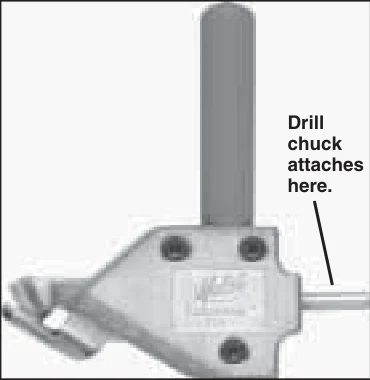
Sheet Metal Shear Fits Power Drill

Featured source:

Put this new gadget on a power drill and you’ll be able to cut through sheet metal, vinyl, steel mesh, ductwork, automotive body panels and thin sheeting.

The Turbo Shear attaches to standard 3/8-in. or larger drill chucks, and requires a minimum 1,200 rpm’s.

The TurboShear is capable of navigating tight curved patterns and square cuts, according to the company. Blind cuts require only a 1/2-in. starting hole. It’ll cut through up to 20 ga. galvanized steel. Suggested retail price is $49.95 and it’s available from heating and air conditioning wholesalers and also at www.amazon.com.

Contact: FARM SHOW Followup, Malco Products, Inc., Box 400, Annandale, Minn. 55302 (ph 800 328-3530 or 320 274-8246; fax 800 206-6760 or 320 274-2269; email: [email protected]); website: www.turboshear.com).

From the archive · Full text
Feature story

On-Line Diesel Parts Supplier

Featured source:

If you own a Ford, Chevrolet, or Dodge diesel pickup, you’ll be interested in this on-line source for diesel parts.

USDieselParts.Com is a one-stop shop for diesel engines and pumps, super chips, exhaust brakes, starters, glow plugs, K & N filters, alternators, exhaust kits, injectors, gauges, propane kits, Stanadyne additives, and turbochargers.

Examples of some of the accessory-type products offered on the company’s home page: Duramax - A handheld programmer that can increase the Duramax engine’s horsepower and torque by 40 to 85 hp.

Gauges - The X-Monitor is a high quality digital gauge. The readout mounts inside a module that’s positioned on the driver’s side A-pillar. You can simultaneously view three functions at the same time: transmission temperature, exhaust temperature and turbo boost pressure.

take Kit - This kit includes a washable and reuseable filter element and keeps the factory look under the hood while giving you an extra 64 ft.-lbs. and 20 hp gain.

is said to be the premier manufacturer of aftermarket performance products for pickups, sport utilities and motorhomes.

A wide variety of other products are available including new Power Stroke injectors; Stanadyne performance formula/diesel additives; and remanufactured engines. A wide variety of vehicle accessories are also available.

Contact: FARM SHOW Followup, USDieselParts.Com, 2400 Palmer, Missoula, Montana 59808 (ph 800 823-4444 or 406 728-7620; fax 406 721-5097; email: [email protected]; website:usdieselparts.com).

From the archive · Full text
Feature story

Quick-Drain Engine Oil Valve

Featured source:

Imagine cutting in half the time it takes to change your engine oil, while eliminating most of the mess at the same time. That is just what the Fumoto Valve promises to do.

More than 250,000 of the valves have been sold over the past year thanks to the fact that at least six major vehicle manufacturers have granted it “genuine part” status.

The ball valve drainage plug screws into the oil pan in place of the original oil plug. To empty your engine oil you simply turn the valve with your fingers. No need to get any hot oil on your hand.

The ball joint in the valve is the same type used in pressurized gas applications. The entire assembly is made out of forged brass and stainless steel.

The drain valve extends only 1/2 in. more than the standard plug so no ground clearance is lost. There is also no chance of engine vibration causing the valve to work loose since it’s held closed by a spring loaded safety lock.

The valves sell for $21.95 to $31.95 depending on the type of vehicle.

Contact: FARM SHOW Followup, YM International Co. P.O. Box 50253, Bellevue, Wash. 98015 (ph 800 822-5689; email: [email protected]).