Practical ideas from FARM SHOW MagazineSubscribe · Free issue · Send us your shop tip
Subscribe to FARM SHOW
Issues / Vol. 47, No. 5 (2023)

Vol. 47, No. 5 (2023)

Money-Saving Repairs & Maintenance Shortcuts · Printed section pp. 32–35

34 selected entries · Complete text of selected entries

This issue’s section includes reader tips and feature-length shop stories. Held items and editorial notices are not reproduced.

Archive text: prices, coupons, availability and contact details reflect the original publication, not current offers. Reader methods are not universal instructions; follow manufacturer guidance and proper safety practices.

Reader shop tips

From the archive · Full text
Reader shop tip

David Simpler

David Simpler, Elkton, Md.

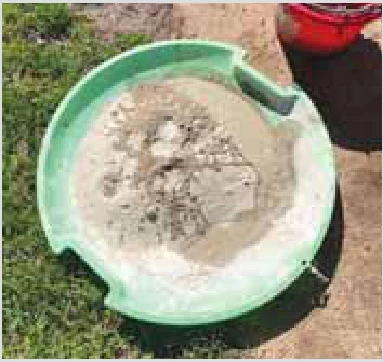
“Have you ever used Green Slime for fixing flat tires? I’ve always hated the stuff, but recently I was changing some 6-in mower tires, and to my surprise, they were full of the stuff. Once I got the beads broken loose, I was amazed at how easily they came off with the Green Slime on them. So, I saved some of the Slime and brushed some on the replacement tire beads before mounting them. Wow! The tires went on easy. I’m going to keep using it when mounting tires.”

From the archive · Full text
Reader shop tip

Ted Cole

Ted Cole, Fort Bragg, Calif.

“I made my fence stretcher easier to grasp without pinching my fingers. I used two 2-in. long pieces of small-diameter pipe and cut a slit through the middle with my angle grinder about 1 in. long. I then slid them on the old levers to make them longer and welded them on. I screwed caps on the ends of the pipes for comfort. The stretcher is now much easier to use, and there are no more pinched fingers.”

From the archive · Full text
Reader shop tip

Mike Frantz

Mike Frantz, Seymour, Mo.

“It seems I was always forgetting to release the brakes on my tractor after setting them to get off and open a gate or do something else on the ground. So, I mounted a cheap trailer light above the steering wheel on my tractor and wired it to the braked light switch. No more forgetting the brakes are set.”

From the archive · Full text
Reader shop tip

Michael Elliott

Michael Elliott, Silesia, Mont.

“I modified a Ken-Tool tire iron to remove lug nuts on my 1-ton F-350 pickup and other big equipment. Instead of using a breaker bar with a deep socket, I cut the end off a Ken-Tool that I picked up cheaply and ground the end down to 1/2-in. sq., and now I can use any impact deep socket for any sized lug nuts and take them off easy with plenty of leverage. Works great.”

From the archive · Full text
Reader shop tip

Dan Tucker

Dan Tucker, Wasilla, Alaska

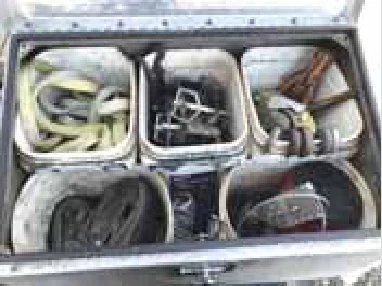
“We carry a lot of stuff around in our pickup and trailers like chains, binders, straps and other paraphernalia. I got tired of pawing through piles of stuff to find what I needed and went looking for a better storage solution. I found it with kitty litter containers. They’re square and about the size of 5-gal. buckets except that they fit better into a square carrier than round buckets. They have handles so you can pull them out easily and you can cut them down if you’re trying to fit them into a smaller carrier box. They work well for me.”

From the archive · Full text
Reader shop tip 1 of 3

Gerald Lenkaitis

Individual tip 1 of 3 from this reader’s published contribution.
Gerald Lenkaitis, Granville, Ill.

“I put a master shut-off switch on all tractors or combines that sit a lot to make sure nothing is left running and to keep the battery from running down.

From the archive · Full text
Reader shop tip 3 of 3

Gerald Lenkaitis

Individual tip 3 of 3 from this reader’s published contribution.
Gerald Lenkaitis, Granville, Ill.

“I rigged up the wiring in my shop so when we turn off the lights, the air compressor shuts off. That way I know if I blow a hose, the compressor won’t burn up because I know I’ll be in the shop if the compressor is running.”

From the archive · Full text
Reader shop tip

Maj. Eric Petrevich

Maj. Eric Petrevich, Lebanon, N.J.

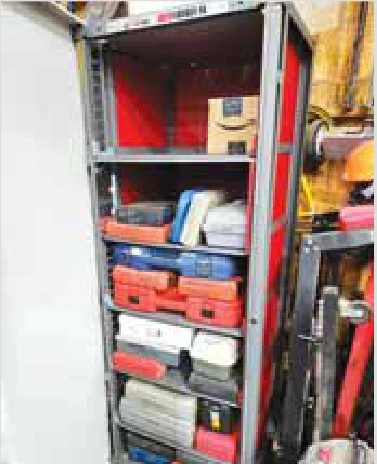
“I found a great way to store all the tools, supplies, and stuff that seems to accumulate in shops. Just search Craigslist or Facebook Marketplace for anyone giving away old computer ‘server racks.’ “They’re all over, and many places are desperate to get rid of them. They come in two types for the most part, full height and half height. The full height is normally about 7 ft. tall, and the half height is about 3 ft. tall.

“Once you get one, they may or may not have shelves. If not, shelves are easy to fabricate. Some have screw holes from the top to the bottom of the four posts, making it easy to add shelves of any size.

“The racks are usually on heavy-duty casters, so it’s easy to move them around when full. Most also have doors and locks if you want them.

“I store my blow-molded tool cases in mine. They’re easy to get to and grab the one I want, and the racks cost little to nothing. Plus, you’re keeping them from getting scrapped out.”

From the archive · Full text
Reader shop tip

Larry Roessler

Larry Roessler, Bruceville, Texas

“I live in Texas, and the deck wood really dries out in the summer. Lots of people buy products like Thompson’s WaterSeal to maintain their decks. I make my own for the cost of a little diesel fuel.

“I get a 5-gal. bucket of used transmission fluid free from a local transmission shop. I mix one part fluid to two parts diesel fuel in an empty bucket.

“I put a long handle on my roller brush, dip it in, and roll it on. Water will bead up on it for 3 mos. Because our wood dries out so much, I may put four treatments on the first year, three the second, and then two each summer.

“Don’t walk on it until it is dry. The transmission oil will stain the wood a little, but you can add stain if you like.

“I also treat my wood trailer bed with it twice a year.”

From the archive · Full text
Reader shop tip 1 of 2

Jim Wise

Individual tip 1 of 2 from this reader’s published contribution.
Jim Wise, Clyde, N.Y.

“Getting kingpins out of the steering knuckle on 4-WD tractors is tough. I use an air chisel and RX-454 penetrating oil. After lots of pounding, I can get it done.

From the archive · Full text
Reader shop tip 2 of 2

Jim Wise

Individual tip 2 of 2 from this reader’s published contribution.
Jim Wise, Clyde, N.Y.

“My routine maintenance suggestion is to take time to change oil on equipment with chains and rollers at the end of the day when the machine is still warm. It helps get oil into the rollers, providing more protection when you start back up, so there’s less wear and downtime.”

From the archive · Full text
Reader shop tip

Mitch Fenske

Mitch Fenske, Mindoro, Wis.

“When buying bearings, I’ve found it pays off to contact an actual bearing distributor. BDI Express in La Crosse, Wis. (www.bdiexpress.com; ph 608-782-6747) has saved me thousands of dollars over the years, both personally and at my job. Rita in the office is nothing short of amazing.”

From the archive · Full text
Reader shop tip

Clinton Keeney

Clinton Keeney, Creighton, Mo.

“For many years I’ve been using maple syrup bottles to add oil to my chainsaw. Just flip the lid and squeeze. No more mess or need for a funnel, and you won’t overfill the reservoir. Works great.”

From the archive · Full text
Reader shop tip

Brent J. Bielema

Brent J. Bielema, Fulton, Ill.

“If you have a hole that’s too big for the screw you have, break off the head of a golf tee and stick the rest of the tee down in the hole. Then drive in your screw.”

From the archive · Full text
Reader shop tip 1 of 2

Bruce Porkka

Individual tip 1 of 2 from this reader’s published contribution.
Bruce Porkka, Atlantic Mine, Mich.

“After installing steel steps in our shop pit, it was kind of precarious climbing up. So, I welded a pipe coupler to the top and bottom steps and inserted removable handles.

From the archive · Full text
Reader shop tip 2 of 2

Bruce Porkka

Individual tip 2 of 2 from this reader’s published contribution.
Bruce Porkka, Atlantic Mine, Mich.

“Getting up into our Valmet 644 Forwarder logging tractor was difficult. I built a 4-step ladder that pivots at the top and then installed a cheap remote-controlled winch to raise and lower it.”

From the archive · Full text
Reader shop tip

Laurence Park

Laurence Park, Presque Isle, Maine

“My 1952 Farmall H stopped like it had run out of gas, but there was still over a gallon in the tank. The outlet to the filter bowl is capped at the bottom, and there are tiny openings into the bowl on both sides just above that cap. I cleaned out dirt and lint in those openings with a paper clip, and the tractor ran like new again.”

From the archive · Full text
Reader shop tip 1 of 2

Jerome Jirak

Individual tip 1 of 2 from this reader’s published contribution.
Jerome Jirak, Waucoma, Iowa

“I bought a used bridge crane for a new shop I put up. I farm by myself, and it’s like having a second set of hands that can hold anything. It’s 60 ft. across and runs 80 ft. along the length of my shop.

From the archive · Full text
Reader shop tip 2 of 2

Jerome Jirak

Individual tip 2 of 2 from this reader’s published contribution.
Jerome Jirak, Waucoma, Iowa

“I bought a plasma cutter, and there’s nothing wrong with the cutter, but on the farm, you’re often working with old and rusted metal. Plasma cutters just don’t work very well on dirty metal. For example, if you must cut a bearing off a shaft, a cutting torch works much better.”

Shop feature stories

From the archive · Full text
Feature story

He Built A 1,000-Hp. Duramax Engine

Featured source: Bryan Woitas, Fort Saskatchewan, Alberta, Canada

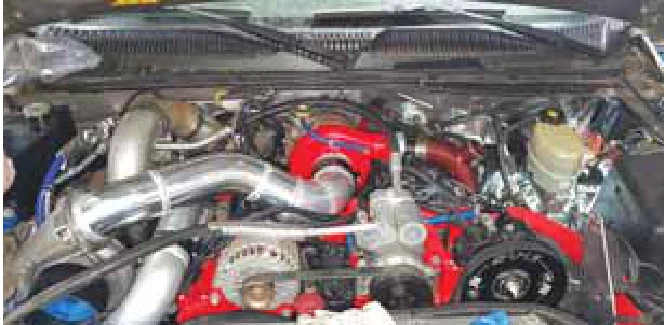
Bryan Woitas of Fort Saskatchewan, Alberta, has built his dream Duramax diesel engine after 8 years of hard work. His 1,000-hp. LB7 was constructed at home with aftermarket parts and a tenacity for problem-solving.

Woitas grew interested in diesel power after experimenting with mild power adders on his ’02 Chevrolet Silverado 2,500 HD that got the truck in racing condition. This included fuel system upgrades. He raced his custom truck at local events for 4 years and achieved several first-place finishes. Unfortunately, the heavy use wore it down after 4 years, and the factory LB7 threw a rod out of the engine block.

This left Woitas without a running truck but ample time to plan his next move. He used social media to connect with leaders in the diesel industry to take the first steps toward upgrading the engine.

“The thing I loved most was that I was able to do most of the work myself,” says Woitas.

“It taught me to focus on attention to detail and patience.”

Woitas sourced proven aftermarket parts for most of the upgrades. These included Carrillo rods, ported and polished heads, Mahle Motorsport 0.020-in. over pistons, a Stage 2 camshaft from Extreme Engine Development, an ATI damper, Industrial Injection threaded injector cups, and SoCal billet injector hold-downs, and plenty of ARP fasteners to keep things in place.

The engine gets most of its power through a fuel and air combo with a PPE Dual Fueler CP3 kit designed to deliver precise amounts of fuel, a Lincoln Diesel Specialties 100 percent over injectors, and a FASS fuel system. It optimizes the power sent to the wheels through Allison 1000 sports components from ATS, Inglewood, PPE, and Deviant Race Parts cooler lines.

The truck still runs on Woitas’ original transmission build. While it works without issue, the transmission isn’t designed to handle the horsepower it now is subject to. Once it inevitably breaks down, Woitas will perform a refresh and upgrade parts through the parts supplier No Zone Diesel.

Woitas also modified the axle, suspension, and steering of his Silverado. He built custom traction bars, removed the overload leaf springs used Beltech drop shackles to lower the rear four inches. There are 2 in. of drop up front due to Beltech drop spindles and flipped MaxxCam torsion bar keys from Suspension Maxx.

Woitas now has the Duramax-powered truck of his dreams. Since he was able to buy secondhand quality used parts, overall costs were around $26,000 CAD as opposed to $40,000 plus if he had gone to a shop and purchased new parts. He recently completed the LB7’s break-in period and is ready to take it on the racing circuit.

Contact: FARM SHOW Followup, Bryan Woitas (Instagram: @bslickcustomz).

From the archive · Full text
Feature story

EZ Way To Lift Small Rigs

Featured source: Ballard, Inc., Ankeny, Iowa

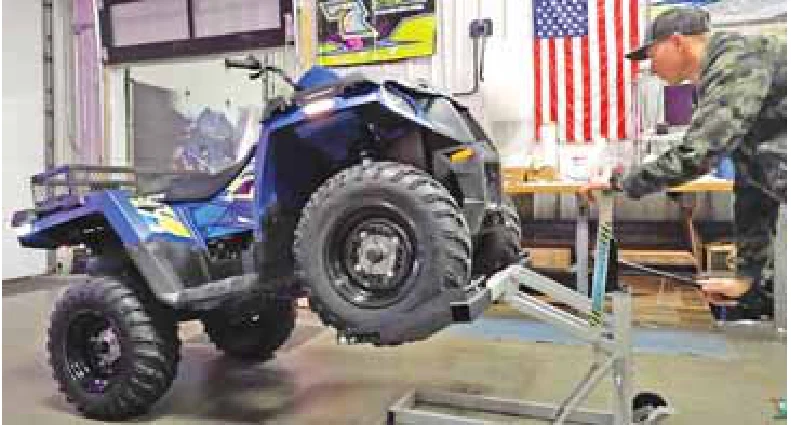
The EZ Pro Lift from Ballard is a versatile 2-wheel jack for everything from riding mowers and garden tractors to ATVs, UTVs, and golf carts. It has five lock-in positions for machine widths of 36 to 50 in. and three safety locking pin positions for use with a raised machine.

“The EZ Pro Lift lets you lift the machine from the front or the back, and you don’t need a lot of strength to do it,” says Kory Ballard, Ballard, Inc.

“We’ve been selling them for 2 years and have yet to have an issue with a warranty or a return.”

For all its versatility, the EZ Pro Lift is priced at only $279.99. It’s a follow-up to the company’s Super Jack, which required the user to lift the weight by pulling back and down on the arms. The Super Jack was also limited to use with ZTRs, stand-on and walk-behind mowers.

The EZ Pro Lift has a 750-lb. front safe lifting capacity and a 25-in. lifting height, ample for machine repair, cleaning, and maintenance. It accepts tires as wide as 10 1/2 in. and up to 26 in. tall. Powered by a conventional, hand-powered, hydraulic bottle jack, the lift is smooth and easy, as is the release. Just drive or back on and lift the machine up.

“There are others out in the marketplace, but we wanted something heavy-duty and better,” says Ballard.

“It does what it’s supposed to do and works as intended.”

Contact: FARM SHOW Followup, Ballard, Inc., 6990 NE 14th St., Suite 3E, Ankeny, Iowa 50023 (ph 877-965-0951; [email protected]; www.ballard-inc.com).

From the archive · Full text
Feature story

Powerful, Portable Industrial Vacuum

Featured source: RNV Hydrovac by Truebite, Vestal, N.Y.

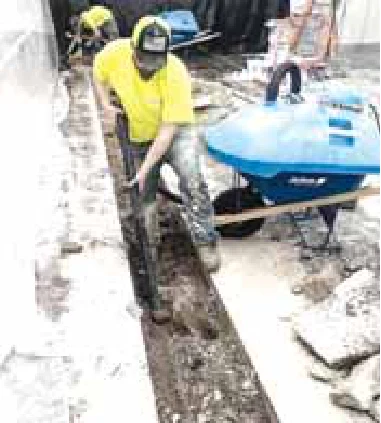
Roll-N-Vac is a portable industrial vacuum designed for cleanup at work sites. The mobile design can suck up debris like sand, sludge, and small aggregate up to 12 ft. vertically. It’s ideal for cleaning drains and construction sites and can even handle manure.

“The inspiration for RNVac came when I was contacted by a business associate who wanted help making a wet-dry vacuum that could be used on rough terrain,” says Ed Calafut, owner of the manufacturer, Truebite Inc.

“The vacuums available in hardware stores were hard to pick up and dump when full. Also, the wheels would often break off when moved on rough terrain.”

Calafut used this market shortfall as inspiration to create a vacuum that could withstand commercial rigor.

“Mounting a vacuum on a wheelbarrow seemed like a natural choice. We had multiple prototypes made over several years before developing the finished product we market today.”

Roll-N-Vac is designed to vacuum directly into a wheelbarrow. Simply place the RNVac unit on an approved 6-cu. ft. capacity steel construction-grade wheelbarrow (preferably the Jackson M6KBUT12), and you’ll turn it into a portable Hydrovac. The vacuum provides suction so strong that it will implode lesser-quality wheelbarrows.

“It can suck up 20 gals. of water on level ground in 10 seconds or 200 lbs. of wet sand and 10 gals. of water in 3 mins. Plus, it’s easy to move and dump,” says Calafut.

In this way, the portable industrial vacuum is designed to blend the best features of basic wet/dry vacuums and a vacuum truck and trailer. Most vacuums lack the power to tackle tough jobs, while vacuum trucks are pricey and not portable. In contrast, you can use the RNVac for hard-to-clean material and it’ll work wherever you can take a wheelbarrow. It’s also used for picking up concrete slurry and cleaning out valve boxes for water drop-off. Calafut shares that it’s also invaluable for livestock farming, as the vacuum can pick up spilled grain off the ground and remove puddles after a floor washdown.

The RNVac weighs 42 lbs., ensuring one technician can handle it easily. It requires a 15-amp power outlet or will easily run on a 2,200-watt generator. Roll-n-Vacs are made in the USA and designed for long-term use.

“The RNVac is rebuildable,” says Calafut.

“Parts are available on our website. It’s not a throwaway product.” Prices start at $1,800.

Contact: FARM SHOW Followup, RNV Hydrovac by Truebite, 2590 Glenwood Rd., Vestal, N.Y. 13850 (ph 607-786-2139; [email protected]; www.roll-n-vac.com).

From the archive · Full text
Feature story

Grease Gun Modification Extends Tool Life

Featured source: Dakota Hanisak, Wassergass, Penn.

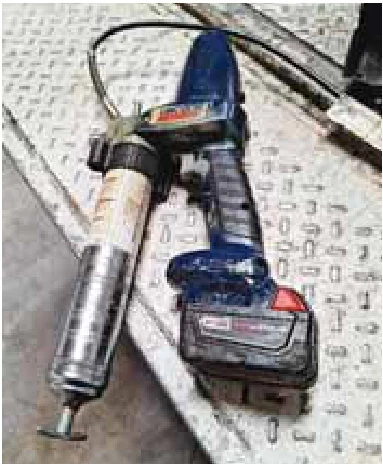
When the batteries on his cordless Lincoln grease gun failed, Dakota Hanisak came up with a unique solution.

“I didn’t see a reason to buy new Lincoln batteries because all the other tools I had at home and in my service truck for farm equipment and commercial heating and air conditioning repair were Milwaukee,” says Hanisak.

“I like to keep similar brands of tools if possible.”

To make the modification, he purchased a Milwaukee M18 battery adapter with two wire connections on eBay, took his Lincoln grease gun apart, and soldered the wires to the leads. To keep the altered unit feeling solid, he ran some screws up into the housing of the grease gun through a small piece of wood and sealed everything with silicone.

“It was one step away from the garbage, but now it works just as well as it did before,” he says.

“It’s not pretty, but now I can use any of my Milwaukee batteries on the gun. Just swap a weak one for a charged one, and it’s good to go.”

Hanisak says the modification cost him about $15 for the adapter and took only 20 minutes to complete.

Contact: FARM SHOW Followup, Dakota Hanisak, Wassergass, Penn. 18055 (ph 610-216-1951).

From the archive · Full text
Feature story

Attachment Keeps Hoses, Wires Safe

Featured source: Curtis Hiebert, Sperling, Manitoba, Canada

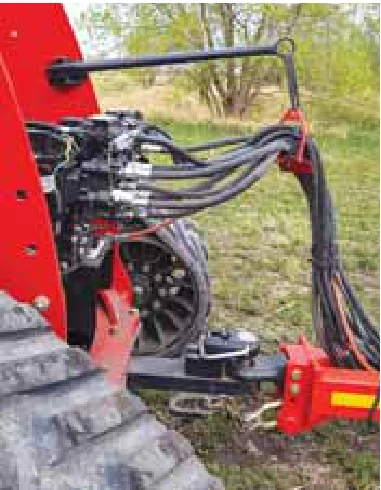
Mount the Lend-A-Hand attachment on a tractor fender and keep hydraulic hoses and electrical lines up and away from hitches. The hanging arm articulates with the hitch as the tractor turns.

“Lend-A-Hand keeps everything hanging over the hitch, so there’s minimal disturbance of hoses and electrical harnesses,” says Curtis Hiebert, The Attachment Farm.

“Our latest model has a slot to keep electrical cables above the hydraulic hoses. It’s very important to not pinch those wires, or they can cause issues.” Hiebert knows about the issues and the potential problems with multiple hydraulic hoses running between the tractor and an implement. He and his family raise grain and oil seed while also marketing handy attachments developed originally for the farm’s tractors and trucks. While he didn’t invent Lend-A-Hand, he has been refining it for the market.

“A Hutterite colony that does some production of items for us developed it and asked us to market it,” says Hiebert.

“It was a perfect fit for our line.” Hiebert has a shorter version for Case New Holland, Case IH Steiger Rowtrac, and New Holland TJ series and newer. A longer arm fits Case 4-WD and Quadtrac tractors. He’s field-testing a Deere version. Models also vary slightly for row crop versus broad crop. An adapter will be available for articulated tractor setups. Ordering the right model for a particular tractor model is key. As he adds new models to fit a broader spread of tractors, Hiebert plans to add a selection guide to his website.

“If you can’t figure out which model is right for your tractor, give us a call, and we’ll figure it out,” he says. Lend-A-Hand is priced at $269.95 with the optional hose saddle priced at $114.95.

Hiebert offers a number of brackets and helpers for use in the cab and out of it. Often, they were the result of frustration on the farm. That was the case with Hiebert’s first product, an armrest mount for 2-way radios. He also designed a retractable mike holder.

“It was annoying to deal with securing and then moving the radios when we changed tractors,” says Hiebert.

“I made some brackets and had them laser cut, bent and powder coated. I started selling them locally, and the business took off.” The 2-way radio mounts were designed for use in S6 series Deere combine cabs. As a result, a lot of Deere dealers carry the mounts. Contact: FARM SHOW Followup, The Attachment Farm, 11075 Road 36 N, Sperling, Manitoba, Canada R0G 2M0 (ph 855-626-3200; [email protected]; www.theattachmentfarm.com).

From the archive · Full text
Feature story

Fuel Tank Kits For Classic Vehicles

Featured source: Zach Robbins, Rockford, Ill.

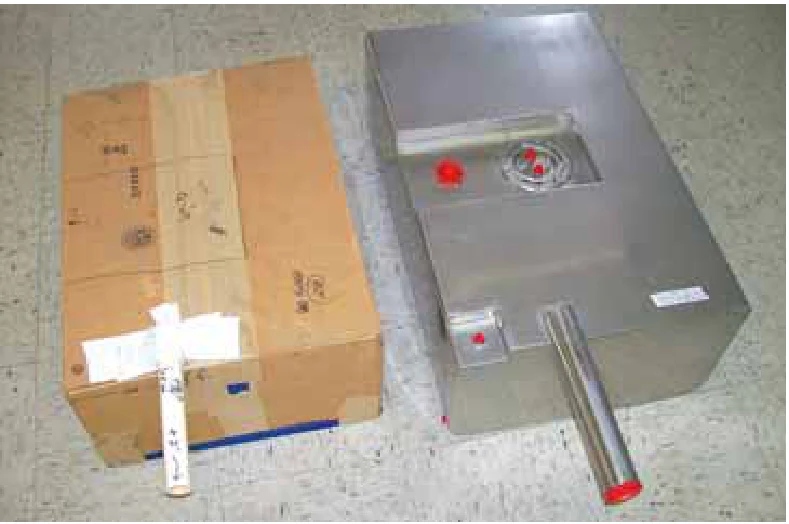
If you need a replacement fuel tank for an old car or truck, Rock Valley can provide a stainless-steel reproduction. For 30 years, the company has been producing ready-to-install kits.

“Custom work is about 40 percent of what we do,” says Zach Robbins, Rock Valley Antique Auto Parts.

“Sometimes there won’t be a tank left to restore. If there are pieces, we put them together to make a CAD model and from that, a replica of the original.”

If an old tank still exists, Robbins will suggest the customer send it in. If there’s no tank or even parts of a tank, other options exist. Often a customer will send in a cardboard mock-up, sometimes with exact dimensions on a sketch or on the mock-up itself. Robbins notes that a mock-up lets the customer fit and visualize the tank, and how it’ll sit and look in the vehicle.

“If you have an idea of how the tank sat in the vehicle, do a hand drawing or a CAD drawing if you can,” he says.

“If needed, we can send a bunch of drawings out to you. Make a cardboard cutout of them and try to fit it in. Then get back to us.”

Over 30 years, a lot of custom tanks and reproductions have been made. The company has created patterns for gas tanks for U.S. and foreign vehicles from 1928 to 1976.

Once produced, they become part of the company’s catalog of available gas tanks and fuel systems.

“We’ve made gas tanks for Duesenbergs and a 1914 Marmon, stock cars, custom and hot rods,” says Robbins.

“If you want to put an LT3 in a 68 Camaro, we can set you up with the right pump assembly or provide everything you need across the board.”

Gas tanks are fabricated by hand from high-grade stainless steel. All tanks are baffled and pressure-tested. Parts and accessories include gas caps, necks, fittings, fuel line hoses, mounting bolts, spring kits, vents, sending units, TPI and TBI kits. Tanks are set up for sending units from most major suppliers, but special sending unit applications are also available.

Rock Valley sells direct, as well as through nearly 500 dealers nationwide and internationally through the Roadster Shop. The company offers more than 8,000 parts for Ford and Chevrolet models from 1928 through 1976. These include everything from access doors to wiring zerks.

Contact: FARM SHOW Followup, Rock Valley Antique Auto Parts, 5295 28th Ave., Rockford, Ill. 61109 (ph 815-645-2271; toll-free 800-344-1934; [email protected]; www.rockvalleyantiqueautoparts.com).

From the archive · Full text
Feature story

12-Volt Horns Fit Any Vehicle

Featured source: Hornblasters, Tampa, Fla.

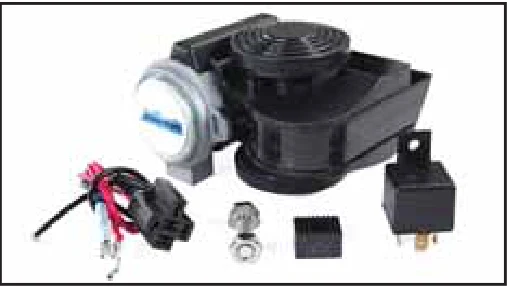
Hornblasters sells a wide range of powerful air-powered horns that sound like a semi-truck horn or even a locomotive (Vol. 36, No. 4). But if you don’t want to install an air compressor, they also sell easy-to-install 12 and 24-volt horns.

Kits vary from as low as $34.99 for their Compact Electric Horn to the 6-sec. honk Conductor’s Special at $983.99.

The $184.99 100-watt Public Address System with Siren is a multi-purpose unit. It amplifies voice and music, or wail, yelp, and hi-low siren sounds. It includes an auxiliary port and cord for connecting to other audio systems. The company warns that the system and sirens are intended only for off-road use.

Most of the electric horns offered are in the $30 to $70 range, with a wide variety of sounds. They include the classic motor-driven Oogah/Klaxon horn, a Ninja horn, La Cucaracha, and Godfather music horns, as well as truck horns.

Several compact versions are available for installation on motorcycles, boats, ATVs and UTVs.

Visit the Hornblasters website to sample the sounds and order.

Contact: FARM SHOW Followup, Hornblasters, 6511 N 54th St., Tampa, Fla. 33610 (ph 877-209-8179; international 813-783-8058; [email protected]; www.hornblasters.com).

From the archive · Full text
Feature story

Low-Cost Loader Ready Manlift

Featured source: Vevor

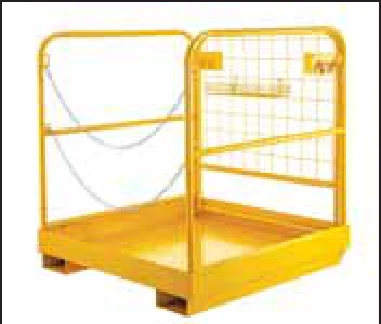
Get a man basket for your forklift or loader forks for only $209.99. The slip-on attachment is direct-marketed by Vevor. The company offers free shipping from more than 30 warehouses in the U.S., as well as warehouses in Canada.

The forklift man basket appears well-made, and the price is certainly attractive. Reviews on the company site were mostly positive.

The lift platform is 39 in. high, 36 in. long, and 36 in. wide, with a weight capacity of 1,100 lbs. It simply slides onto standard forks and locks in place. It has a mesh door on one side and chain restraints on the other. It’s collapsible for easy storage, simply remove the chains and lower the walls. Although the company claims it’s crafted with heavy-duty steel, multiple reviewers on the company site commented on the lightweight material used, often suggesting it was what they expected for the money.

Of on-site reviewers, 71 percent gave the man basket a 5-star rating. One of the 5-star reviewers recommended wire roping the man basket to the bucket for safety and using a safety harness. Even the 4-star ratings were mostly positive. Concerns included damages incurred during shipping and lightweight chains. One mentioned having to reweld a side rail hinge. The most common response was that it was a good product for the price.

Contact: FARM SHOW Followup, Vevor (ph 855-385-1880; www.vevor.com or www.vevor.ca).

From the archive · Full text
Feature story

Lathe Stone Repurposed As Grinding Wheel

Featured source: John Krueger, Blanchard, Okla.

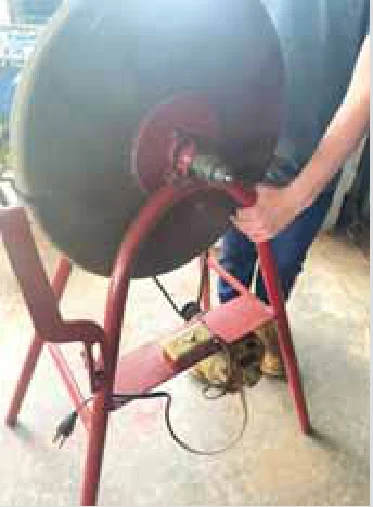
A large grinding stone salvaged from an aircraft engine lathe was perfect for making an old-fashioned grinding wheel powered by a small electric motor.

“I wanted to do something with the stone, so I put my pipe bender to work and made a frame for it to sit in,” says John Krueger.

“I patterned the frame after an old pedal-powered grinder. I used 1 1/4-in. pipe and shaped the two sides as close to each other as I could.”

The lathe stone was one of three picked up by Krueger. He uses two of them for lawn ornaments after setting aside the one in the best shape for his grinder. It had a large, open center that he suspects was chuck mounted to the lathe.

“I cut an oak block to fit inside the opening and drilled a hole in its center for a shaft and a bushing,” says Krueger.

“I sandwiched the stone and bushing with two steel plates that I bolted together through the oak block. They create a friction lock, so the wheel, plates and shaft all rotate as one.”

The shaft rides in two pillow-block bearings mounted to the pipe frame. A large diameter pulley mounted on one side of the shaft is bolted to one of the sandwiching plates. The other end of the shaft has a drill chuck on it.

“The chuck is handy if I want to do a little filing or other fine work,” says Krueger.

“I didn’t plan for it; it just fit the shaft.”

The pulley is driven by a 1/4-hp. electric motor mounted below it on the cross member of the frame.

“I mounted the motor so it can slide on the cross member when I wanted to tighten the belt,” says Krueger.

“I got the speed right through trial and error. It’s been great for shaping, grinding and sharpening. Because the side is solid stone from the center out, I do a lot of metal work against the side.”

Contact: FARM SHOW Followup, John Krueger, 1112 County St. 2984, Blanchard, Okla. 73010 (ph 405-392-4796).

From the archive · Full text
Feature story

Aluminum Tractor Pump Protector

Featured source: Roscoe Lynn, Bryceville, Fla.

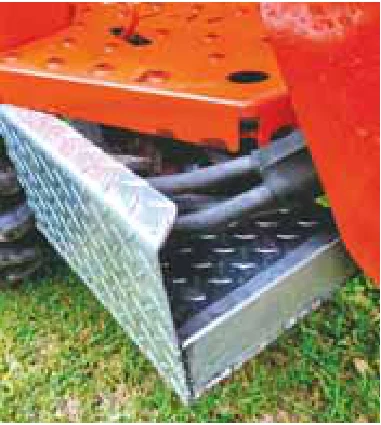
Three years ago, Roscoe Lynn took his 15-year-old Kubota to a dealer to get a bucket put on the front. While there, he saw a tractor similar to his that was waiting for repair because it had ripped up its hydraulic pump going over rough terrain.

Lynn knew pump damage was a serious problem and decided to protect his from future damage once he got his tractor back.

“I fabricated a cover out of aluminum diamond plate I had,” he says.

“I wanted it to look good and to protect the pump from the bottom and side.”

Lynn used scrap material for the project. So far, the pump protector has done its job for 3 years and counting. When Lynn wants to remove it, it’s as simple as undoing the two bolts that fasten it in place.

“I’ve worked with metal for years, so the project was simple,” he says.

“The protector is easy to wash off when material gets splashed on it, and you can change the filter in the back without taking the protector off. When I took my tractor back to the mechanic later, he thought my repair was a great idea.”

Contact: FARM SHOW Followup, Roscoe Lynn, 5855 Stafford Rd., Bryceville, Fla. 32009 (ph 904-314-7544).

From the archive · Full text
Feature story

Andyclean Soap Now Sold At Deere Dealerships

Featured source: Andy Pasztor

Andy Pasztor unintentionally started a movement when he posted photos of his freshly cleaned tractors on Twitter.

“I’m the guy who cleans up everything in the winter,” he says.

Michigan farmer Robert Reese saw his tweets and added the hashtag “Andyclean.” Others followed suit, and soon farmers began tweeting at Andy to ask if their freshly washed equipment met the Andyclean standard.

Pasztor first caught John Deere’s attention while on a family trip to the company’s museum in Waterloo, Iowa. He tweeted to the tractor manufacturer about how #Andyclean the equipment displays were, and John Deere responded with a shipment of complementary cleaning products. Three months later, they sent a second shipment of approximately 1,000 #Andyclean stickers. Pasztor shipped the stickers to anyone who posted a picture of their #Andyclean equipment. As interest in #Andyclean scaled worldwide, people began donating money to help offset the postage costs.

“We built a community,” says Pasztor.

“It’s about keeping equipment clean, but more so, it’s a shared love for farming and taking pride in our land, family, and machinery. So, I started to think to myself, maybe it’s time to develop a soap!”

Pasztor partnered with a local Ontario manufacturer to develop a cleaning product that met the Andyclean seal of approval. This foaming cleanser is made entirely from ingredients sourced from North America and is 100 percent safe for use on all vehicle surfaces.

“This is a soap built by farmers, for farmers,” says Pasztor.

“It’s fun to use, and it smells great! Just like apples.”

Soap in hand, Pasztor took a road trip across Canada and the States, connecting with John Deere dealers and introducing them to Andyclean. Today, you can purchase the soap at all John Deere locations across both countries. Andyclean is sold in 1-gal. and 5-gal. jugs. Expect to get four to six washes out of a gallon for cleaning a standard tractor.

Looking forward, Pasztor is eager to see how his soap business will continue to develop but is also just enjoying the ride and the community he’s cultivated.

“I would have never done anything like this without the farming community on Twitter,” he says.

Contact: FARM SHOW Followup, Andy Pasztor (ph 519-403-8680; www.andyclean.ca).

From the archive · Full text
Feature story

How To Remove Oxidation, Water Marks

Featured source: Protective Coating Systems, Boise, Idaho

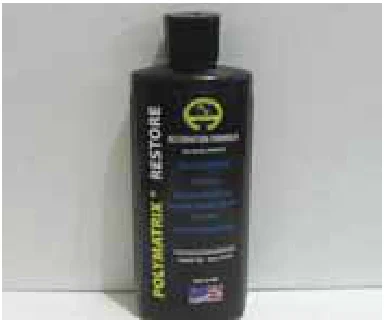
Protective Coating Systems, maker of Polymatrix, the “world’s most advanced all-purpose polish and protectant,” has recently released a new product called Polymatrix Restore. It’s designed to remove oxidation on agricultural and industrial equipment.

“People with antique tractors love this product,” says William Maxwell, Protective Coating Systems representative.

“But it works for anything with oxidation; it helps clean up equipment much faster.”

Polymatrix Restore works similarly to a rubbing compound. The cleaner is a blend of selected abrasives that remove signs of oxidation as well as scratches and water spots. The abrasives within it level the edges of scratches and remove watermarks for a smooth, level shine.

Customers can use it on metallic paint, industrial finishes, and older cars. Polymatrix Restore is safe for all paint finishes and makes it possible to polish your vehicle to a bright, smooth shine before treating it with other Polymatrix products.

Using Polymatrix Restore is straightforward.

“All that’s needed is to squirt some of the solution on a sponge and rub it into the problem spot. Then, rub it off with a microfi - ber cloth,” says Maxwell.

“It’s that easy. We don’t make any products that are hard to use.”

Like all Protective Coating Systems products, Polymatrix Restore is made in the USA. It retails for $29.99 for an 8-oz bottle. You can purchase it directly from the company website.

Contact: FARM SHOW Followup, Protective Coating Systems, Boise, Idaho 83702 (ph 800-497-1782; www.protectivecoatingsystems.com).