Practical ideas from FARM SHOW MagazineSubscribe · Free issue · Send us your shop tip
Subscribe to FARM SHOW
Issues / Vol. 32, No. 6 (2008)

Vol. 32, No. 6 (2008)

Money-Saving Repairs & Maintenance Shortcuts · Printed section pp. 36–39

36 selected entries · Complete text of selected entries

This issue’s section includes reader tips and feature-length shop stories. Held items and editorial notices are not reproduced.

Archive text: prices, coupons, availability and contact details reflect the original publication, not current offers. Reader methods are not universal instructions; follow manufacturer guidance and proper safety practices.

Reader shop tips

From the archive · Full text
Reader shop tip

Charles Marley

Charles Marley, St. Peters, Mo.

“Here’s how I made a quickie shelter with no extra framing. I bought three shipping containers, which are readily available, and then bridged the spaces between them with sections of gable roofing.

“The canvas-covered roof sections are very light and can be moved by hand if I ever need to move the location of the containers and shelters. I simply wire them down into place.”

From the archive · Full text
Reader shop tip

Vernon Wilkins

Vernon Wilkins, West Virginia

For the farmer in your last issue who was having trouble with his Echo chainsaw in Eldora, Iowa, he should just take a grease needle and stick it in the hole on the blade to put some grease in it with a grease gun. He said the roller nose was binding up and burning out the clutch. The problem is it’s just not getting enough lubrication.”

From the archive · Full text
Reader shop tip

Lloyd Gardus

Lloyd Gardus, Frost, Texas

“For a couple years now, I’ve been using 5-gal. buckets to store extension cords. I lay out the cord in one line and then fold it in half. I feed the folded end into the bucket first so that when I’m finished, both ends are at the top and I can pull out what I need. No tangles. I’m sure many of your readers have figured this out but most of my friends haven’t so I thought I’d share it. I use the same method to store chain, rope and even water hose.”

From the archive · Full text
Reader shop tip

Chris Morski

Chris Morski, Manistee, Mich.

“A reader in a recent issue complained that his 2005 Sears Craftsman mower with a 42-in.

deck cuts unevenly and leaves streaks of uncut grass. I had the same problem with the same deck. The problem is that the blades are too short for the deck. You need to have 21-in. blades. Another problem is that the front inside wheel is packing grass down. Make sure the grass is dry before mowing.”

From the archive · Full text
Reader shop tip

Melvin J. Gay

Melvin J. Gay, Saginaw, Mich.

“I have a problem with the magnetic clutch on my 4400 Deere combine that operates the header. It locks up but will not release. It has the proper voltage and closes fine. Would be a big help to be able to release when the header starts to plug up. Can anyone help?”

From the archive · Full text
Reader shop tip

Mark Snider

Mark Snider, Cle Elum, Wash.

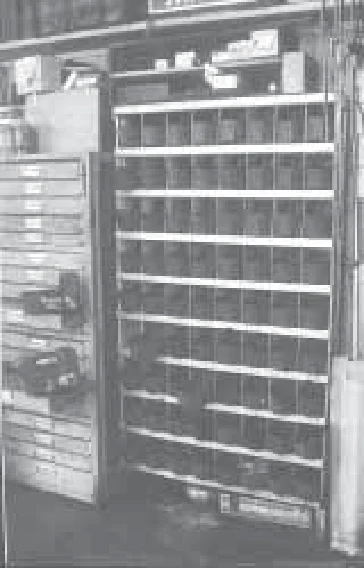
“My storage system for nuts and bolts was simple to make from scrap wood and old oil jugs. There are 72 separate compartments, each with a slide-out jug (cut down as shown at left in photo). Each compartment is 8 1/2 in. deep and 7 in. high. There are 1/8-in. saw cuts every 5 in. Pieces of 1/8-in. plywood are inserted into the cuts for vertical dividers. Narrow 1 1/2 by 3/4-in. strips of wood nail to the front of each shelf as stiffeners and to keep the jugs from sliding out too far. The wood strips are nailed to each shelf, positioned so they’re even with the shelf above and extend down into the compartment below. When you pull the jug out it hits the stop, but you can tip it up to take it out.”

From the archive · Full text
Reader shop tip 1 of 2

Dean Hertzler

Individual tip 1 of 2 from this reader’s published contribution.
Dean Hertzler, Veteran, Wyo.

“I installed two Optima 12-volt 800 batteries in several tractors, including a Deere 4050, two Deere 4455’s, a Deere 570 road grader, and a Cat 920 loader. You can wire them in series or parallel to get 24 or 12 volts. The machines all start great now with power to spare.

From the archive · Full text
Reader shop tip 2 of 2

Dean Hertzler

Individual tip 2 of 2 from this reader’s published contribution.
Dean Hertzler, Veteran, Wyo.

“We installed metal hydride lights in our 40 by 60-ft. shop with three 20-ft. bays. There’s one 400-watt overhead bulb and two 250-watt wall-mount bulbs in each bay. They’re expensive to purchase, but I can finally see without shadows and dark areas. Makes repairs safer.”

From the archive · Full text
Reader shop tip

Karl Dueck

Karl Dueck, Upper Kennetcook, Nova Scotia

“To fix levers and handles or to cover protruding bolts, drill holes in golf balls and screw them on. They make great, cheap knobs, and will protect your hands and knees from hitting bolts.”

From the archive · Full text
Reader shop tip

Darrell Sewell

Darrell Sewell, Joplin, Mo.

“When I went searching for wheels for a welding tank cart, they were either too light duty or they cost $35 each and didn’t even have bearings.

“Then I got the idea of using wheels off a wheelchair. They’re heavy-duty, look good, and I got an entire wheelchair for $20. With the help of my friend, Mike, I mounted the wheels on the cart, which was made from recycled steel and is fitted with a toolbox off a Case tractor. The cart rolls around very easily and is easy to maneuver into place.”

From the archive · Full text
Reader shop tip

Haslag Steel Sales

Haslag Steel Sales, Inc., 6560 Hwy. YY, Washington, Mo. 63090 (ph 636 239-6813; fax 636 239-1267)

The company can make replicas of factory-made aluminum fenders to fit IH 06-66 and Deere 6030 tractors. They’re built from .080 aluminum and weigh 30 lbs. per set. They also make 3-bar roll cages for those older tractors.

From the archive · Full text
Reader shop tip 1 of 2

Marvin W. Anderson

Individual tip 1 of 2 from this reader’s published contribution.
Marvin W. Anderson, Glyndon, Minn.

“I always start 2-cycle string weed trimmers or leaf blowers at full throttle. That way the engine gets plenty of air, and I don’t have to use the primer. Instead, I can rely more on the choke.

From the archive · Full text
Reader shop tip 2 of 2

Marvin W. Anderson

Individual tip 2 of 2 from this reader’s published contribution.
Marvin W. Anderson, Glyndon, Minn.

“I repaired the plastic door hinge roller on a 1984 Pontiac Fiero by removing the top pin and roller, and then drilling out the bottom part of the pin and tapping it so the proper sized bolt fits the roller. I also replaced the bushing. Now the door roller works better than new.”

From the archive · Full text
Reader shop tip

Tim Wasner

Tim Wasner, 8768 N. Centerline Road, Bitely, Mich. 49309 (ph 231 745-4254; www.accuratediesel.com)

“Our new fuel solenoid driver (FSD) aftermarket kit is designed for 1994 to 2001 Chevy pickups equipped with 6.5-liter diesel engines. It’s designed for the do-it-yourselfer and takes only about 15 minutes to install.

“The kit solves an engine-stalling problem specific to these pickups. What happens is that the engine can shut off when you’re driving down the road, almost like someone reached over and shut the key off. You can put the pickup in neutral as it rolls along and then start it back up. However, as time goes by it takes longer and longer to restart, until finally the engine won’t restart at all.

“There’s a module on these engines that drives the injection pump, and the problem occurs when some of the components inside the module fail due to overheating. If you go to a GM dealer they’ll charge $2,200 or more to replace the entire injection pump. Our kit mounts the module in a different location and requires no disassembly. You just unplug the original module and bolt our kit to the top of the engine. A cooler on top of our module causes it to run cooler.

“The kit sells for $350.”

From the archive · Full text
Reader shop tip

Edward C. Pieper

Edward C. Pieper, Akron, Colo.

“My 1982 Gleaner L2 combine is equipped with a big diesel engine that smoked bad. I moved the timing up an additional seven degrees. It worked - the engine quit smoking and now it also uses a lot less fuel. I also added an electronic fuel pump to boost fuel flow to the injector pump. I made these changes six years ago and the engine has been running fine ever since.”

From the archive · Full text
Reader shop tip

Dave Mertell

Dave Mertell, Independence, Mo.

“I had a problem with bearings in the spindles on my riding mower drying out and then spinning inside the spindle housing. To solve the problem, I removed the inside seals in the bearings and installed grease fittings in the spindle housings. Then I installed bearings in the spindle, using J.B. Weld. Problem solved.”

From the archive · Full text
Reader shop tip

Norman Frey

Norman Frey, Mobridge, S. Dak.

“Greasing the cylinder drive bearings on a Deere 9600 combine is a daily routine that requires climbing on top of the right drive wheel. To make the climbing part easier, I installed an L-shaped bracket step, shown in the photo, onto the right fan screen holders. Very handy.”

From the archive · Full text
Reader shop tip

Hodgson Farm

Hodgson Farm, Sainte-Marthe, Quebec

“Here’s a quick fix for piston sleeves that are leaking anti-freeze into the oil pan. Replace the anti-freeze in the radiator with light motor oil. I’ve used this idea on some old tractors for 10 years, and it works.”

From the archive · Full text
Reader shop tip

Ben Koch

Ben Koch, Kersey, Penn.

“I built a portable vice stand by taking an old car wheel rim and a piece of well pipe and welding a piece of flat stock to bolt the vice to, and then welding the pipe to the wheel rim. Lets me move it anywhere.”

From the archive · Full text
Reader shop tip 1 of 2

Al Schollenberger

Individual tip 1 of 2 from this reader’s published contribution.
Al Schollenberger, Egg Harbor, N.J.

“When replacing any bushings or bearings in equipment, I first put the new ones in the freezer for a few hours. They usually fall right in place.

From the archive · Full text
Reader shop tip 2 of 2

Al Schollenberger

Individual tip 2 of 2 from this reader’s published contribution.
Al Schollenberger, Egg Harbor, N.J.

“When replacing blades on my riding mower, I raise the front end on a tree branch with a come-along for easy access.”

From the archive · Full text
Reader shop tip

Dennis R. Ewert

Dennis R. Ewert, Mukwonago, Wis.

“I mounted angle iron brackets with fiberglass grating on both sides of my International Harvester 966 tractor. Works great for checking the gas tank and radiator and is safer than a stepladder.”

From the archive · Full text
Reader shop tip

Allyn Boling

Allyn Boling, Lentner, Mo.

“I used the frame of an old hospital bed to build this roll-around work bench that’s equipped with a built-in Lazy Susan. The bench can be easily raised or lowered with a crank to the desired height and is built quite strong. The drawers are made from 1/2-in. plywood with solid walnut facings. The walnut lumber was cut and cured on our farm. It’s all dovetail construction.

“The can holders on top of the bench are made from an old driveshaft chopped into metal rings, with a rod underneath supporting the bottom of the cans. Holds the cans securely when moving the bench. There’s even a magazine rack with a zip-up notebook in the knee hole for storing operator’s manuals.”

Shop feature stories

From the archive · Full text
Feature story

Great Shop Light

Featured source: Mark Snider

Mark Snider made a handy shop light from two inexpensive 4-ft. fluorescent light fixtures and some gas pipe.

The light telescopes up and also pivots out from vertical to horizontal, held in place by two “T” screw locks.

What’s handy about the big light is that you can extend it under a car hood or even up over the top of a semi engine. A brace about halfway up the fixtures holds them tight. Pieces of wire hold the lightbulbs in place. The light rolls around on three caster wheels.

Contact: FARM SHOW Followup, Mark Snider, 210 Reed St., Cle Elum, Wash. 98922 (ph 509 674-8051).

From the archive · Full text
Feature story

Top Engine Performance Easier With Filter Minders

Featured source: Ron Kelderman

Filters plug up. That’s their job. The problem is knowing when a filter is plugged up enough to reduce engine performance. Filter Minders from Engineered Products Co. let you know when an air or fuel filter needs to be replaced.

“You can look at the indicator, or we also have electronic sensors that light up on the dash or trigger a default code on your computer,” says Ron Kelderman, Engineered Products Co.

“We sell mostly through OEMs, but installation, especially for the air filter, is easy for most applications.”

He explains that most OEM equipment comes with a fitting between the air filter and the engine to attach the Filter Minder. If not, it’s easy to drill a hole and pop in a grommet. Fuel and hydraulic lines are tougher and re-quire an inline fitting. At this time it’s not designed for oil filters.

Checking the Filter Minder is easy. It measures and recalls the highest restriction at maximum airflow or full load condition. As the filters plug up and restrict flow of air or fluids, the indicators activate. A yellow position indicator gradually moves up in a clear window on the unit. When it reaches the red zone, it’s time to change the filter and reset the indicator.

The company points out that air filters actually are more efficient once they have a dirt film build up. That is why changing them because they look dirty may be actually re-ducing performance.

Filter Minders are available direct from the company or through major auto parts distributors like Wicks, NAPA and others. Prices range from $22 for air filter monitors to $29 for fuel filter monitors.

Contact: FARM SHOW Followup, Engineered Products Co., 2940 Airport Blvd., Waterloo, Iowa 50703 (ph 319 234-0231; toll free 800 689-7803; [email protected]; www.Filterminder.com).

From the archive · Full text
Feature story

They Rebuild Battery Packs “Better Than New”

Featured source: Peter Peterson

If you have a power tool battery pack that’s gone bad, you don’t have to replace it. You can rebuild it instead, and it should be more powerful than ever.

“We rebuild more than 1,000 battery packs a month,” says Peter Peterson, Voltman Batteries.

“We rebuild any brand. You will re-ceive your original case back with brand new batteries on the inside.”

Peterson says the batteries are rebuilt better than the original. All connections between batteries are spot welded instead of soldering, which can create heat and damage cells.

“We’ve invested more than $10,000 in each of our welding systems,” he adds.

“Each strap receives several spot welds to ensure the best connection.”

Rebuilt 2000 mAh NICAD batteries re-ceive a 90-day warranty. The larger 3300 mAh NIMH rebuild offers 60 percent more run time than the original and carries a 180-day warranty. Peterson claims the rebuild will outlast lithium batteries.

You can also sell your old DeWalt 18-volt 9096 or 18-volt Milwaukee standard shape batteries with Voltman, even if you don’t want them rebuilt. The company will send a pre-paid shipping label and pay $3 each.

All old batteries are recycled. The company claims to recycle more than a million pounds of batteries each year.

Cost of rebuilding varies by power. Prices for rebuilds range from $25 for any brand 1.2 to 8.4-volt 2000 mAh to $140 for any 36-volt 3300 mAh. Lithium battery rebuilds with lithium cells are also available. Voltman Batteries will rebuild and return the pack within 4 to 6 weeks. Same-day-turn-around service for a $20 premium is also available.

“Just prepay by phone or online, or enclose a check with the battery,” says Peterson.

“We will replace every cell with new high drain cells, and when you get it back, it will be better than new.”

Contact: FARM SHOW Followup, Voltman Batteries, 320 North Mulberry St., Mansfield, Ohio 44902 (ph 419 526-1570; fax 419 526-1571; [email protected]; www.voltmanbatteries.com).

From the archive · Full text
Feature story

Business Booms For Tractor Restorer

Featured source: Lee Sackett

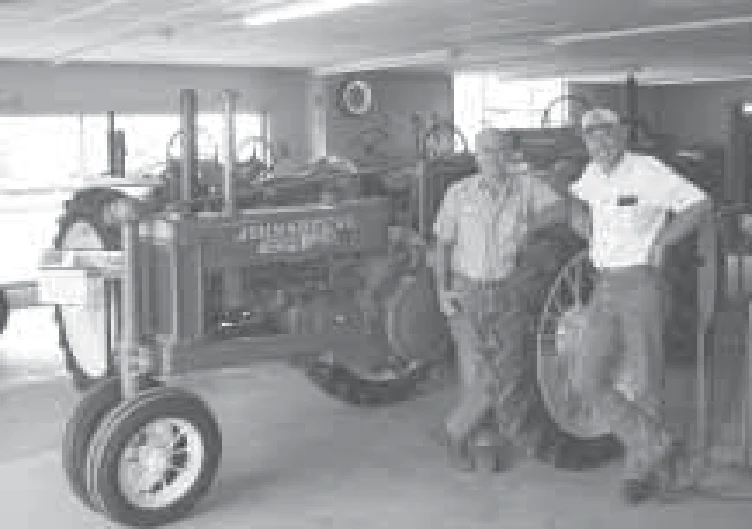
Lee Sackett may be the biggest tractor restoration specialist in the country. With more than 100 tractors finished and still to come, he has worked on tractors and equipment from Florida to California and many places in between. Today he and his nine-man crew continue to build up the business.

A mechanical engineer by training, Sackett was laid off shortly after 9/11. He decided to try to make some extra money restoring an old tractor. He took it to a show to sell it and ended up with orders to restore several other tractors. Soon he had a waiting list, and seven years later his business has grown dramatically.

At first he and his wife did it all. As the business expanded, he began hiring employees. He now operates out of two locations with three trained body and paint technicians, a manager who also handles parts, and five mechanics, three with diesel engine training and one a certified CNC machinist.

“The employees we’ve added are tremendous resources for the business, and with each one our expertise and quality have gone up a notch,” says Sackett.

“There’s a small group of restorers in the country who work at a very high level of quality, and I think we can say we’re in that group.”

One sign of this quality level is a Gray brand tractor now starting restoration. Sackett just watched the same model, a Gray 22-40 Canadian Special, sell for just under $100,000 at an Illinois auction.

Like all of the tractors his group works on, the Gray will follow a strict restoration program. The first step is to assess the tractor and develop a restoration cost estimate. A company spreadsheet compares previous restoration costs to come up with likely costs, barring surprises encountered during restoration.

They first make any needed mechanical repairs, replacing gaskets, wiring, radiator hoses, etc.

“We usually recommend refurbishing or replacing the radiator, water pump, light bulbs, carburetor, ignition points, battery and spark plugs,” says Sackett.

Disassembly follows mechanical repairs. Anything that cannot be repainted in place or that blocks another part from painting is removed.

Large parts are sand blasted with a “pressure type” sand blaster. The abrasive crystals used cut through grease, grime, old paint and rust to expose pure bare metal. Critical components are protected with specially fabricated metal plates bolted in place and sealed with silicone before blasting.

Bodywork removes dents and dings using modern and classic techniques. Sheet metal is made to look like new with fabricated steel patches where rust has eaten away the metal.

Sheet metal and parts requiring an extremely smooth finish get an etching primer followed by a high-build, sandable primer. Sanding of imperfections is followed by sealer and then paint.

“When it comes to the final paint job, we prefer single stage automotive paint such as Martin Senour or PPG brand,” explains Sackett.

“Some customers prefer the implement brand paint, but generally it is more difficult to get a perfect finish. The paint we use has a hardener added to it that gives it a better shine and more durable coat.”

Once the paint has dried and the tractor reassembled, decals are applied. Bolt heads and other items are “touched up” by hand.

The restored tractor should look better than it did when it came off the assembly line,” says Sackett.

“The modern chemicals and processes we use will help to keep it that way.”

Sackett says he isn’t too concerned about talk of recession. He left for a week’s vacation and came home to a mailbox and voice mail loaded with messages asking about restoration. He says there always seems to be someone with a tractor to restore.

One big change that Sackett noticed recently is a growing interest in antique implements.

“We restored a Deere B with a Deere 101 corn picker,” he says.

“Having an implement with a tractor sets it apart from other restorations. Even if you don’t have an implement, make a display that tells the tractor’s story with pictures of before and after. That makes people stand around longer than if it were just another John Deere B.”

Contact: FARM SHOW Followup, Lee J Sackett, Inc., 16010 SW 42nd Ave., Ellendale, Minn. 56026 (ph 507 684-2070; [email protected]; www.leejsackett.com).

From the archive · Full text
Feature story

“Slider” Keeps Tape Measure Moving

Featured source: Dennis Dodge

Anyone who works a lot with a tape measure will be interested in this new “Slider” that allows the free end of the tape to slide smoothly over rough surfaces such as grass, carpet, roofing, decking, etc.

The 3-in. long Slider is made from plastic and is curved at one end. The end of the tape measure blade simply slips into a slot on the Slider.

“It turns a 2-person job into a 1-person job, using half the effort. It’s perfect for plumbers, roofers, carpenters, landscaping, carpet layers, concrete workers, and so forth,” says inventor Dennis Dodge.

“The Slider adds exactly 3 in. to the measurement. It’s small enough to fit easily in your tool belt or pocket. And it makes a great stocking stuffer for Christmas.”

Two Sliders sell for $5 plus $1 S&H; or you can buy five sliders for $10 plus $1.50 S&H.

Contact: FARM SHOW Followup, Dennis Dodge, Dodge and Sons, LLC, 3817 162nd Ave. E., Lake Tapps, Wash. 98391 (ph 253 266-1380; [email protected]; www.the-slider.com.

From the archive · Full text
Feature story

“Gas Feed And Filter” Keeps Fuel Flowing

Featured source: Terry Young

Terry Young had a problem with loose rust settling at the bottom of the gas tank on his International Harvester 706 tractor, causing the fuel line to plug up. The Coffeen, Ill., farmer found a simple way to solve the problem.

He added a short upright length of 3/8-in. dia. tubing inside the tank to raise the level of the gas intake about 1 in. above the bottom. That way, rust or other debris stays at the bottom of the tank. He also replaced the original sediment bulb with an in-line filter that’s easy to replace.

C. F. Marley, Nokomis, Ill., used the same idea on his IH tractor (pictured) but added a brass shut-off valve that makes filter replacement easy.

Contact: FARM SHOW Followup, Terry Young, 73 Young Lane, Coffeen, Ill. 62017 (ph 217 534-2456).

From the archive · Full text
Feature story

Charger Rejuvenates Drained Batteries

Featured source: Rafael Ruiz

Living off battery power is simpler with the patent-pending portable charger invented by Rafael Ruiz. Powered by gas or biodiesel, the charger runs for a couple of hours to charge a large bank of lead acid batteries that can run a household for a week.

The design came out of need 10 years ago when Ruiz was using solar panels and wind turbines to generate power for his Poteet, Texas, home. A big storm hit and caused a lot of damage, cutting off his power. Insurance covered the roof, but not the solar panels or turbines. Needing to find a way to re-store power, he applied his experience building alternators for wind turbines. He rigged up a setup with a generator, alternator and geared up old drill press and fully charged his batteries.

“From there I decided to make it convenient and use a biodiesel engine,” Ruiz says. He filters used cooking oil from a local restaurant, uses a trap to remove water, and blends 1 gal. of diesel per 4 gal. of cleaned oil to fuel the 1-cyl. diesel engine battery re-juvenator charger.

Ruiz charges 10 Trojan T105 batteries (common in electric golf carts) in two to three hours with about a gallon of fuel. His system is designed for auto, truck, marine and deep cycle lead acid batteries. He’s used the same batteries for 11 years.

“We’ve used this charger to rejuvenate batteries that people were going to throw out,” he says.

The charger meets California safety and EPA regulations and is on a handy cart, making it compact and portable for independently-powered home, farms, cabins, marine, camping, hunting, RVs and any uses. It gained international attention last year, when it won a silver medallion at an invention show in Taipei, Taiwan.

“It’s great for underdeveloped countries and off-grid in the U.S.,” Ruiz says. His company is committed to educate the public on the benefits and simplicity of a greener lifestyle.

The gas model starts at $1,600 and the biodiesel model at $2,700. Electric start and recoil options are available.

“It’s a quality product even for an emergency backup system,” Ruiz says.

“The small gas model is equal to 15 solar panels. And with this, you don’t have to wait for sun or wind.”

Contact: FARM SHOW Followup, Rafael Ruiz, Impact Renewable Energy, 4122 W Fm 476, Poteet, Texas 78065 (ph 830 742-3200; www.impactrenewableenergy.com).

From the archive · Full text
Feature story

Great Way To Free Seized Engines

By By Keith Berglind
Featured source: Keith Berglind

As a mechanic, I’ve learned to deal with rusted nuts and bolts and other simple rust problems by using penetrating oil, drills, grinders and torches.

But one situation often taxes the skills of most of us: a rust-seized piston in an engine. Engine rebuilders/restorers often encounter engines that have sat for years with water collecting in one or more cylinders. The piston rings and piston walls are locked to the cast iron cylinder wall.

Easy jobs may require only some penetrating oil, then a block of wood driven by a large hammer. But all too often this means the piston is destroyed and the cylinder wall cracks from the wedging action of the rust jammed between the piston and the wall.

Back when pistons were cheap and easy to locate, I preferred to chisel the piston to pieces and do everything to protect the cylinder wall. But diesel pistons are usually expensive, and some old model engine parts are getting scarce. So, I’m always looking for a better way to loosen-up a rust-seized engine.

This past spring a supplier suggested I try a product called Engine Release. He sent enough technical information to attract my attention so I ordered enough to do a 6-cylinder engine. It turns out one kit is required for each cylinder, so I ended up with 6 small kits. Each kit consists of an 8-oz. can of Engine Release, a small applicator bottle, and a dispenser hose.

The proper application is to put 2 oz. into the small bottle and squirt it into the cylinder through the spark plug or nozzle hole. Then repeat this step every two days until the entire chemical is gone. From my experience, after all the chemical has soaked in, the piston rings will break free of the cylinder wall and the piston will move.

The first engine I tried it on was a well-rusted block from a Ford 6000 tractor. This block was stripped except for the one piston and rod that a mechanic friend had been unable to drive out with a hammer six years ago. It had lain on its side outside since the last attempt.

After the second 2-oz. application of the chemical, the piston moved after a sharp blow with a hammer and block of wood. We were impressed by the underside view of how the chemical soaked down into the lower skirt area.

The instructions claim that it is possible to treat a seized engine, and then as soon as it is free to turn, the engine can be started. As the engine runs it will purge out the rust and chemical, leaving you with a usable engine.

I don’t doubt that this may work for some jobs, and it’s worth the try in order to save dismantling. I think this is a good time to add some upper-cylinder lubrication into the gas, to help lubricate the ring grooves.

I got my kits from www.enginerelease.com (ph 514 636-1423). The cost is $19.95 a kit plus $4.95 S&H. Delivery is by mail, usually in 10 to 14 days.

Contact: FARM SHOW Followup, Keith Berglind, P. O. Box 268, Sandy Hook, Manitoba, Canada R0C 2W0.

From the archive · Full text
Feature story

He Built His Own Drywall Jack

Featured source: Frank Dyck

Putting up drywall is now an easier job for Frank Dyck, who built his own drywall jack.

“It’s a real time saver,” says Dyck, of La Crete, Alberta.

“I came up with the idea because I was finishing a basement and had to put up the 8-ft. high ceiling by myself.”

The jack rides on four small caster wheels and consists of an adjustable length of thin wall, 1 1/4-in. sq. tubing that fits over a 48-in. length of 1 1/2-in. sq. tubing. The outside tube has a roller chain welded along its length to match the teeth on a sprocket that’s operated by a hand crank. The crank and sprocket are mounted on another 48-in. length of 1 1/ 2-in. sq. tubing welded to the base about 3 in. beside the other one.

“It’s especially useful on 12-ft. long sheets which are almost impossible for one man to put up,” says Dyck.

“My total cost was less than $100. Comparable commercial jacks sell for $500 or more.”

The angle iron frame on top measures 42 by 42 in. so I can lift a half sheet.

A sprocket is welded onto a 3/4-in. dia. shaft, which drives a bigger double chain sprocket. The shaft at the top of the double chain sprocket supports another sprocket that engages a length of roller chain that’s welded onto the sq. tubing. He welded a saw blade to one end of the shaft. The blade’s teeth engage in a pawl to hold the load in position and serve as a brake.

“The top H-frame is attached to the sliding post with a heavy hinge so when I approach the lift with a sheet, it’s already tilted toward me,” says Dyck.

“I made a stopper on it so it can only tilt about 45 degrees. I step on the nearest base end so it stays, lay the sheet on it, and tilt it level. Then I wheel the load into position, crank it up, and lock the pawl in place. It has a maximum lift of 98 to 99 inches.” Contact: FARM SHOW Followup, Frank M. Dyck, P.O. Box 388, La Crete, Alberta, Canada T0H 2H0 (ph 780 928-3944).

From the archive · Full text
Feature story

Super Charge Older Tractors With 12-Volt Conversion

Featured source: Ronald Hodsdon

Ronald Hodsdon’s 1956 Deere 420 tractor used to be a bear when it came to cold weather. All it wanted to do was hibernate. Now he hits the starter for half a turn, and it’s off and running, no matter how cold it is.

“I changed it from a 6-volt system to a 12-volt, but I kept the old 6-volt starter,” says Hodsdon.

The change was easy. He bought a new 12-volt battery and pulled an internal resister coil and an alternator out of a couple of old Volkswagens.

“The alternator fit the original generator mount with minor changes,” says Hodsdon.

“I installed a flexible cowling over it to keep it dry.”

The larger battery was more of a problem. Hodsdon fabricated a battery box out of angle iron and sheet metal and hung it on the right side of the bell housing. The old battery space became tool storage.

Hodsdon made the change 30 years ago and says he has had to overhaul the old starter a few times over the years.

“But that’s a small price to pay for the quick starts,” he notes.

Contact: FARM SHOW Followup, Ronald Hodsdon, 255 Hodsdon Rd., Pownal, Maine 04069 (ph 207 688-4469).